



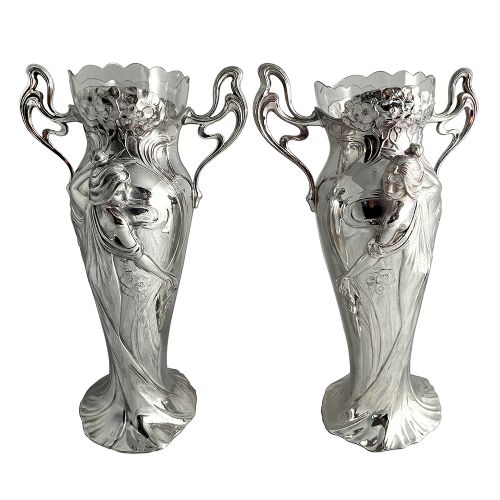


Art Nouveau Metal Vases
Art nouveau metal vases bring fluid organic lines and sculptural botanical forms directly into your interior scheme.
Art Nouveau Metal Vases
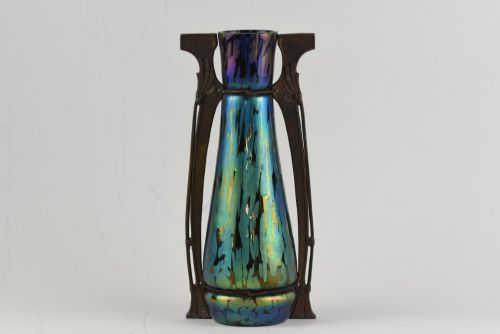
Art nouveau metal vases encompass vessels shaped by flowing botanical motifs and organic asymmetry, emerging primarily around nineteen hundred and the early twentieth century. You will encounter pieces spanning bronze, copper, pewter, and silver plate, often paired with iridescent glass or cobalt inserts.
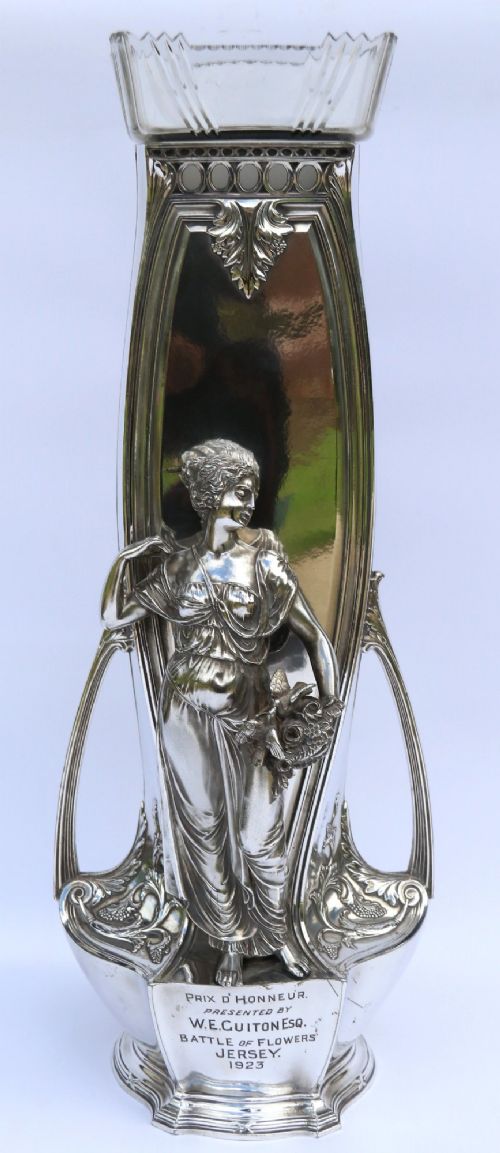
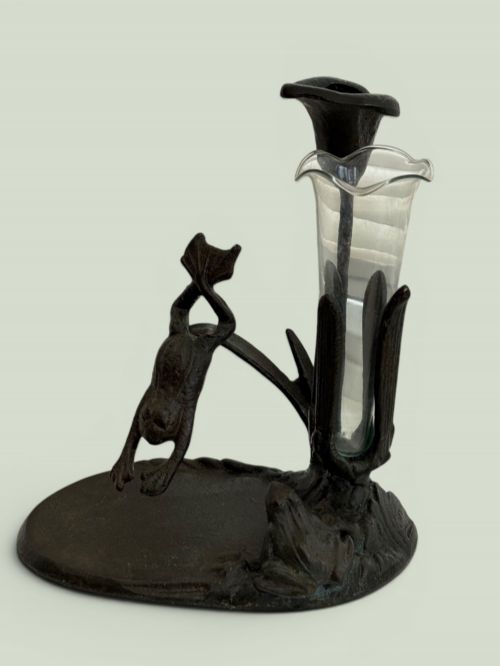
Makers utilised specific regional vocabularies, ranging from French cast bronze figural works to German Jugendstil pewter and Viennese secessionist silver. Forms extend from simple pedestal stands and tall slender vessels to elaborate centrepieces and figural maiden vases.
How they were made
Foundries shaped these vessels through bronze casting, copper beating, and pewter moulding, capturing the sinuous curves characteristic of the period. Artisans applied patinated finishes, silver plating, or gilt bronze to enhance the tactile metallic surfaces.
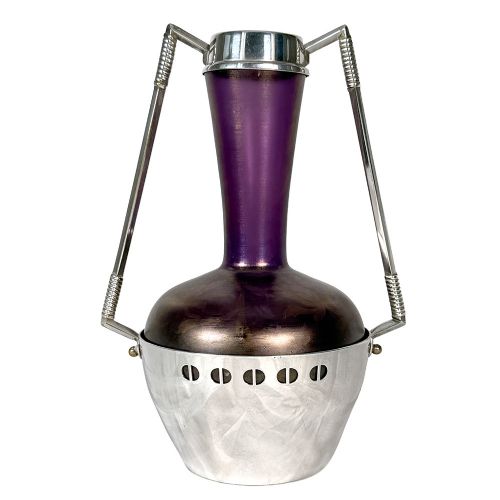
Many works incorporate mixed media, combining metal mounts with blown iridescent glass inserts or overlaying pewter directly onto coloured glass bodies.
Art Nouveau Metal Vases Retail Price Guide 2026
Typical asking prices for art nouveau metal vases among the pieces listed under this phrase on Sellingantiques today, from the lower quarter to the upper quarter. They describe what is for sale here now, not the wider market.
Listings feature works spanning Victorian times, nineteen hundred, the nineteen tens, and the nineteen twenties, alongside later twentieth century interpretations.
What varies in quality
Quality rests upon the crispness of the casting and the sensitivity of the chased surface detail, separating mass production from master foundry work. Sculptural figures integrated into the design show distinct variation in anatomical realism and expressive fluidity.
The sophistication of the material combination, such as the marriage between patinated bronze and iridescent glass, dictates the visual success of the piece. Maker attribution also plays a role, distinguishing unmarked commercial items from signed foundry productions.
Loetz and Argentor·Charles Korschann·Jean Dunand·WMF·Georges Van De Voorde·Kayserzinn·Henry Dasson
The Art Nouveau Metal Vases Glossary
- Jugendstil
- The German manifestation of the art nouveau movement, heavily represented in metalwork and pewter production around nineteen hundred. It takes its name from the Munich art journal Die Jugend.
- Pewter
- A malleable metal alloy of tin mixed with copper and antimony, utilised extensively by continental foundries for complex cast vessels. It accepts intricate low relief botanical patterns exceptionally well.
- Patinated bronze
- Bronze treated with chemical solutions to produce a controlled surface coloration, ranging from deep brown to greenish tones. This technique accentuates the sculptural contours of figural designs.
- Secessionist
- A stylistic offshoot associated with progressive artists breaking from traditional academies, particularly visible in Viennese metalwork and silver design. These objects often favour geometric restraint alongside organic curves.
Art Nouveau Metal Vases: Frequently Asked Questions
What metals were commonly used?
Foundries relied heavily on bronze, copper, pewter, and silver plate to achieve the desired sculptural plasticity. These materials allowed artisans to cast fluid organic contours and intricate plant motifs.
Secondary elements such as gilt bronze and mixed metal applications frequently appeared on higher end decorative pieces from this era.
How do I identify Jugendstil metalwork?
Jugendstil pieces originating from German speaking regions typically display distinct floral and botanical patterns executed in pewter or silver. Look for stylised leaf and mistletoe motifs alongside characteristic maker stamps.
These objects often bridge the gap between functional vessels and sculptural art objects typical of the nineteen hundred period.
Can these vases hold water?
While many metal vessels were constructed for decorative display, variants with glass inserts or glazed interiors can accommodate floral arrangements. You should check the internal lining before filling any antique metal vessel with liquid.
Older pewter and silver plated items benefit from careful hand washing rather than immersion to preserve historic patination.
Where were these pieces produced?
Production centred largely in European workshops, with prominent centres in France, Germany, and Austria. Major foundries and independent artists each contributed distinct regional interpretations to the broader movement.
Japanese export workshops also produced mixed metal pieces during the Meiji period that aligned closely with European aesthetic tastes.