


Art Nouveau Hearth Guard
An art nouveau hearth guard is a decorative metal screen or kerb placed before a fireplace to manage sparks, uniting organic curves with robust Victorian and Edwardian craftsmanship.
Art Nouveau Hearth Guard
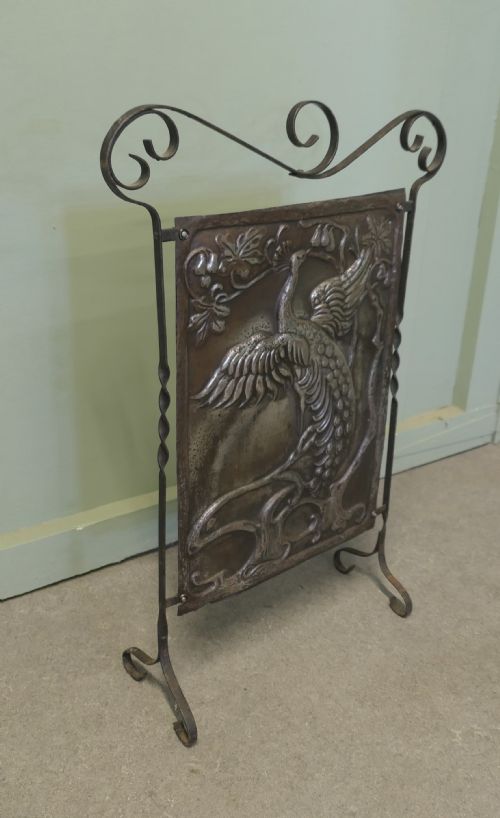
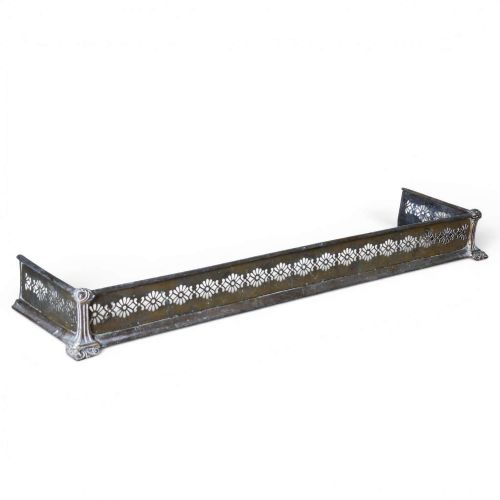
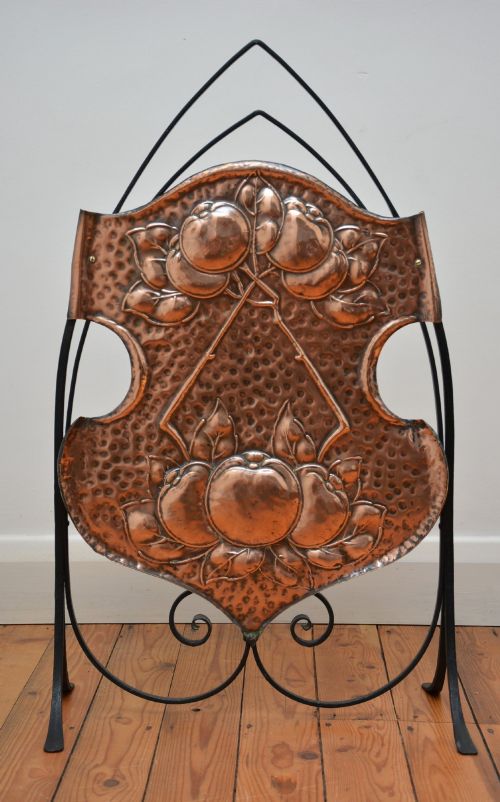
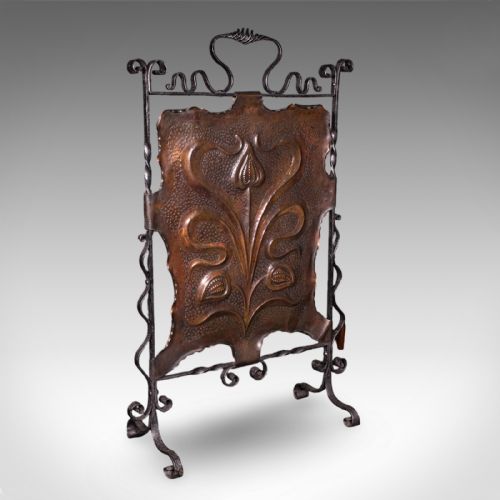
When you search for an art nouveau hearth guard, you encounter functional fireside brass and copper pieces dating from the Victorian and Edwardian eras. These domestic items take the form of upright fire screens or low fireplace fenders designed to protect the room from stray embers.
The versions you are most likely to meet on this page combine polished iron, wrought iron, and steel frameworks with distinctive aesthetic movement motifs. Many examples integrate decorative panels of textile, wool, cut glass, or repoussé metalwork.
Originating across English and French workshops, these fireplace accessories range from simple brass frames to large decorative fire kerbs and reflector screens. They bridge the gap between heavy nineteenth century utility and flowing turn of the century design.
Materials and construction
Makers utilised heavy sheet copper, cast brass, and wrought iron to construct the primary frames and kerbs of these hearth accessories. These metals were frequently polished or left with a natural patina that deepens over decades of domestic use.
Decorative screens often incorporate specialist elements such as inset cut glass panels or hand worked textile and wool tapestries depicting birds like peacocks and parrots. Iron components were forged and riveted to provide sturdy support for the more malleable brass and copper decorative surfaces.
Art Nouveau Hearth Guard Retail Price Guide 2026
Typical asking prices for art nouveau hearth guard among the pieces listed under this phrase on Sellingantiques today, from the lower quarter to the upper quarter. They describe what is for sale here now, not the wider market.
Parrots and peacocks frequently gaze out from the hearth, stitched in wool or hammered in metal to keep company with the fire.
Judging quality and craftsmanship
The distinction between standard production items and finer examples lies in the depth of hand working visible in the metal and the integration of specialised inserts. Superior pieces feature detailed repoussé work on copper panels, intricate iron scrollwork, or securely framed tapestries rather than stamped sheet metal.
Substantial gauge brass and robust steel construction ensure structural integrity in larger fireplace fenders and kerbs. Quality is further evident in the preservation of original patination, clean glass cutting, and the precise fit of decorative elements within the main frame.
The Art Nouveau Hearth Guard Glossary
- Repoussé
- A metalworking technique where the metal is hammered from the reverse side to form a raised design in relief. This process creates the characteristic flowing organic contours seen on copper fire screens.
- Fender
- A low metal guard placed on the hearth around the perimeter of a fireplace. It serves to contain coal and ash while framing the hearth space.
- Kerb
- An alternative term for a fireplace fender, often describing a larger stone or metal surround framing the hearth area. In nineteenth century listings it refers to heavy floor level metal barriers.
- Patina
- The natural surface sheen developed on metals through age, oxidation, and handling. Collectors value original patination for its historical depth.
Art Nouveau Hearth Guard: Frequently Asked Questions
What is the difference between a fire screen and a fender?
A fire screen is an upright panel on feet that stands directly in front of the fireplace opening to block radiant heat or hide the grate when not in use.
A fender is a low barrier that sits on the floor around the hearth perimeter to keep burning fuel and embers from rolling onto the carpet.
How do I clean a brass or copper fire screen?
Dust the metal regularly with a soft dry cloth to prevent the accumulation of soot and grime from the open hearth.
Avoid harsh chemical polishes that strip away historical patination, opting instead for gentle cleaning methods appropriate for antique metals.
Can I use an antique hearth guard with an open fire?
Many of these pieces were built for active coal and wood fires, utilising heavy iron, brass, and copper to withstand high temperatures.
However, delicate fabric panels, wool tapestries, and cut glass inserts require careful placement to avoid heat damage from modern fires.
How do I date an art nouveau hearth guard?
Examine the construction methods, materials, and stylistic motifs to determine if the piece belongs to the Victorian or Edwardian periods around 1900.
Look for typical manufacturing markers such as hand riveting, forged ironwork, and characteristic organic curved motifs typical of the arts and crafts movement.