



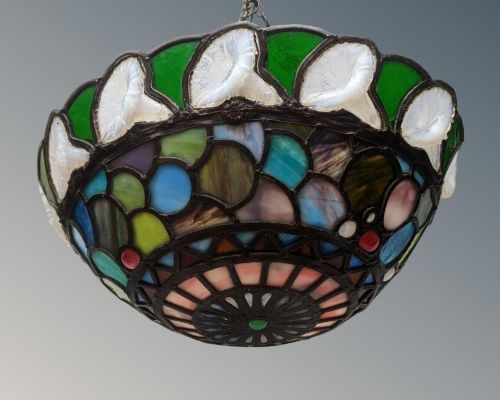


Art Nouveau Glass Fixture
An art nouveau glass fixture brings fluid organic form and luminous colour into a room, capturing the definitive decorative spirit of the turn of the twentieth century.
Art Nouveau Glass Fixture
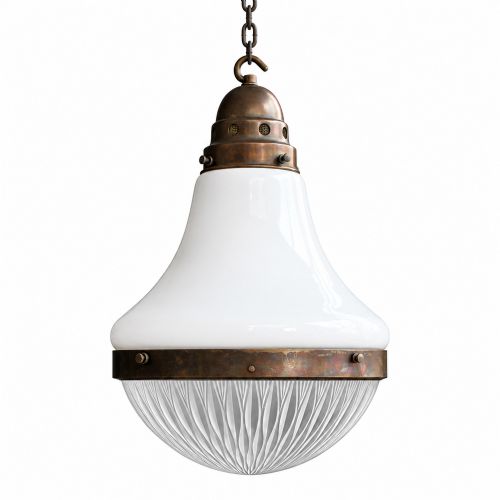
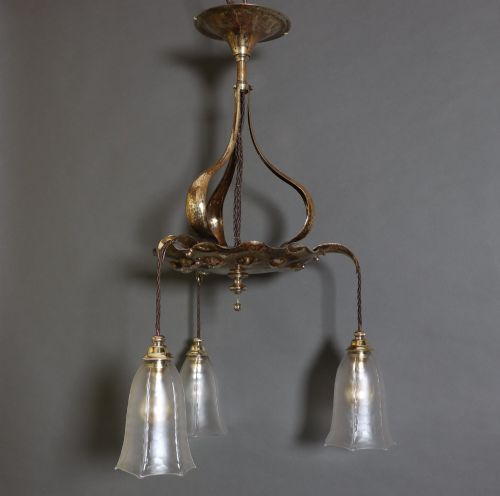
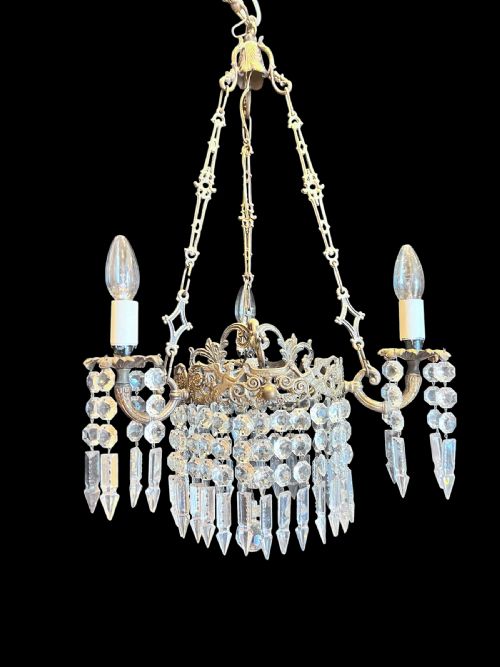
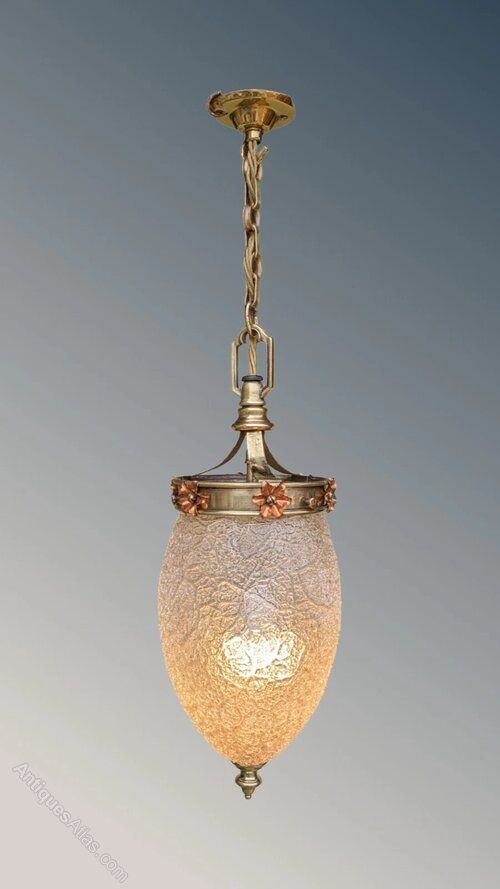
An art nouveau glass fixture encompasses ceiling lights, chandeliers, pendant lights, floor lamps and table lamps produced across the late nineteenth and early twentieth centuries. These hanging and standing pieces merge botanical glass shades with sculptural metal mounts to define period interiors.
The versions most commonly met on this page include brass and copper ceiling lights alongside French chandeliers from the nineteen hundreds and nineteen tens. Examples range from simple frosted or etched glass pendants to elaborate multi-light fittings incorporating crystal, cobalt blue leaded glass and pate verre.
Influences from the Arts and Crafts movement appear alongside strict Art Nouveau designs, showing hand-beaten metalwork and converted oil lamps. Buyers find both British and French creations spanning the eighteen nineties through the Edwardian era to the nineteen twenties.
Materials and technique
Makers shaped structural components from brass, copper, bronze and wrought iron to support heavy decorative shades. These metals were cast, beaten or turned into adjustable standards, rise and fall mechanisms and detailed ceiling roses.
Glass elements were worked into varied textures including frosted, opal, etched, crackle glaze, cranberry and pate verre finishes. Specialised techniques allowed glassmakers to achieve rich green, cobalt blue and multi-coloured effects that diffused light softly through botanical bulbs and bowls.
Art Nouveau Glass Fixture Retail Price Guide 2026
Typical asking prices for art nouveau glass fixture among the pieces listed under this phrase on Sellingantiques today, from the lower quarter to the upper quarter. They describe what is for sale here now, not the wider market.
Some converted oil lamps retain their original wick adjusters, ready to confuse guests who reach to turn up the flame.
Markers of quality
Quality rests upon the harmony between the glass shade and its metal housing, where superior pieces display confident hand-beaten textures and substantial gauge brass or copper. The weight of the metal armature and the depth of colour within the glass distinguish standard production from exceptional studio work.
Mastery is evident in signed glass and sophisticated mechanical elements such as functional rise and fall counterweights or intricate wrought iron framing. The integration of specialised techniques like pate verre elevates a fitting far above simple utilitarian lighting.
Schneider·Verrerie Des Vosge·Muller Freres
The Art Nouveau Glass Fixture Glossary
- Pate verre
- A French term for glass paste, created by packing finely crushed glass into a mould and fusing it in a kiln to produce a dense, textured finish. This technique yields translucent shades with subtle tonal gradations.
- Rise and fall
- A mechanical ceiling light suspension system utilising pulleys and counterweights to allow the height of the pendant to be adjusted easily. It provides practical task lighting over dining tables.
- Standard lamp
- A freestanding floor lamp designed to illuminate a room from a corner or beside seating. These tall metal fixtures often feature adjustable stems and decorative shades.
- Etched glass
- Glass decorated by applying acid to eat away exposed surfaces and create frosted patterns or botanical motifs. This treatment softens the glare of early electric bulbs.
Art Nouveau Glass Fixture: Frequently Asked Questions
How do I hang a heavy antique chandelier?
Heavy chandeliers require secure anchoring directly into ceiling joists using appropriate fixings to support the combined weight of the metal armature and glass shades. Professional electrical installation ensures the vintage wiring is safely connected to your mains supply.
Because many of these fixtures utilise substantial brass, copper or iron frames alongside thick glass bowls, verifying the structural capacity of the ceiling is essential before mounting.
Are these lights compatible with modern bulbs?
Most antique fixtures accept standard modern LED or incandescent bulbs provided the base size matches the original lampholder. Care should be taken with enclosed glass shades to select bulbs that do not generate excessive heat.
Consulting a qualified electrician allows you to update internal wiring safely while preserving the exterior brass, bronze or wrought iron components.
How do I clean delicate art glass shades?
Delicate glass shades should be removed from the metal fixture and washed gently in lukewarm water with mild soap. Avoid harsh chemical cleaners or abrasive cloths that might damage etched, enamelled or crackle glaze surfaces.
Allow the glass to dry completely before reattaching it to the brass, copper or iron mounts.
What distinguishes French Art Nouveau from British pieces?
French pieces often display fluid, asymmetrical botanical forms and specialised glass techniques such as pate verre or multi-layered coloration. Workshops across France favoured sculptural bronze, wrought iron and signed glass elements.
British designs frequently reflect the structural honesty of the Arts and Crafts movement, emphasising beaten copper, leaded glass and functional mechanisms like rise and fall counterweights.