



Art Nouveau Floor Standing Lamp
An art nouveau floor standing lamp brings sinuous lines and warm metalwork to a room, offering both vertical presence and character.
Art Nouveau Floor Standing Lamp
An art nouveau floor standing lamp stands as a tall vertical lighting fixture designed to illuminate a room from floor level. These pieces belong predominantly to the Victorian, Edwardian, and early twentieth-century periods, capturing the distinct aesthetic of the movement.
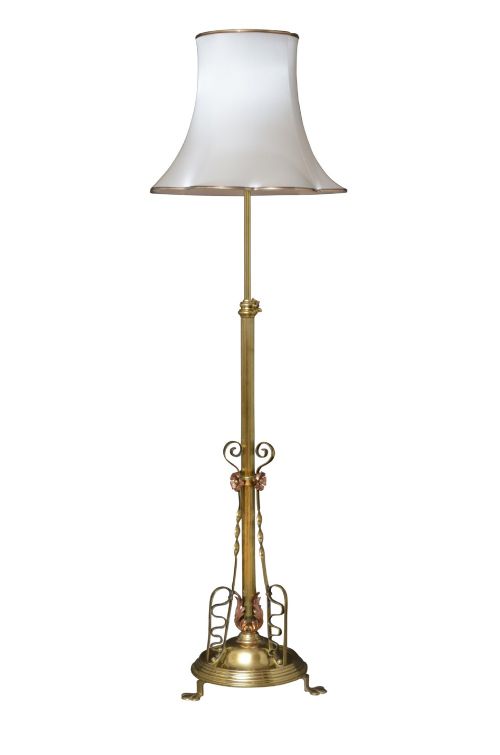
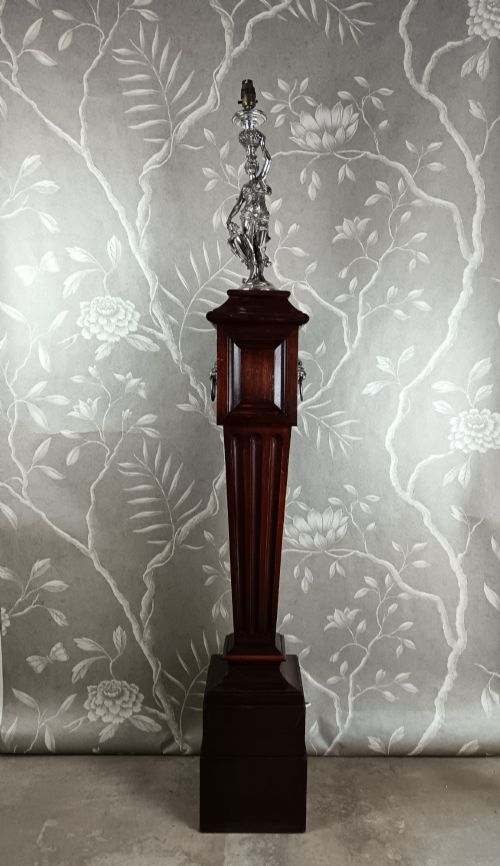
The standard lamps and floor lamps appearing in these listings most frequently take the form of metal uprights supporting fabric shades. Examples range from simple brass columns to height-adjustable designs and figural pedestals.
Origins and styling span the continental Jugendstil and Belle Epoque alongside British Edwardian and Victorian interpretations. Buyers encounter standard uplighters and reading lamps shaped by these overlapping historical currents.
How these lamps were constructed
Makers shaped an art nouveau floor standing lamp primarily from metals such as brass, copper, bronze, and iron, often pairing them to create contrasting tones on the shaft and base. Silver plating and mahogany also appear among the materials used to build these upright standards.
Construction techniques focused on mechanical adjustability and figural ornamentation, incorporating threaded mechanisms for height adjustment and cast metal statues. Fabric and thread complete the construction on shade elements supported by the metal frames.
Some uprights include a marked figural statue of WMF, turning a humble reading lamp into a piece of miniature statuary.
What separates the finest examples
Quality in an art nouveau floor standing lamp rests on the crispness of the metal casting and the complexity of the silhouette. Pieces featuring combined metals like brass and copper or integrated figural elements display higher sculptural ambition than plain columns.
The inclusion of functional mechanics, such as height-adjustable stems, marks a more sophisticated level of workshop production. The integrity of the original materials and the sophistication of the period styling ultimately define the upper tier.
WMF
The Art Nouveau Floor Standing Lamp Glossary
- Standard Lamp
- A floor-standing lighting fixture with a vertical pole supporting a light source at the top. This term is frequently used interchangeably with floor lamp in historical listings.
- Jugendstil
- The continental German-language variant of the Art Nouveau movement. It emphasises organic motifs and flowing lines.
- Torchere
- A tall ornamental stand or floor lamp designed to hold a light pointing upwards. These often feature decorative figures or pedestals.
- Belle Epoque
- A period of European history spanning the late nineteenth century and the years leading up to the First World War. It informs the decorative style of many transitional lamps.
- Uplighter
- A lamp designed to cast illumination upward toward the ceiling rather than down into the room. This form provides ambient background light.
Art Nouveau Floor Standing Lamp: Frequently Asked Questions
What is an art nouveau floor standing lamp?
An art nouveau floor standing lamp is a tall lighting fixture from the late nineteenth or early twentieth century featuring organic styling and metal construction. These pieces were designed to illuminate period interiors while serving as sculptural furnishings.
They appear primarily as standard lamps and torcheres in brass, copper, and iron, often with adjustable heights for functional versatility.
How do you date an art nouveau floor standing lamp?
Dating relies on identifying period materials, stylistic markers, and manufacturing techniques associated with the Victorian, Edwardian, and early twentieth-century eras. Stylistic overlap with Jugendstil and Belle Epoque provides further chronological context.
Makers' marks or stamps, such as those found on silver-plated figural elements, also help establish a precise period of origin.
Were these lamps adjustable?
Many period examples incorporated mechanical adjustments to alter the height of the standard. Makers utilised telescoping brass shafts and tightening keys to let users control the level of illumination.
This practical feature distinguishes more complex workshop designs from fixed-height columns.
What metals were used?
Makers relied heavily on brass, copper, bronze, and iron for the structural framework of the standards. Silver plating was occasionally applied to metal surfaces or figural statues incorporated into the base.
Combinations of brass and copper frequently appear together on a single lamp to create contrasting metallic tones.
How do standard lamps differ from torcheres?
Standard lamps generally describe functional floor-standing uprights intended for general room lighting or reading purposes. Torcheres specifically refer to ornamental stands historically designed to hold upward-pointing lights or figures.
Both forms share similar vertical construction and period styling within these listings.