


Art Nouveau Bed
An art nouveau bed brings organic curves and floral motifs into the bedroom, offering substantial metal or timber frames built to endure.
Art Nouveau Bed
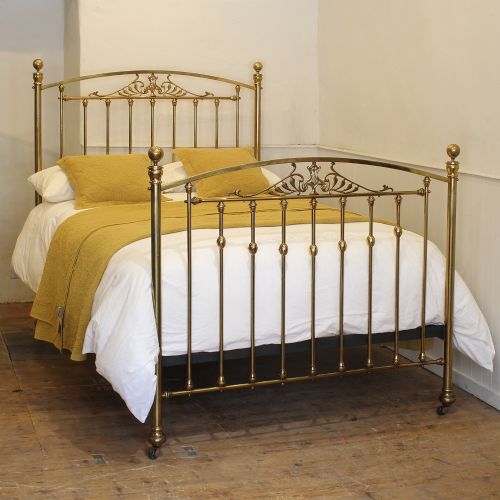
An art nouveau bed is a sleeping frame characterised by flowing, plant-inspired lines, whiplash curves and stylised natural motifs typical of turn-of-the-century design. These pieces appear in both metal and timber variants, with brass and cast iron frames or rich wood constructions dominating the selection.
Buyers encounter double and king size proportions most frequently, alongside single frames and occasional pairs. Origins span British workshops as well as continental centres, particularly French makers utilising local hardwoods and metals.
The style merges structural utility with decorative movement, translating the aesthetic of the period directly into domestic furniture. Surviving examples preserve the distinctive hardware and detailing characteristic of the era.
Materials and construction
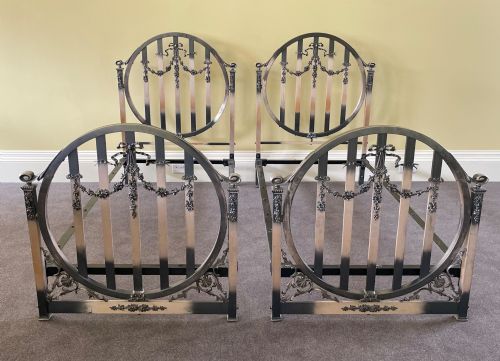
Makers utilised cast iron and brass tubing for metal frames, frequently applying nickel plating or combining black iron with polished brass highlights. These metal components were shaped into curvilinear headboards and footboards, often secured with side irons.
Timber frames relied on walnut, mahogany, oak, satinwood and plum pudding mahogany, shaped through carving and steam bending to achieve the signature fluid contours. Cabinet elements accompanying the beds often incorporated marble tops and glazed panels.
Construction methods balanced decorative joinery with robust internal framing to support standard mattress sizes. Metal beds utilised bolted joints and side rails, while wooden bedsteads employed traditional tenon and mortise joinery.
Listings demonstrate that walnut and mahogany remained the dominant timbers for wooden frames, while brass and cast iron defined the metal bed selection.
Factors determining quality
The sophistication of the carved wooden ornament or the complexity of the brass and iron castings dictates the grade of the piece. Master craftsmen achieved fluid, organic asymmetry that lesser workshops reduced to stiff, formulaic stampings.
The choice of material and finish preservation separates standard utility furniture from high-end commissions. Finely figured timbers like burr walnut or substantial gauge brass tubes with intact nickel plating indicate superior original execution.
Louis Majorelle·Krieger·Shapland & Petter
The Art Nouveau Bed Glossary
- Bedstead
- The complete structural framework of a bed, including headboard, footboard and side rails. This term frequently appears interchangeably with bed frame in historical listings.
- Side irons
- The longitudinal metal bars connecting the headboard to the footboard of a metal bed. They provide the primary structural tension for the frame.
- Nickel plating
- An electrolytic coating applied to brass or iron frames to provide a silvery, corrosion-resistant surface. It was favoured for a bright, modern finish during the Edwardian period.
- Whiplash curve
- The characteristic asymmetric, undulating line defining the art nouveau style. It mimics the natural growth patterns of stems and tendrils.
Art Nouveau Bed: Frequently Asked Questions
What size mattresses fit antique beds?
Many antique frames accommodate modern standard mattress sizes, though older French and British dimensions can vary slightly from contemporary measurements. Buyers should verify internal width and length before sourcing a mattress.
Custom or bespoke mattress makers easily supply appropriate dimensions for non-standard frames. Checking the side iron clearance ensures the selected mattress sits correctly within the bedstead.
How do I care for a brass bed frame?
Polishing brass requires careful selection of cleaning agents to protect aged patinas and protective lacquers. Regular dusting with a soft cloth prevents accumulation of grime on intricate castings.
Avoid abrasive metal cleaners that strip original finishes or damage nickel-plated surfaces. Gentle maintenance preserves the metallic sheen developed over decades of use.
Are wooden beds difficult to assemble?
Most wooden bedsteads utilise standard bolted joints or interlocking wooden rails that disassemble for transport. Assembly typically requires basic hand tools and two people to align the heavy head and footboards.
Checking that side rails seat firmly into the original corner brackets ensures structural stability. Keeping threads and bolts lubricated protects antique timber fittings during setup.
How do I distinguish art nouveau from Victorian styles?
Art nouveau design abandons strict historical revivalism in favour of asymmetric, organic curves inspired by natural forms. Victorian furniture often relies on heavier geometric proportions, classical symmetry or Gothic and Renaissance revivals.
Floral motifs in art nouveau pieces appear stylized and flowing rather than botanically rigid. This stylistic shift marks the transition into twentieth-century decorative arts.