
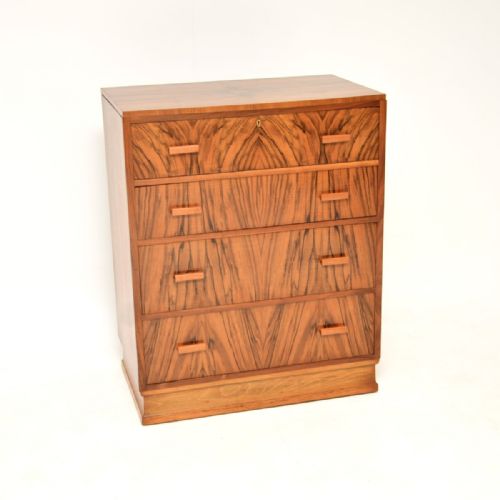


Art Deco Wooden Chest
An art deco wooden chest brings geometric lines and rich grain to a room, offering practical storage with distinct period character.
Art Deco Wooden Chest
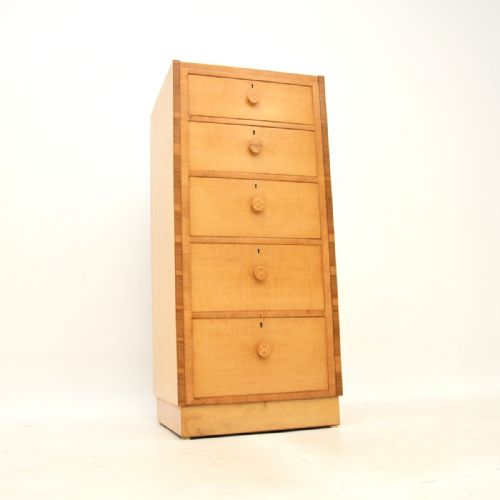
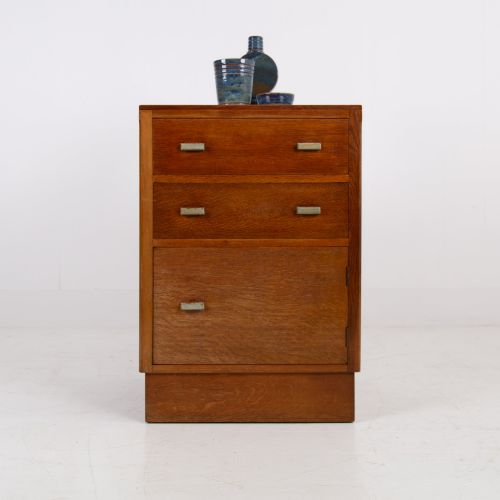
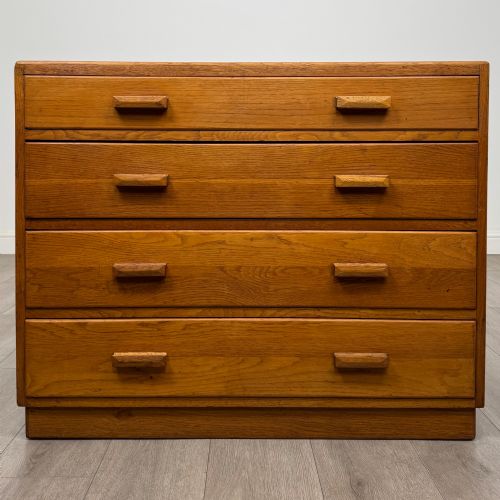
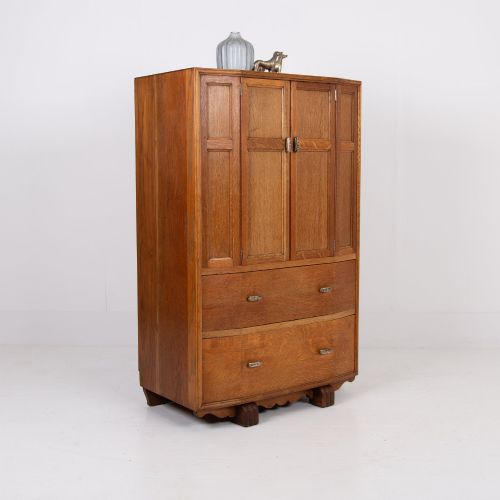
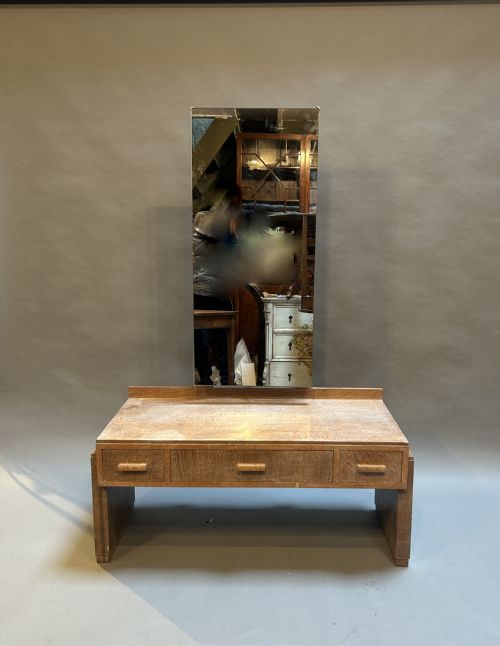
An art deco wooden chest takes the form of tallboys, bedside cabinets, commodes, and multi-drawer storage units. These pieces emerge primarily from the 1920s and 1930s, alongside Edwardian examples.
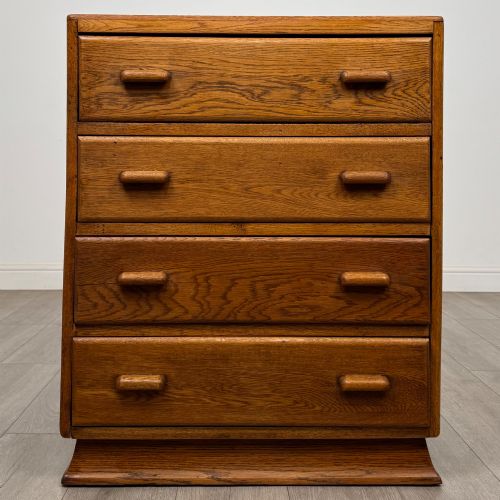
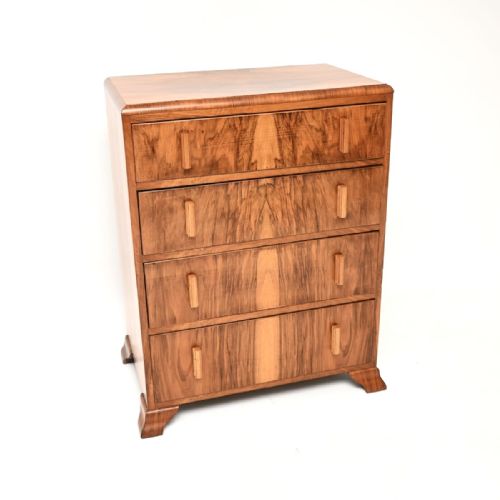
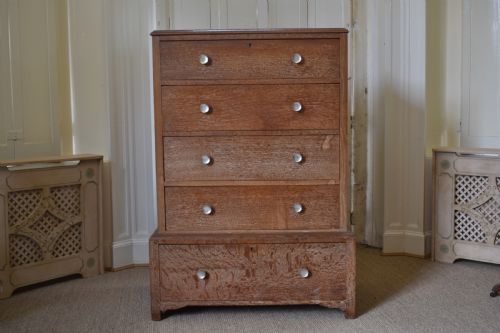
The most common version met on this page is the walnut or oak chest featuring clean horizontal and vertical lines characteristic of the period. Makers such as Heal's, Hille, and Gomme shape the output seen here.
How they were made
Cabinet makers utilise solid timber alongside elaborate veneer work to build these storage pieces. Oak and walnut form the structural and decorative core, often highlighted with figured grains.
Detailing involves contrasting woods, metal fittings, and occasional Bakelite touches. Inlaid sunray motifs and ebonised finishes complete the surface treatments recorded across the pieces.
A steamer trunk listed among the chests suggests someone packed for an ocean liner voyage back in the day.
What varies in quality
The sophistication of the veneer matching determines the visual impact of walnut and oak surfaces. Master workshops apply figured grains deliberately across drawer fronts to create balanced geometric patterns.
Construction methods and hardware integration separate standard production from notable maker output. Original metal handles, brass details, and integrated mechanisms reflect the standing of the original workshop.
Hille·Gomme·Heal's·Betty Joel·Hartman Luggage Co.
The Art Deco Wooden Chest Glossary
- Tallboy
- A tall chest of drawers, often combining a cupboard section above lower drawers. This form maximises vertical storage space in compact rooms.
- Veneer
- A thin layer of choice wood glued to a base timber to provide a decorative surface. Figured walnut veneer creates the striking grain patterns seen on period fronts.
- Commode
- A low chest of drawers or cabinet with doors. French examples often feature darker ebonised finishes.
- Bakelite
- An early synthetic plastic utilised for handles and decorative details. Its dark, durable finish suits the modernist aesthetic.
Art Deco Wooden Chest: Frequently Asked Questions
What woods were used for an art deco wooden chest?
Makers predominantly worked with oak and walnut, frequently applying figured walnut veneer to achieve striking grain patterns across the front drawers. Limed oak and ebonised finishes also appear.
Secondary timbers provide internal structure while the primary decorative surfaces display the distinctive tones and figures characteristic of the interwar period.
How do I identify a 1930s chest?
Look for geometric forms, clean lines, and symmetrical veneer arrangements that depart from heavy Victorian styling. Stepped profiles and minimal ornamentation typically signal this era.
Drawer configurations often include tallboy formats and bedside pairs that reflect modern spatial planning of the 1920s and 1930s.
Where should I place a tallboy in my home?
A tallboy offers substantial vertical storage while occupying a modest footprint on the floor. This makes it suitable for bedrooms or dressing areas requiring storage without extra breadth.
Keep the piece away from direct heat sources to protect the wood and veneer from drying out or splitting over time.
Are bedside cabinets sold as pairs?
Certain listings offer matching pairs of bedside cabinets designed to flank a bed symmetrically. These smaller storage units mirror the design language of the larger chests.
Checking the dimensions ensures the height aligns correctly with contemporary mattress levels while maintaining the intended aesthetic balance.