





Art Deco Wood Sideboard
An art deco wood sideboard brings bold geometric presence and rich figured grain to a room.
Art Deco Wood Sideboard
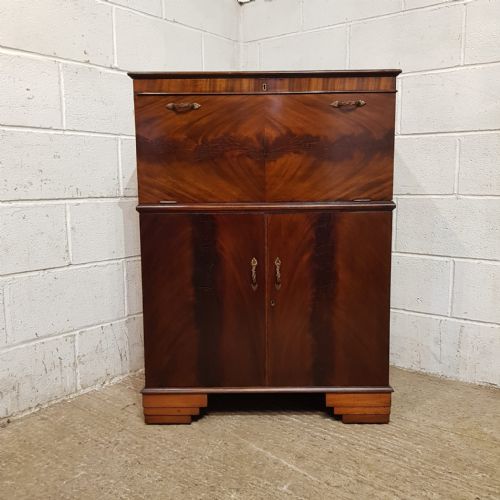
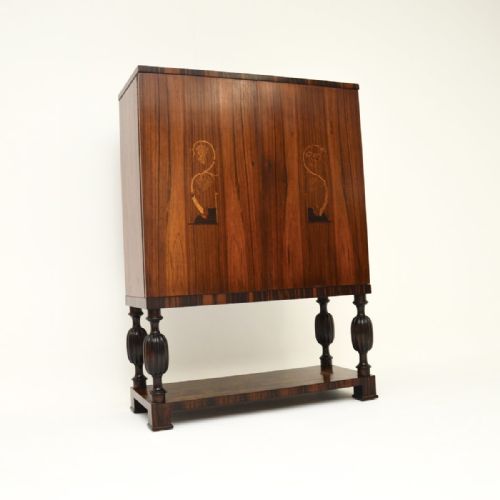
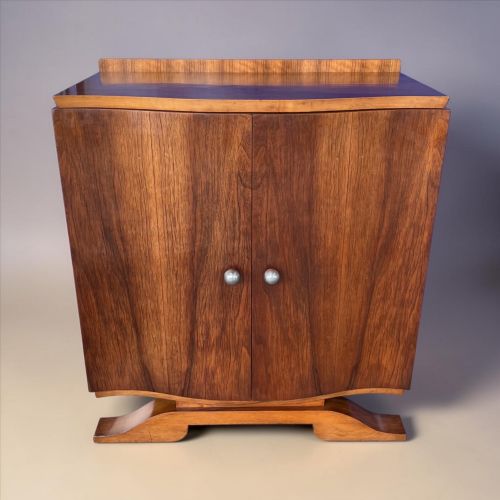
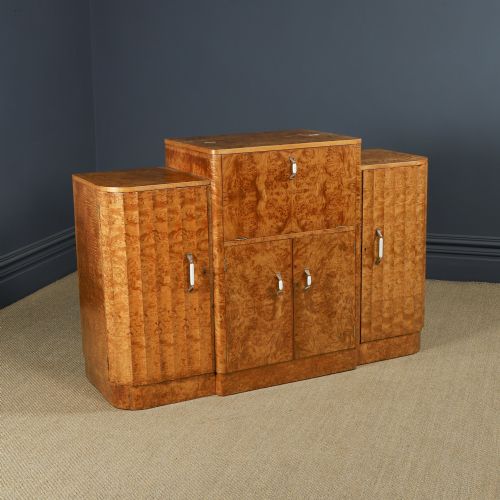
An art deco wood sideboard is a substantial storage piece defined by the distinct lines and luxurious veneers of the early twentieth century. These low, long cabinets serve dining rooms and living spaces alike, providing deep cupboards and drawers for tableware or drinks.
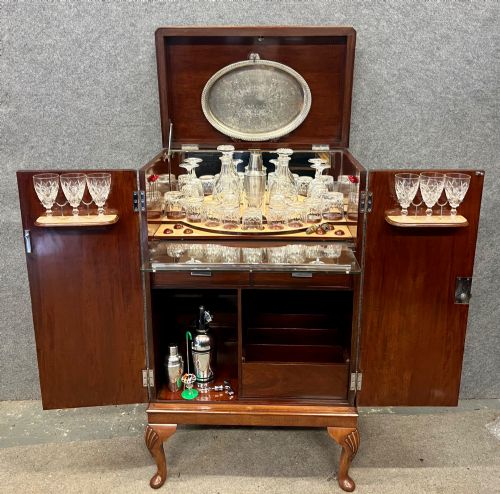
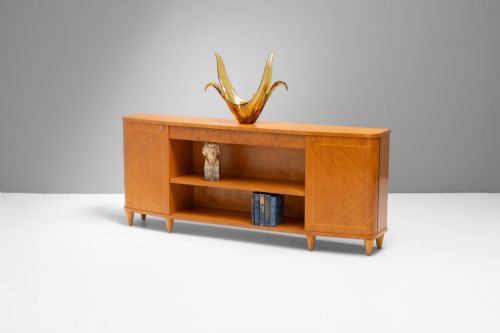
The versions most commonly met on this page date from the nineteen-thirties, though examples stretch from nineteen-ten through the nineteen-forties. Alongside traditional sideboards, the search captures related forms like cocktail cabinets, desks, and low bookcases sharing the same stylistic vocabulary.
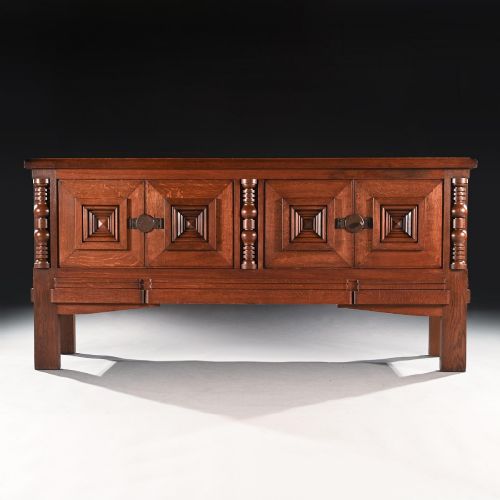
Origins span across England, France, Sweden, and Italy, reflecting distinct national interpretations of the movement. French pieces often lean towards dramatic exotic veneers, while Swedish examples favour lighter timbers and restrained grace.
How they were made
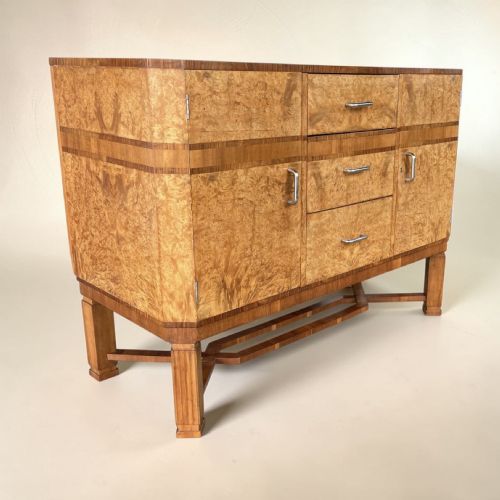
Cabinet makers utilised a foundation of solid oak or mahogany, surfacing the carcasses with decorative wood veneers selected for striking grain patterns. Burr walnut, burr elm, macassar, calamander, and birch provide the characteristic figured patterns across the drawer fronts and door panels.
Metal mounts and handles in brass and chrome accent the timber construction, offering sharp geometric contrasts to the warm wood tones. Some pieces incorporate inlaid details or carved elements to break up large expanses of polished surface.
Art Deco Wood Sideboard Retail Price Guide 2026
Typical asking prices for art deco wood sideboard among the pieces listed under this phrase on Sellingantiques today, from the lower quarter to the upper quarter. They describe what is for sale here now, not the wider market.
Listings span four distinct decades, stretching from nineteen-ten to nineteen-forty.
What varies in quality
The distinction between ordinary and exceptional pieces lies primarily in the choice and book-matching of the timber veneers. Master workshops selected figured grains that mirror across central axes, creating symmetrical patterns that elevate the visual impact of the piece.
Construction methods and hardware integration separate standard production from high-end commissions. Heavier carcasses, dovetail jointing in the drawers, and original, substantial brass or chrome fittings indicate superior craftsmanship.
Harry & Lou Epstein·Étienne Kohlmann·Bowman Brothers·Otto Schulz
The Art Deco Wood Sideboard Glossary
- Burr walnut
- A figured wood taken from the deformed growth or burl of a walnut tree, prized for its swirling grain patterns. It provides a highly decorative surface on many high-end cabinets.
- Macassar
- A dense, dark exotic timber featuring prominent brown and black streaks, originating from the East Indies. It was favoured by French designers for dramatic effect.
- Swedish Grace
- A style bridging neoclassical restraint and early modernist functionalism that flourished in Sweden during the nineteen-twenties and nineteen-thirties. It is characterised by clean lines and lighter woods.
- Commode
- A low piece of furniture with drawers or cupboards, originating in France. Early examples provide precursors to the proportions found in later sideboards.
Art Deco Wood Sideboard: Frequently Asked Questions
How do I use a cocktail cabinet?
These fitted cabinets were designed for entertaining, often featuring pull-out mirrored shelves for mixing drinks and specialised storage for glassware.
Today, they function brilliantly as focal points in living rooms or dining areas, keeping barware neatly concealed behind decorative wooden doors.
What is the difference between a sideboard and a commode?
Sideboards are typically longer, lower pieces engineered for dining rooms to hold serving dishes and cutlery.
Commodes generally offer shorter, chest-like proportions with multiple drawers, suited to hallways or bedrooms.
How do I care for wood veneers?
Polished veneers require gentle dusting with a soft, dry cloth and protection from direct sunlight to prevent fading.
Applying a quality beeswax periodically helps nourish the timber and maintain the deep lustre of the original polish.
How can I date an art deco cabinet?
Dating relies on combining the timber choices, hardware materials, and structural characteristics recorded across the period from nineteen-ten to nineteen-forty.
French pieces from the earlier decades often show heavier proportions, while nineteen-thirties items embrace streamlined geometric layouts.