




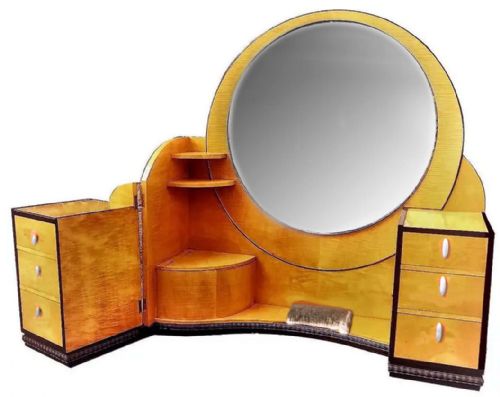


Art Deco Wood Mirror
An art deco wood mirror brings geometric punch and warmth to a room, offering clean lines through rich veneers.
Art Deco Wood Mirror
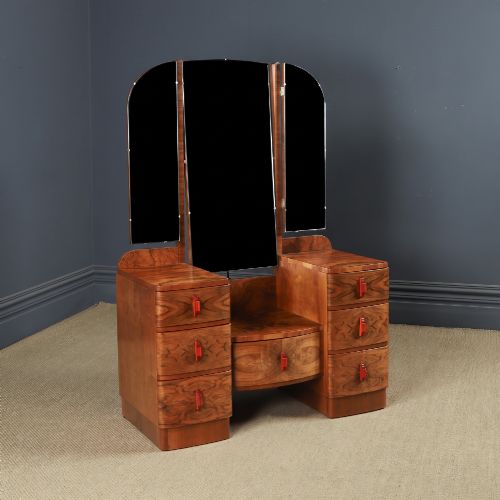
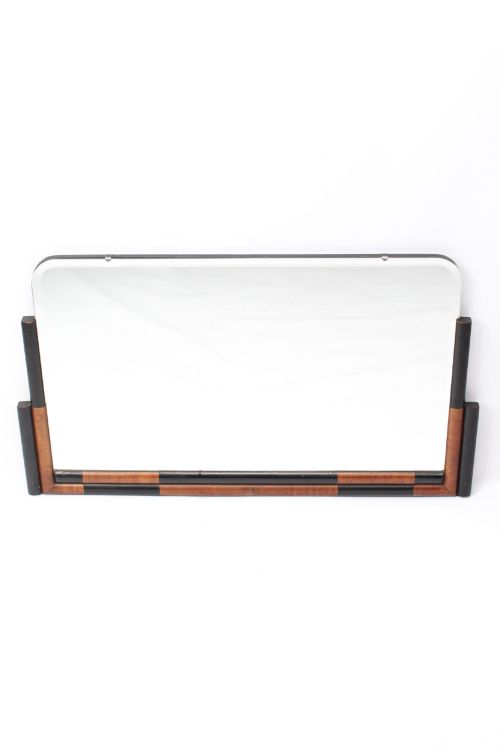
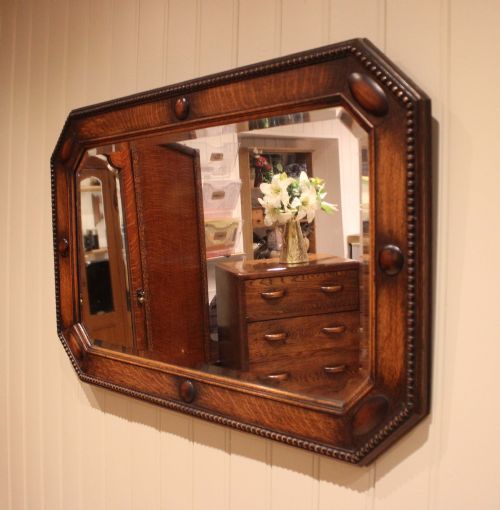
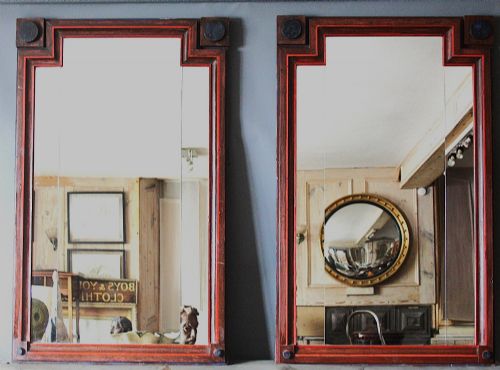
An art deco wood mirror brings together the architectural geometry of the interwar decades and the warmth of figured timber frames. When buyers search for an art deco wood mirror, they typically encounter wall-hanging plates, overmantel designs, and cheval dressing mirrors spanning the 1920s and 1930s.
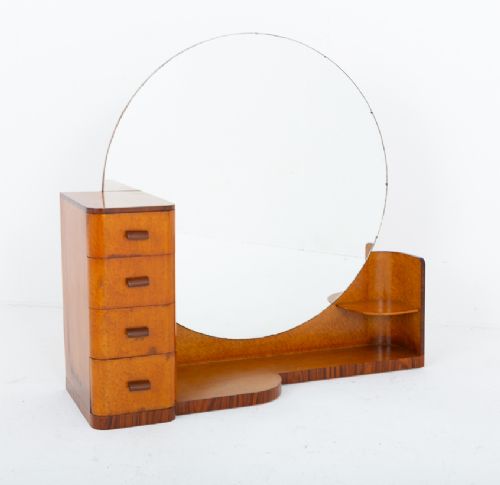
The material vocabulary ranges from figured burr walnut and birds eye maple to solid oak and ebonised highlights. Pieces appear in distinct regional expressions, moving from British walnut and oak output to Swedish Grace pieces and French mid-century framing.
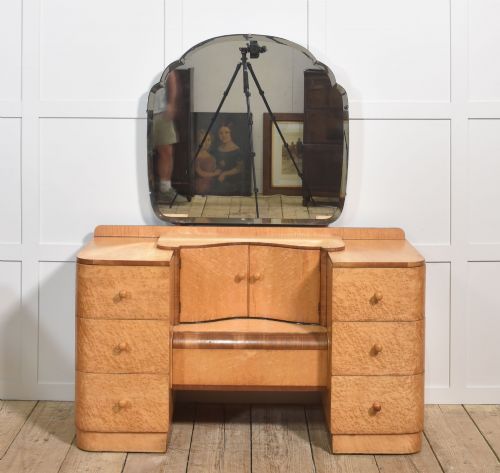
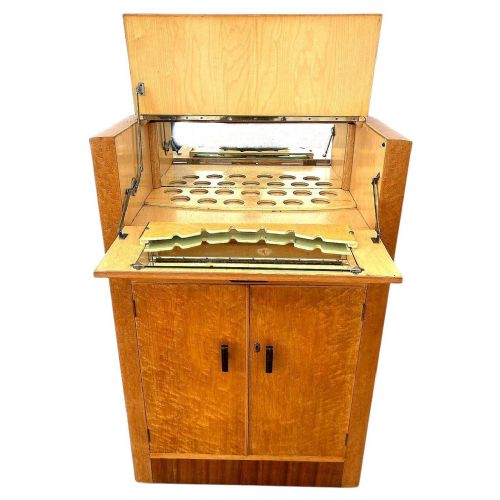
Beyond standalone wall plates, similar wooden frames anchor functional forms such as dressing tables, cocktail cabinets, and console tables. These pieces provide practical reflective surfaces while introducing period character through stepped crests and contrasting veneers.
Materials and construction
Cabinetmakers built these frames using dense hardwoods like oak and walnut as structural carcases, frequently applying sliced decorative veneers such as burr walnut and birds eye maple across the surface. This technique allowed makers to showcase complex grain patterns and symmetrical figuring across broad panels and aprons.
Surfaces often incorporated contrasting ebonised timber details, metal mounts, and silver-gilt accents to accentuate the geometric planes characteristic of the style. Mirror glass was bevelled or cut to follow stepped and arched framing contours, secured directly into rebated wooden housings.
Art Deco Wood Mirror Retail Price Guide 2026
Typical asking prices for art deco wood mirror among the pieces listed under this phrase on Sellingantiques today, from the lower quarter to the upper quarter. They describe what is for sale here now, not the wider market.
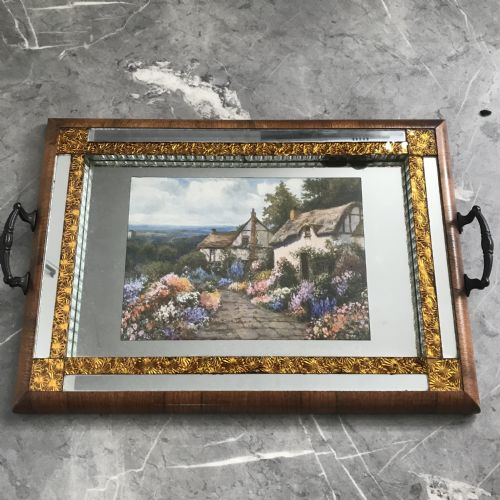
Listings feature oak, walnut, birds eye maple, and bamboo materials across dressing tables, cocktail cabinets, and wall mirrors dating from the 19th century through the 1940s.
Distinctions in quality
Quality rests upon the selection and matching of wood veneers, where superior examples display book-matched grain symmetry across the entire frame face. Lesser pieces rely on plain, unfigured timbers with simpler joints and minimal attention to veneer layout.
The integration of secondary materials also separates standard production from workshop execution. Top-tier pieces incorporate hand-finished silver-gilt, precise marquetry panels, or substantial cast brass hardware, whereas lower grades use simpler mouldings and basic fixings.
Maurice Adams·Harry and Lou Epstein·A.J Rowley·Betty Joel
The Art Deco Wood Mirror Glossary
- Burr walnut
- A figured wood harvested from the wart-like growths on walnut trees, prized for its swirling, organic grain patterns. It was frequently used for veneering prominent surfaces on dressing tables and cocktail cabinets.
- Birds eye maple
- A maple wood variation featuring small, circular markings resembling tiny eyes in the grain. Makers utilised this timber to create pale, highly decorative surfaces on 1930s furniture.
- Overmantel mirror
- A large horizontal looking glass designed to hang specifically above a fireplace mantelpiece. These examples often span considerable lengths to balance the proportions of the hearth below.
- Cheval mirror
- A freestanding full-length dressing mirror suspended in a swivelling frame between two upright posts. They allowed users to adjust the viewing angle for complete attire checks.
- Marquetry
- The art of applying thin slices of wood veneers to a structural panel to form pictorial or geometric patterns. Artists like A.J Rowley employed this technique to create picture-like wall mirrors.
Art Deco Wood Mirror: Frequently Asked Questions
How do I date an art deco wood mirror?
Dating relies on stylistic markers such as stepped crests, sunburst motifs, and veneer choices typical of the 1920s and 1930s. Examining the backing boards, screw types, and mirror silvering provides further chronological clues.
Earlier 1910s examples often retain heavy Edwardian proportions, whereas 1930s pieces lean towards streamlined, modernist geometry.
What is birds eye maple?
Birds eye maple is a decorative hardwood featuring tiny, swirling knots that resemble small eyes scattered across the pale timber. Cabinetmakers valued it for adding subtle texture to otherwise minimalist cabinetwork.
It appears frequently on dressing tables and cocktail cabinets from the 1930s.
How do I clean antique mirror glass?
Use a soft microfiber cloth and a mild, ammonia-free glass cleaner applied to the cloth rather than directly onto the glass. This prevents moisture from seeping behind the bevelled edges and damaging the silver backing.
Take care around older wooden frames to avoid getting moisture onto the polished veneer.