


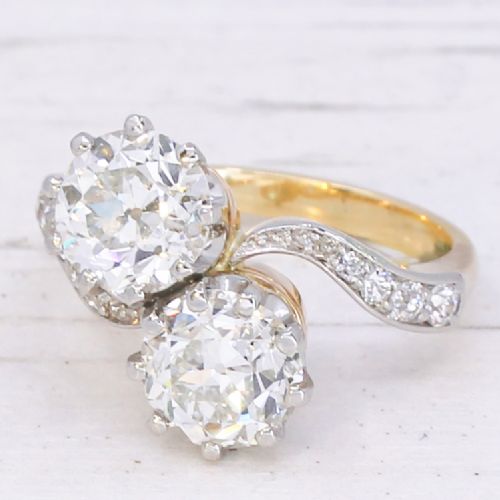


Art Deco Toi Et Moi
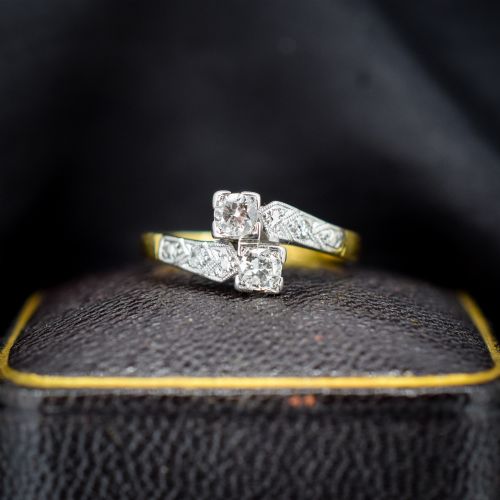
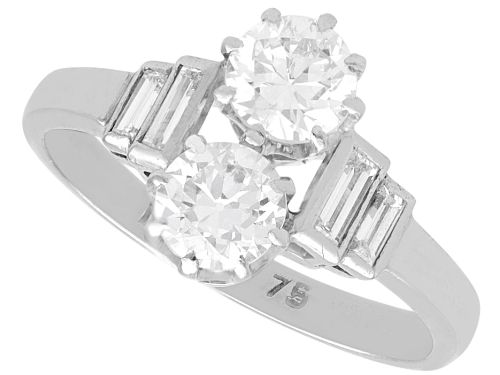
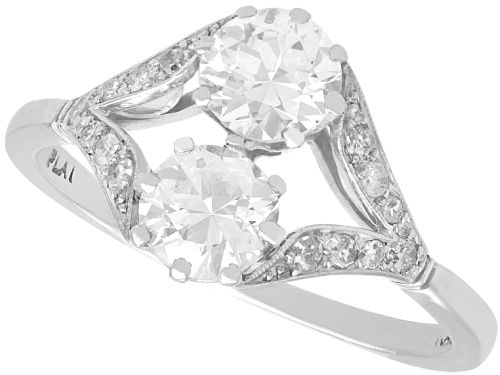
Art deco toi et moi rings bring together two principal stones in a twin setting that symbolises union, capturing the spirit of twentieth-century design.
Art Deco Toi Et Moi
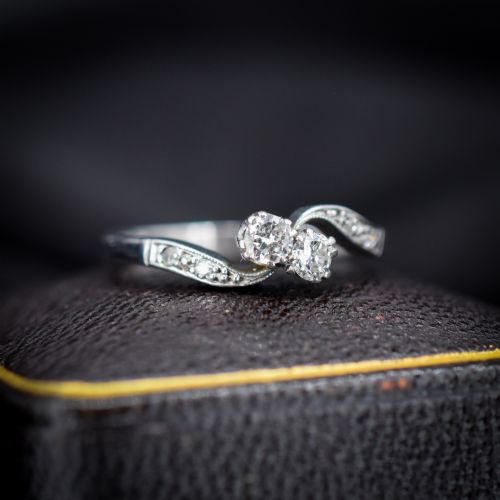
An art deco toi et moi ring centres on two distinct gems set closely together, most frequently taking the form of a twist or crossover silhouette. These pieces date principally from the nineteen-twenties and nineteen-thirties, with occasional examples spanning from the nineteen-tens to the nineteen-forties.
The evidence shows rings fashioned predominantly as two-stone twists or bypass mounts, uniting diamonds with coloured gems such as sapphires, rubies or emeralds. Platinum and eighteen-carat gold, including white and yellow varieties, form the structural foundation of these designs.
Materials and construction
Goldsmiths utilise platinum and various grades of gold, including eighteen-carat white gold and fourteen-carat yellow gold, to mount the principal stones securely. Metalwork often relies on meticulous platinum setting over gold bases to maximise the brilliance of the diamonds.
Cut types vary across the eras, encompassing old European cuts, transitional cuts, princess cuts and oval cuts. These stones are arranged in bypass, twist or crossover configurations that require precise tension and alignment.
Art Deco Toi Et Moi Retail Price Guide 2026
Typical asking prices for art deco toi et moi among the pieces listed under this phrase on Sellingantiques today, from the lower quarter to the upper quarter. They describe what is for sale here now, not the wider market.
Every twist ring tells a silent story of two stones locked in an eternal embrace.
Quality variations in the range
The distinction between tiers rests upon the scale and weight of the principal stones, alongside the purity of the precious metals utilised in the mount. Larger carat weights and rarer coloured gems, such as Burmese rubies or natural sapphires, elevate the standing of a piece.
Execution of the twist or crossover mount defines the standard of craftsmanship, where smooth lines and secure integration of both stones reveal the skill of the original bench worker.
The Art Deco Toi Et Moi Glossary
- Toi et Moi
- You and me. This French term describes a ring featuring two main gemstones set side by side or in a crossover design.
- Bypass ring
- A ring style where the shank wraps around the finger and the two ends pass each other without meeting directly.
- Old European cut
- An early form of brilliant cut diamond characterised by a high crown, small table and open culet.
- Transitional cut
- A diamond cut bridging old cuts and modern brilliants, typical of the period from the nineteen-twenties to the nineteen-forties.
- Platinum
- A dense, durable white metal utilised in fine jewellery manufacture for its strength in secure stone settings.
Art Deco Toi Et Moi: Frequently Asked Questions
What is a toi et moi ring?
A toi et moi ring is a two-stone design representing two souls intertwined. The style places two principal gems in close proximity.
Most examples seen here feature diamonds paired with diamonds or coloured stones in a twist configuration.
How do I date these rings?
Dating relies on stylistic markers, metal choices and stone cut types. Pieces from the nineteen-twenties often display platinum settings and old cuts.
Later examples from the nineteen-forties incorporate different gold alloys and transitional cut diamonds.
What metals are used?
Jewellers used platinum, eighteen-carat gold, eighteen-carat white gold and fourteen-carat yellow gold. Platinum was frequently chosen for its strength.
Combination mounts pairing gold shanks with platinum heads are also common.
Are coloured stones common?
Coloured gems appear alongside diamonds in numerous configurations. Sapphires, emeralds and Burmese rubies provide contrast.
These coloured stones are paired with diamonds to create balanced dual-stone compositions.