





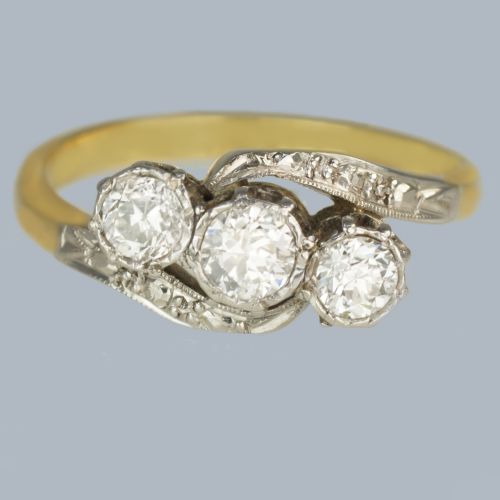

Vintage Twist Ring
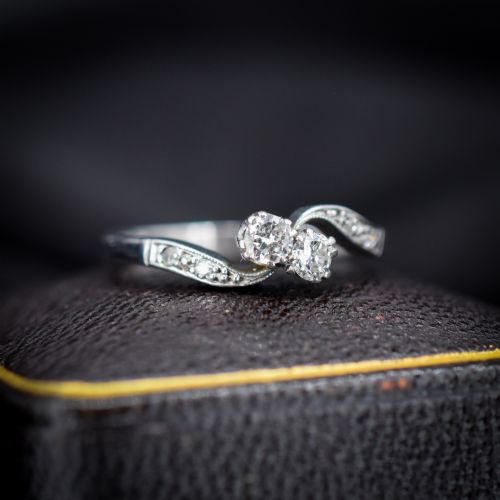
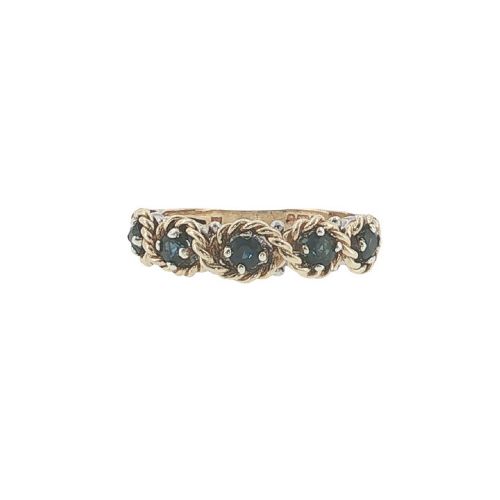
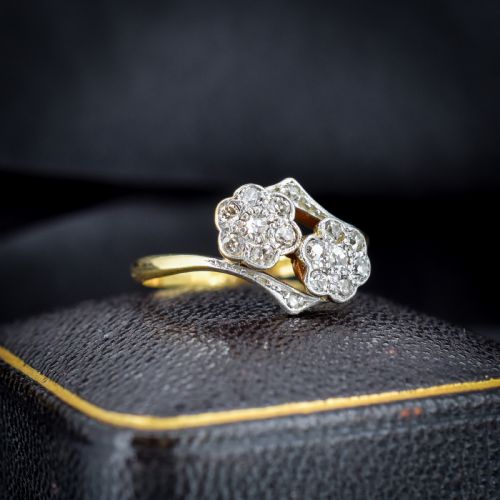
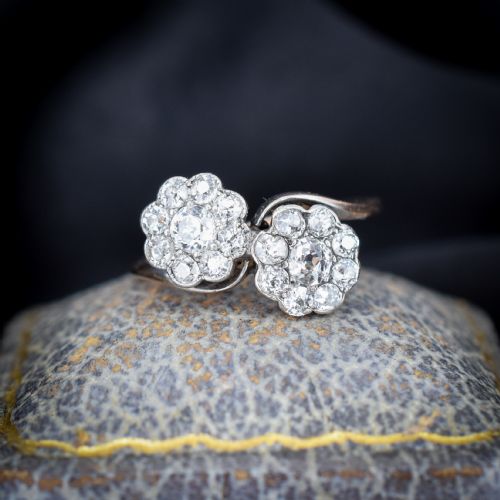
A vintage twist ring brings together sweeping bands of gold and platinum with diamonds or sapphires, offering a dynamic silhouette born from historical design.
Vintage Twist Ring
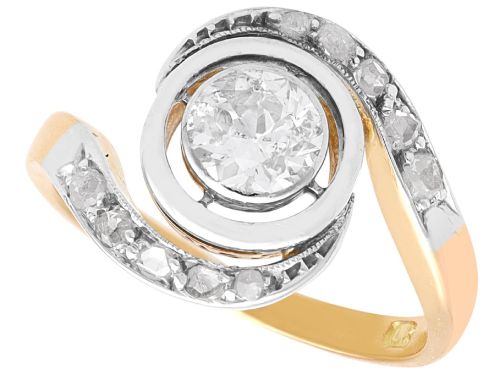
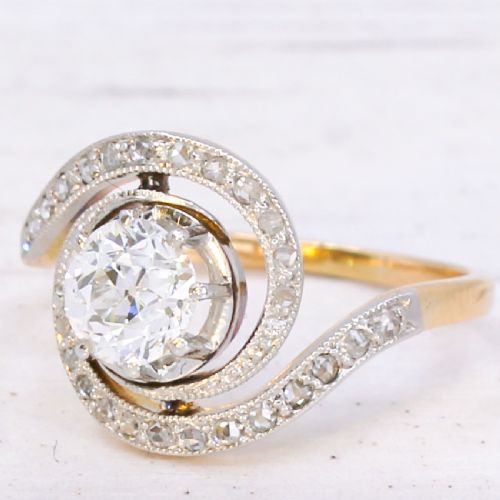
A vintage twist ring follows a flowing design where the band curves or crosses over itself, creating an eye-catching movement across the finger. These pieces span from the late nineteenth century through the Edwardian and Art Deco eras up to mid-century modern designs.
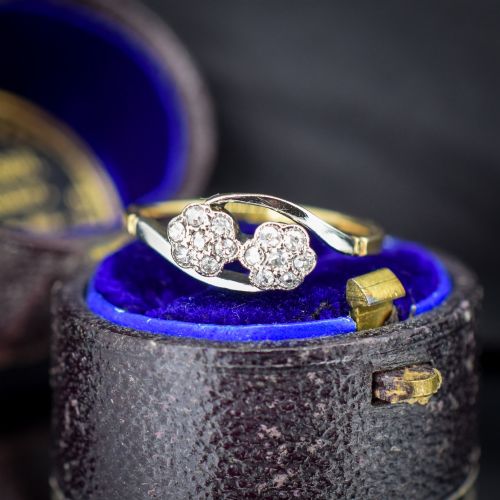
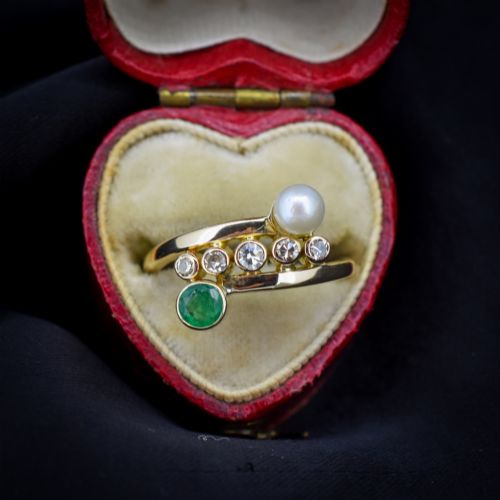
Most examples encountered on this page rely on precious metals paired with diamonds, sapphires, or pearls. The selection includes two-stone arrangements and crossover bands that sit comfortably alongside related forms such as bypass rings.
Makers utilised yellow gold, white gold, and platinum to support old cut diamonds and coloured gemstones. Alongside traditional finger rings, the evidence even includes a Victorian iron door knocker sharing the same twisted motif.
How they were made
Goldsmiths worked with 18ct gold and platinum to construct the fluid shoulders and settings typical of a vintage twist ring. Platinum gained favour during the Edwardian and Art Deco periods for its strength in holding delicate stone arrangements securely.
Gemstones such as old cut diamonds and basaltic sapphires were hand-set into the entwined bands. The construction required precise metalwork to maintain the tension and symmetry of the crossover shape without losing structural integrity.
Vintage Twist Ring Retail Price Guide 2026
Typical asking prices for vintage twist ring among the pieces listed under this phrase on Sellingantiques today, from the lower quarter to the upper quarter. They describe what is for sale here now, not the wider market.
What varies in quality
The standard of a vintage twist ring depends on the weight and purity of the precious metal combined with the cut and clarity of the stones. Heavier platinum and 18ct gold settings provide greater durability for everyday wear.
Mastery of hand-forged curves and the precision of the stone settings distinguish finer examples from standard production. Pieces featuring certified old cut diamonds or substantial sapphires command attention through superior materials and skilled execution.
The Vintage Twist Ring Glossary
- Twist ring
- A ring featuring a band that curves or crosses over itself in a continuous movement. This design creates a dynamic silhouette on the hand.
- Toi et Moi
- French for you and me, denoting a two-stone ring representing two souls entwined. This style frequently appears in twist and crossover configurations.
- Bypass ring
- A ring style where the ends of the band pass each other rather than meeting in a traditional closed circle. It shares a similar flowing aesthetic with twist rings.
- Old cut
- A diamond cutting style prevalent in antique jewellery featuring a smaller table, higher crown, and open culet. These stones catch candlelight differently than modern brilliant cuts.
- Tourbillon
- A term derived from French meaning whirlwind, applied to jewellery with a swirling or vortex-like design. It describes dynamic movement within the metalwork.
Vintage Twist Ring: Frequently Asked Questions
How do I wear a twist ring daily?
Pair your vintage twist ring with plain stacking bands that sit flush against the curving shoulders. Consider the setting height when choosing daily wear jewellery.
Store the ring in a padded box overnight to prevent the stones from scratching neighbouring pieces in your collection.
What periods do these rings come from?
The pieces span from late Victorian and Edwardian workshops through Art Deco periods to mid-century modern creations. Each era brings distinct metal choices and stone cuts.
Victorian and Edwardian examples often feature yellow gold and delicate platinum settings, while Art Deco designs lean into geometric flow.
Are these rings suitable for engagements?
Many historical examples function wonderfully as unique engagement rings, particularly two-stone Toi et Moi designs and diamond-set crossover bands. Their symbolic intertwining shapes carry rich romantic history.
Ensure any antique ring chosen for daily engagement wear has been checked for secure stone settings by a professional.
How do I identify an Edwardian twist ring?
Edwardian pieces frequently combine yellow gold bands with platinum-topped settings to maximise the brilliance of old cut diamonds. Look for intricate filigree and delicate proportions.
Stylistic cues from this era emphasise light, airy metalwork rather than the heavier gold forms seen in earlier Victorian items.