





Art Deco Tan Chair
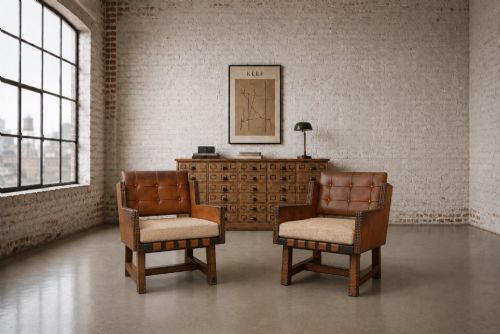
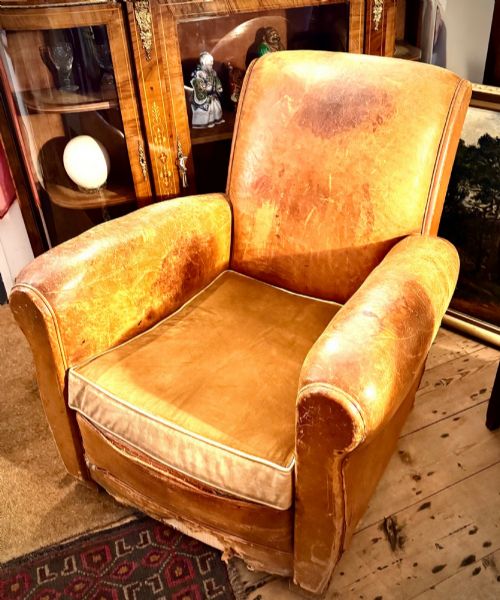
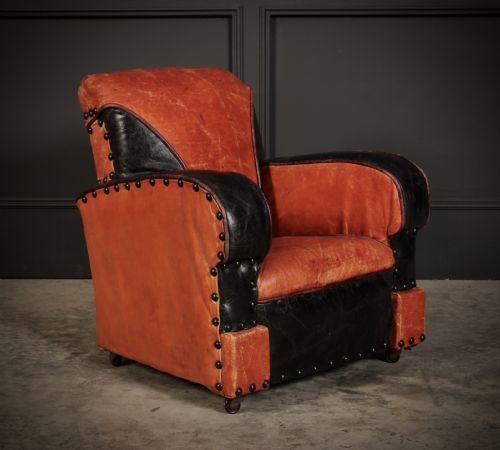
An art deco tan chair brings robust club seating and rich hide into a room with genuine period weight.
Art Deco Tan Chair
When you search for an art deco tan chair, you are looking at substantial seating built primarily during the 1920s and 1930s, though occasional Edwardian and 1910 precedents appear. These pieces are predominantly club armchairs, alongside bar stools, bridge chairs, and childs club chairs.
The most common forms on this page are French and English club armchairs upholstered in leather, cigar brown hide, or sheepskin leather. Walnut and oak frequently support these leather hides, delivering the heavy frames typical of the style.
Makers such as Foot and Sons are represented alongside broader stylistic pieces like French art deco armchairs and tank chairs. Buyers encounter everything from standard club chairs to reclining armchairs and matched pairs.
How they were made
Construction relies heavily on sturdy wooden frames of oak and walnut to support deep, heavy seating forms. Metal and brass elements occasionally accent the timber structures.
Upholstery centres on leather, sheepskin leather, and fabric, often featuring button-back detailing and hand-stitched hides. These natural materials were selected for durability and comfort during daily use.
Art Deco Tan Chair Retail Price Guide 2026
Typical asking prices for art deco tan chair among the pieces listed under this phrase on Sellingantiques today, from the lower quarter to the upper quarter. They describe what is for sale here now, not the wider market.
Listings span the 1910s, Edwardian period, 1920s, and 1930s, featuring oak, walnut, brass, leather, and sheepskin leather.
What varies in quality
The depth and grain of the leather or sheepskin dictate much of the visual character, with richer, full-grained hides holding greater appeal. Original upholstery methods and authentic period materials distinguish standard production from finer workshop output.
Frame timber selection also plays a part, as solid walnut and oak foundations provide superior structural integrity compared to secondary woods. The presence of identifiable maker attribution further elevates specific pieces above anonymous examples.
Foot and Sons
The Art Deco Tan Chair Glossary
- Art Deco
- A design style emerging in the early twentieth century characterised by sleek geometric lines and streamlined forms. It dominated furniture design through the 1920s and 1930s.
- Club Armchair
- A deep, comfortable armchair with upholstered arms designed for lounging. These chairs typically feature substantial leather coverings and sprung seats.
- Sheepskin Leather
- A soft, pliable hide derived from sheep, often utilised for upholstery to give a tactile, textured finish. It appears frequently on club chairs from this era.
- Bridge Chair
- A compact, lightweight armchair originally intended for card games or occasional seating. They feature smaller footprints than heavy club armchairs.
- Button-Back
- An upholstery technique where buttons are pulled deep into the padding to secure the stuffing and create a diamond pattern. This method adds traditional texture to leather hides.
Art Deco Tan Chair: Frequently Asked Questions
What is an art deco tan chair?
An art deco tan chair is a sturdy upholstered seat, usually a club armchair, produced during the early decades of the twentieth century. These pieces combine heavy wooden frames with warm leather hides.
They serve as focal points in living spaces, offering deep seating and distinct period character. Most examples date from the 1920s and 1930s.
How do I identify a 1930s club chair?
Look for low-slung, rounded profiles with wide arms and substantial leather upholstery. French and English variants often feature thick cushioning and smooth wooden bases.
Details such as button-back tufting and cigar brown hides help distinguish pieces from this specific interwar period. Construction methods generally involve robust oak or walnut frames.
Where were these chairs used?
These armchairs were primarily designed for domestic comfort in libraries, studies, and drawing rooms. Bar stools and bridge chairs served specific social and entertaining functions.
Their durable leather hides made them suitable for everyday lounging and heavy use in private homes. Reclining variants provided adjustable comfort for reading.
How do I care for vintage leather?
Maintain vintage leather by keeping it away from direct sunlight and excessive heat sources. Regular conditioning prevents the hide from drying out and cracking.
Avoid harsh chemical cleaners and instead use appropriate specialist leather balms. Gentle dusting preserves the natural patina built up over decades.