
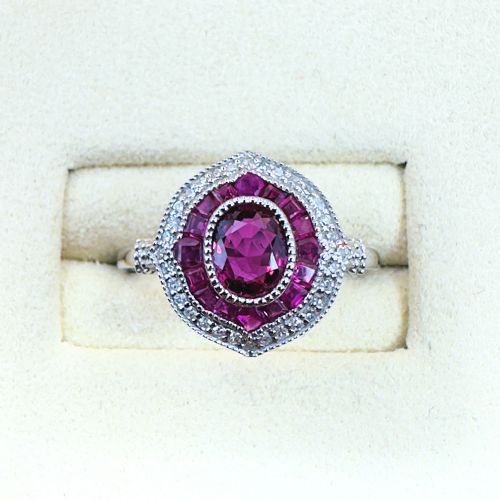
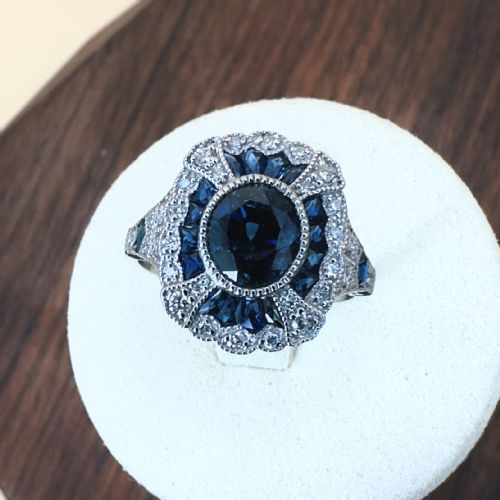


Art Deco Style Cluster Ring
An art deco style cluster ring brings geometric precision and bold gemstone contrast to the hand.
Art Deco Style Cluster Ring
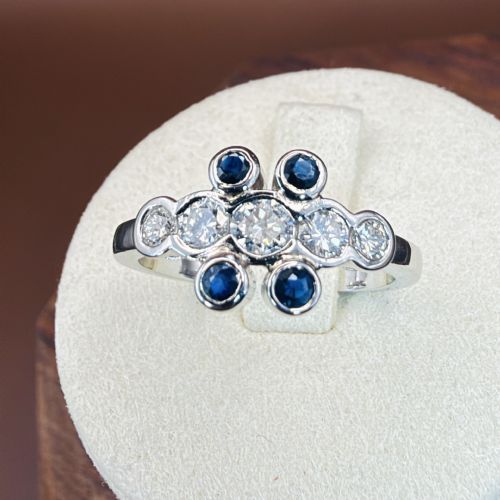
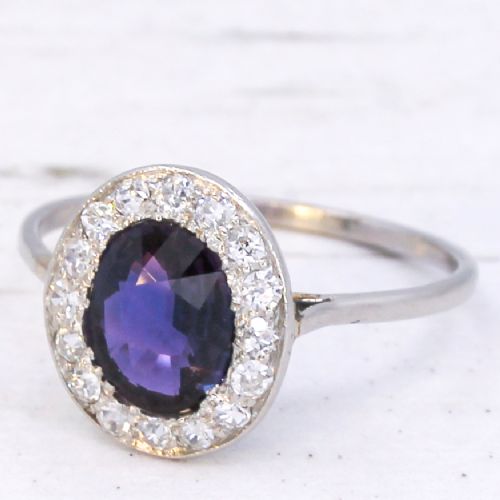
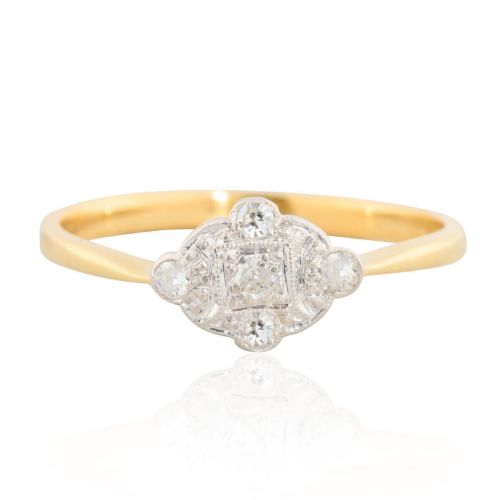
An art deco style cluster ring centres on a prominent gemstone surrounded by a geometric arrangement of smaller stones. Buyers searching for an art deco style cluster ring encounter pieces originating from the 1920s and 1930s, alongside later revivals from the mid-twentieth century and beyond.
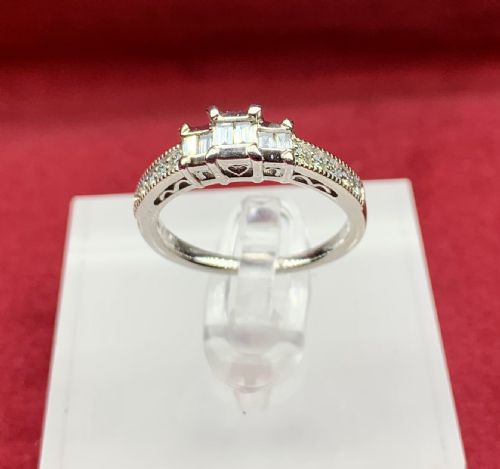
The selections on this page span cocktail rings, dress rings, and engagement rings. Platinum and white gold dominate the metalwork, framing sapphires, emeralds, rubies, aquamarines, and diamonds in tightly arranged geometric clusters.
How they were made
Goldsmiths utilised platinum and eighteen-carat white gold to create strong, thin settings that could hold multiple stones without heavy metal borders. This metallic framework allowed stones to be set closely together in stepped, plaque, and daisy cluster formations.
Gemstones were cut into old cuts, baguettes, and oval facets to fit the strict linear patterns demanded by the style. Claw and bezel settings secured diamonds around central coloured stones such as sapphires, emeralds, and zircons.
Listings feature platinum, 18ct white gold, and 14ct white gold housings supporting diamonds alongside sapphires, emeralds, and aquamarines.
What varies in quality
The distinction between tiers rests on the calibre of the central gemstone and the precision of the geometric layout. Natural, untreated stones and heavier carat weights command attention for their depth of colour and clarity.
Handmade metalwork featuring crisp millegrain edges and well-matched surrounding diamonds represents higher refinement than simpler cast iterations from later revival periods.
The Art Deco Style Cluster Ring Glossary
- Cluster ring
- A ring design featuring a central stone encircled by a group of smaller stones. This arrangement maximises visual impact and perceived size.
- Plaque ring
- A ring characterised by a flat, wide top surface covered in gemstones. These settings often display intricate pierced metalwork.
- Old cut
- A diamond cutting style typical of earlier periods featuring a smaller table, higher crown, and open culet. These stones catch candlelight distinctively.
- Millegrain
- A decorative technique involving a line of tiny beaded metal dots along the edge of a setting. It softens the metallic boundary and adds texture.
- Baguette
- A rectangular step-cut gemstone shape with straight parallel sides. This cut serves to create sharp linear borders in geometric designs.
Art Deco Style Cluster Ring: Frequently Asked Questions
What is an art deco cluster ring?
An art deco cluster ring is a finger ornament featuring a central gemstone surrounded by geometric patterns of smaller stones. These designs rely on symmetrical arrangements and contrasting colours.
The aesthetic draws from the 1920s and 1930s movements, prioritising straight lines, stepped motifs, and stylized floral or abstract shapes.
How do I identify a true period piece?
Identifying a period piece involves examining the metalwork techniques, the style of stone cutting, and overall wear appropriate to the era. Platinum and eighteen-carat white gold were standard for original 1920s and 1930s examples.
Old cut diamonds and natural untreated coloured stones often indicate genuine early manufacture, whereas later mid-century revivals utilise different casting methods and modern cut stones.
Are these rings suitable for daily wear?
These rings can be worn daily provided they receive proper care and regular inspections by a jeweller. Platinum and white gold provide durable structures for holding cluster settings securely.
Owners should remove such jewellery during heavy manual tasks to protect fragile gemstones like emeralds and delicate millegrain edges from impact.
What gemstones appear in these rings?
Diamonds form the primary framing element in almost all of these cluster designs, paired with central coloured stones. Sapphires, emeralds, and rubies appear frequently alongside aquamarines, pink sapphires, and zircons.
Stone choices dictate the overall colour palette, ranging from deep blues and greens to soft pinks and sparkling white.