


Art Deco Standing Shelves
Art deco standing shelves offer functional display and storage through striking geometric forms that anchor a room.
Art Deco Standing Shelves
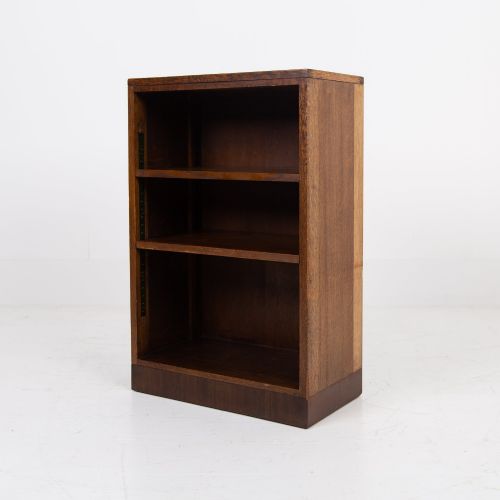
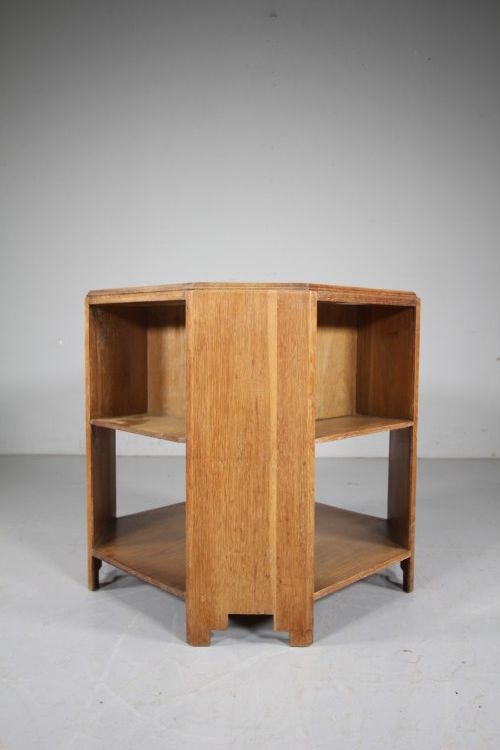
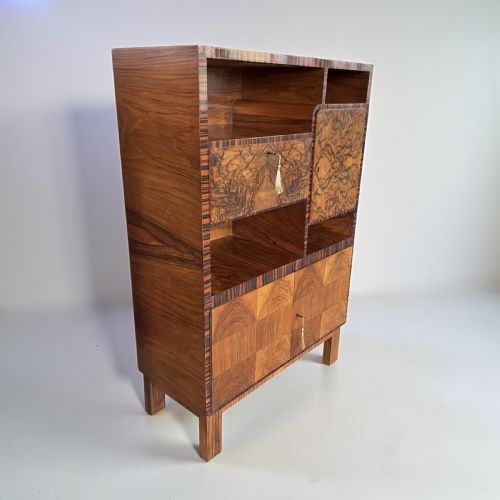
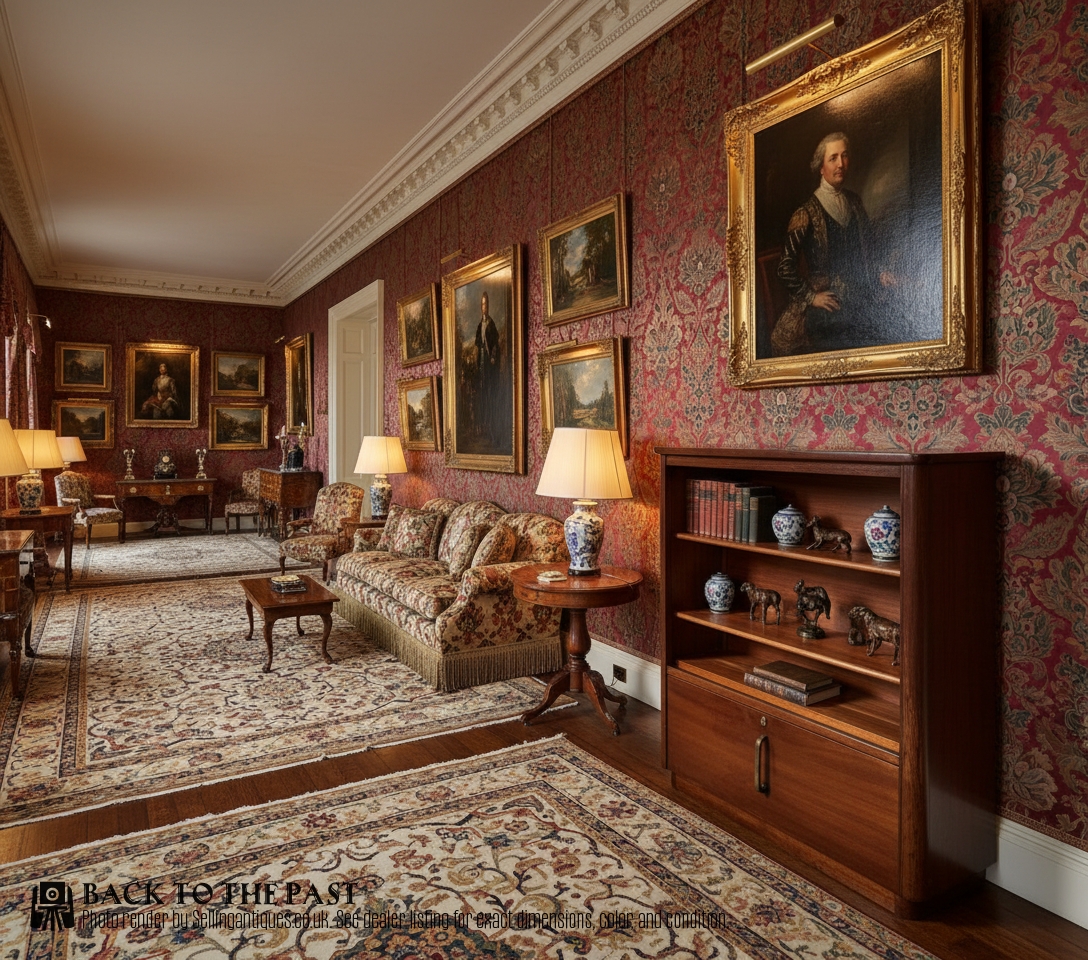
Art deco standing shelves combine architectural presence with practical shelving, drawing heavily from the design language of the 1920s and 1930s. These pieces include open bookcases, side tables with integrated shelves, and cabinet combinations designed to maximise vertical space.
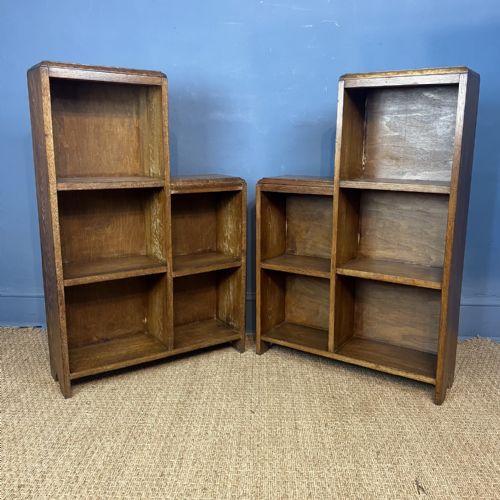
Most examples found here date from the 1930s or the 1920s, though occasional Edwardian waterfall variants also appear. They serve as both utility furniture and display units for books, ceramics, and objects.
The materials span traditional hardwoods like oak, walnut, and mahogany alongside industrial touches of brass, iron, and glass. Makers such as Heals, Betty Joel, and Liberty's of London represent the calibre of craftsmanship associated with these forms.
How they were made
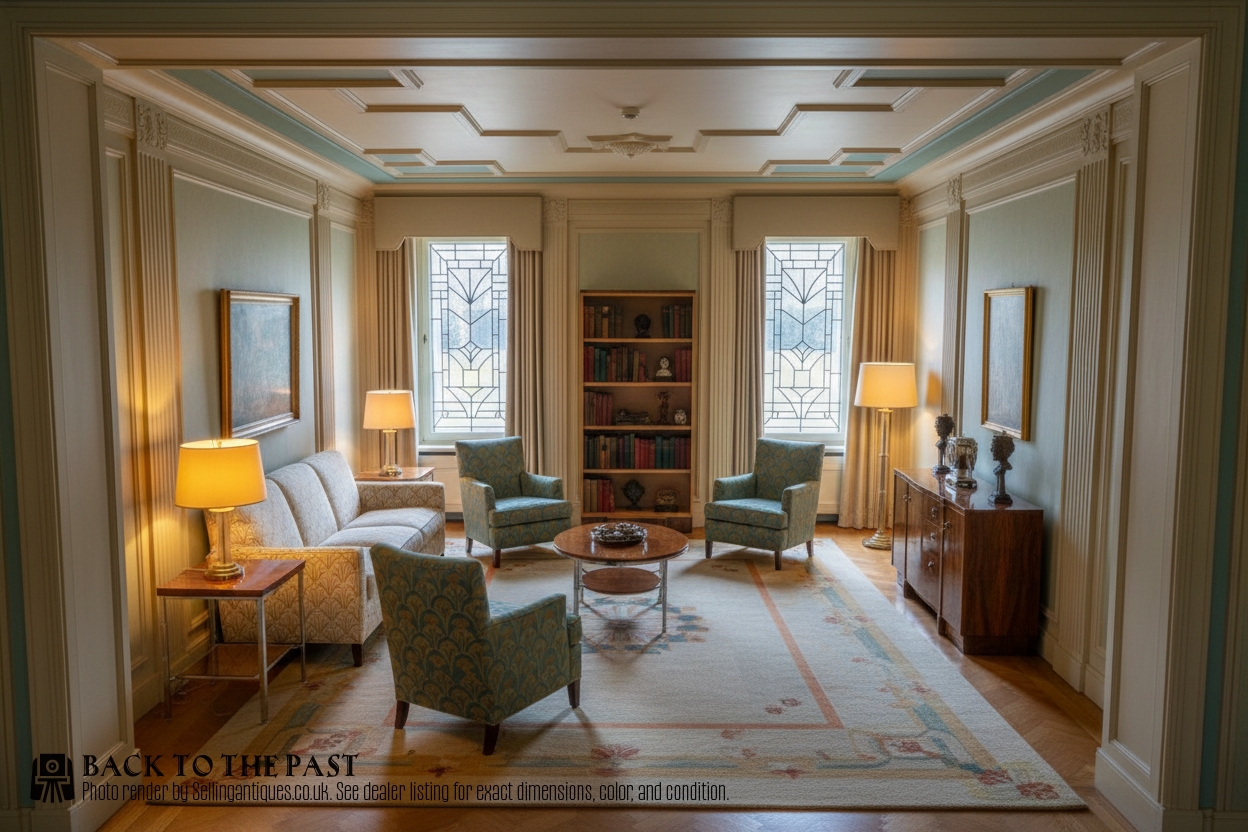
Makers utilised solid timbers and selected veneers, applying techniques like liming to oak or showcasing the natural grain of burr walnut. Brass and metal components provided structural framing or decorative hardware.
Joinery techniques focused on clean lines and geometric mouldings, maintaining the characteristic profile of the period without excessive ornamentation.
Keep an eye out for horse-themed oak book shelves alongside standard geometric cabinets.
What varies in quality
The distinction lies in the selection of timber veneers and the crispness of architectural mouldings. Pieces bearing attribution to known makers or firms typically display superior cabinet work.
Proportion and the integration of mixed materials, such as glass and brass combined with wood, dictate the visual balance of each unit.
Heals·Betty Joel·Sandberg & Co·Liberty's of London
The Art Deco Standing Shelves Glossary
- Waterfall bookcase
- A stepped shelving unit where each lower shelf extends further forward than the one above it.
- Veneer
- A thin layer of decorative wood applied over a secondary timber base to create patterned surfaces.
- Limed oak
- Oak treated with a finish that lightens the grain, popular in interwar modern furniture.
- Book trough
- A low open receptacle designed to hold books upright at an accessible angle.
Art Deco Standing Shelves: Frequently Asked Questions
What periods do these shelves cover?
The pieces span the early twentieth century, with the majority originating in the 1920s and 1930s.
Earlier Edwardian and Victorian examples also surface among the listings.
How were these shelves used?
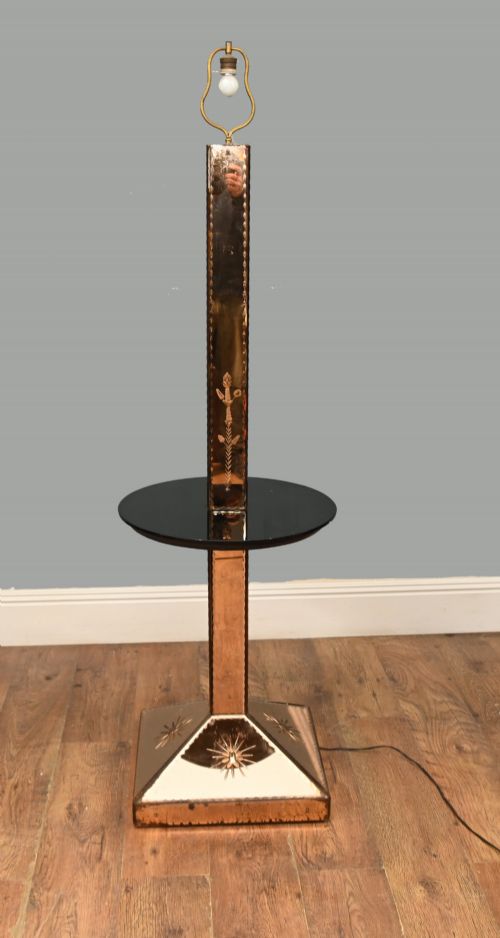
They functioned primarily for storing books, displaying decorative objects, or combining shelving with surfaces for lamps and drinks.
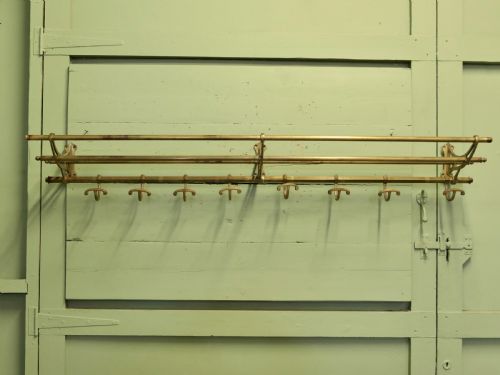
Some variations incorporated hat and coat racks or glass display compartments for domestic use.
What materials are typical?
Construction relies heavily on oak, walnut, and mahogany, frequently enhanced by decorative veneers.
Metal, brass, glass, and leather frequently appear as supporting materials or surface details.
Are signed pieces common?
Attributions to prominent firms and makers like Heals or Betty Joel do appear on specific cabinets and bookcases.
Many other pieces reflect the general stylistic output of French and British workshops without explicit maker marks.