



Art Deco Silver Tea Set
An art deco silver tea set brings geometric sharpness and clean metal lines straight to the afternoon table.
Art Deco Silver Tea Set
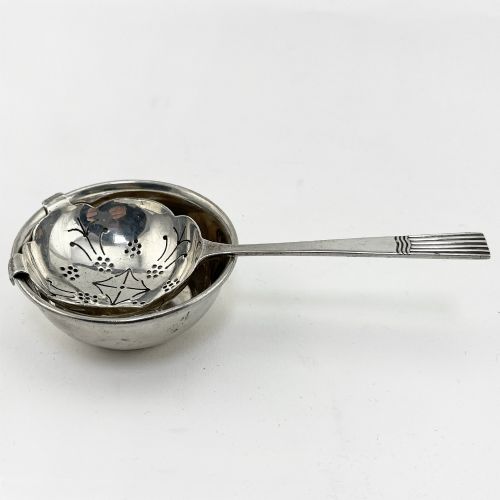
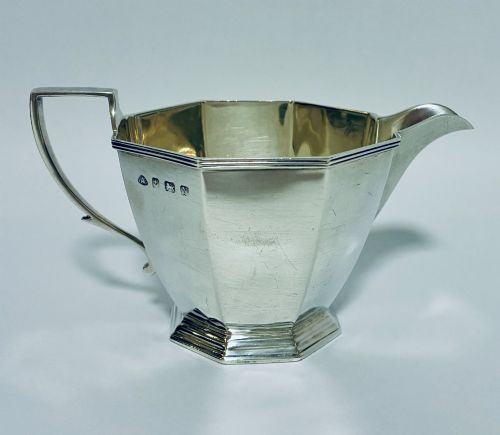
When you search for an art deco silver tea set, you encounter complete tea services alongside individual milk jugs, creamers, strainers, and associated cutlery. The predominant items shaping this selection range across the 1920s, 1930s, and 1940s eras, often incorporating George V styling.
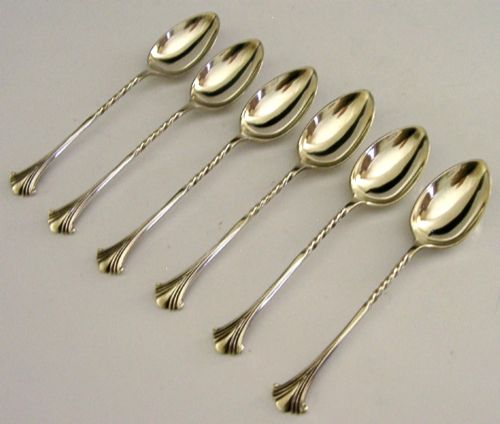
Sets frequently appear alongside smaller groupings such as enamelled teaspoons, cake forks, coffee spoons, and boxed presentation sets lined with satin, velvet, or leatherette. Occasional silver-plated geometric ensembles, including cubic configurations, expand the category beyond solid sterling silver.
The aesthetic relies on strict lines, stylised motifs, and occasional brightly coloured enamel panels or Bakelite handles. These pieces span standard tea services to specialised bridge spoons and coffee cans with ceramic inserts.
Materials and construction methods
Pieces in this category are fashioned primarily from sterling silver or silver plate, utilising standard silversmithing techniques such as forming, casting, and soldering. Handles and accents frequently incorporate contrasting materials like Bakelite or fit snugly inside fitted cases lined with silk, satin, and velvet.
Enamel work appears across many spoons and associated vessels, fused to the metal base to create hard, colourful decorative surfaces. Hallmarks stamped directly into the silver provide official verification of metal purity and date.
Art Deco Silver Tea Set Retail Price Guide 2026
Typical asking prices for art deco silver tea set among the pieces listed under this phrase on Sellingantiques today, from the lower quarter to the upper quarter. They describe what is for sale here now, not the wider market.
The selected items span the 1920s to the 1950s, bridging George V traditions and mid-century designs.
Assessing quality in silver sets
Quality separates along the crispness of the geometric detailing and the precision of the silversmith's finish. Superior examples maintain intact enamel without chipping, alongside clean hallmarks and undamaged original presentation cases.
Weight and balance dictate the standard of hollowware items like milk jugs and creamers. Heavier gauge sterling silver constructions demonstrate superior material investment compared to thinner silver-plated alternatives.
Mappin and Webb
The Art Deco Silver Tea Set Glossary
- Sterling silver
- A silver alloy containing 92.5 percent pure silver by mass, with the remainder composed of other metals, usually copper. This standard alloy forms the material basis for many durable domestic items and tableware.
- Silver plate
- A layer of silver applied to a base metal core, such as copper or nickel brass. This method produced accessible dining wares during the twentieth century.
- Enamel
- A decorative glassy substance fused to the surface of metal through high-temperature firing. It provides vibrant colour accents on spoons and decorative vessels.
- Bakelite
- An early plastic material used for handles and decorative elements on twentieth-century metalware. Its heat-resistant properties made it practical for tea and coffee service components.
- Hallmark
- An official stamp applied by an assay office to indicate metal purity, origin, and date of manufacture. These small stamped symbols allow precise dating of British silver items.
Art Deco Silver Tea Set: Frequently Asked Questions
What pieces belong in a full set?
A complete tea service typically comprises a teapot, milk jug or creamer, and sugar basin, sometimes accompanied by a matching tray.
Associated dining accessories often extend to strainers, teaspoons, cake forks, and specialised coffee spoons.
How do I identify the manufacturing date?
British items usually carry a series of hallmarks that include a date letter indicating the exact year of assay.
Stylistic cues such as enamelled geometric patterns and Bakelite handles also point firmly toward the interwar decades.
Are these sets suitable for daily use?
Solid silver and silver-plated tea wares remain entirely functional for serving hot beverages and hosting meals.
Items featuring delicate enamel work or original presentation linings require careful hand cleaning to preserve their condition.
What is the difference between silver and plate?
Solid sterling silver consists of a regulated high purity metal alloy throughout its entire structure.
Silver plate involves a thin coating of precious metal bonded over a durable base metal core.