


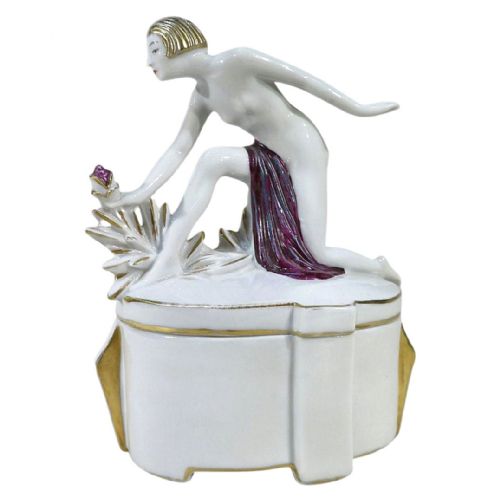


Art Deco Porcelain Trinket Dish
These art deco porcelain trinket dish options bring 1930s glamour to a dressing table, combining ceramic artistry with miniature utility.
Art Deco Porcelain Trinket Dish
When you search for an art deco porcelain trinket dish, you encounter small ceramic containers designed for vanity tables, powder bowls, and dresser boxes. The most common iteration on this page is the 1930s figural powder box featuring moulded flapper girls, bathing belles, and jesters.
Origin plays a strong role in these objects, with French and German workshops dominating the selection. Pieces range from decorative bowls and bonbonniere forms to half doll dresser boxes that separate into a ceramic base and a seated upper figure.
Materials and construction
Makers shaped these items using porcelain, ceramic, and earthenware bodies, fired to form hard-wearing vanity containers. Glaze finishes sealed the surfaces, often complemented by enamel painting, gold leaf, and gilt highlights.
The figural lids required skilled moulding to capture detailed costume, hair, and facial expressions typical of the period. Once cast and glazed, these covers fitted neatly over matching powder bowls and trinket boxes.
Art Deco Porcelain Trinket Dish Retail Price Guide 2026
Typical asking prices for art deco porcelain trinket dish among the pieces listed under this phrase on Sellingantiques today, from the lower quarter to the upper quarter. They describe what is for sale here now, not the wider market.
Several 1930s lids feature cheeky bathing belles and jester figures ready to guard your powder.
Judging quality in vanity ceramics
Origin also influences the character of the piece, with recognised continental houses producing finer porcelain bodies than standard commercial earthenware versions from the same decade.
Limoges·Royal Copenhagen·Wedgwood
The Art Deco Porcelain Trinket Dish Glossary
- Half doll
- A ceramic upper torso with no lower legs, originally made to sit on top of boudoir lamps or brush handles before being adapted for powder box lids. These figures define many dresser boxes from the 1930s.
- Bonbonniere
- A small decorative container traditionally used for sweets or confectionary. In porcelain, these double as elegant trinket boxes for a dressing table.
- Glaze
- A glassy coating fused to ceramic wares through firing. It waterproofs the body and provides a smooth, shiny finish.
- Gilt
- A thin layer of gold applied to the surface of porcelain or ceramic items. It highlights moulded rims and decorative details.
- Enamel
- Opaque vitreous material fused to ceramics for decoration. It adds bright, durable colour to painted motifs.
Art Deco Porcelain Trinket Dish: Frequently Asked Questions
What is an art deco porcelain trinket dish used for?
These small ceramic vessels were originally designed to hold face powder, pins, and small pieces of jewellery on a dressing table.
Today, they serve both as decorative display items and as practical containers for keeping small daily accessories organised.
How do I identify a 1930s powder box?
Look for characteristic figural lids depicting flapper girls, bathing belles, or pierrots moulded in ceramic or porcelain. The geometric styling and specific glaze finishes typically point to the 1930s.
Many of these items originate from French and German potteries that specialised in vanity wares during the interwar period.
Are these dishes made of porcelain or earthenware?
The listings include both porcelain and earthenware bodies, alongside glazed ceramic variations. Porcelain versions tend to feature harder, whiter bodies with finer detail.
Glaze and enamel finishes are applied across all material types to give the colourful surface patterns seen on the lids.
Where were these trinket boxes made?
The pieces originate primarily from European workshops, with specific examples attributed to French makers like Limoges and regional German potteries. Scandinavian houses also contributed distinct decorative bowls.
Each region brought different moulding techniques and painting styles to the vanity box format.