


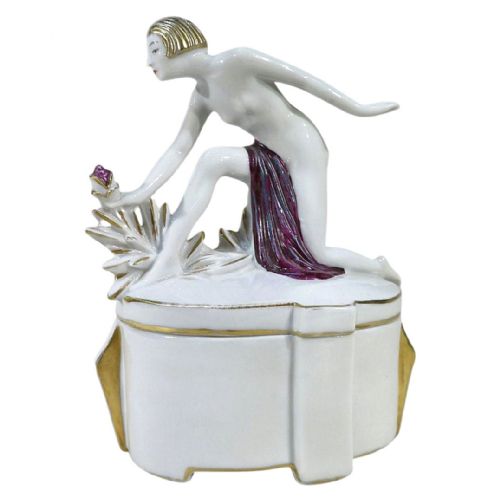


1930s Flapper Girl Figurine
These pieces of a 1930s flapper girl figurine capture the vibrant spirit of the era, offering distinct decorative charm for collectors.
1930s Flapper Girl Figurine
A 1930s flapper girl figurine embodies the quintessential Art Deco aesthetic across various functional and decorative objects. Buyers searching this phrase encounter half dolls, powder boxes, trinket boxes, and hatpin holders that celebrate the stylish silhouette of the period.
Most items on this page originate from the 1930 or 1920 periods, frequently showcasing French and Austrian craftsmanship. Common domestic forms integrate these sculptural ladies directly into functional dresser items and smoking accessories like cigarette strikers.
The assortment spans diverse decorative objects, including larger spelter figures mounted on onyx or marble bases, alongside porcelain novelty powder bowls. Each piece serves as a characteristic example of the design trends defining the era.
Materials and construction
Metalworkers employed spelter to cast substantial figural ladies, frequently mounting the heavier metal sculptures onto sturdy onyx or marble bases. Gold leaf details applied to select surfaces enhance the ornamental appeal of the finished objects.
1930s Flapper Girl Figurine Retail Price Guide 2026
Typical asking prices for 1930s flapper girl figurine among the pieces listed under this phrase on Sellingantiques today, from the lower quarter to the upper quarter. They describe what is for sale here now, not the wider market.
Evaluating the standard
The refinement of the facial moulding and the precision of the glaze application distinguish superior porcelain examples. Details in the hair, expression, and hand placement reveal the level of artistry invested by the maker.
For metal pieces, the definition within the spelter casting and the quality of the stone base determine the overall standard. Heavier mineral bases and clean, crisp casting lines indicate higher manufacturing execution.
Fasold & Stauch
The 1930s Flapper Girl Figurine Glossary
- Half doll
- A ceramic torso without legs, originally designed to adorn tea cosies, lampshades, or powder box lids. These figures typically feature elaborate hairstyles and contemporary hats.
- Spelter
- A zinc alloy commonly utilised as a cost-effective alternative to bronze for casting decorative sculptures during the period. It accepts patination and metallic paints effectively.
- Onyx
- A banded variety of chalcedony used frequently for heavy decorative bases supporting metal figural sculptures. Its natural strata provide a contrasting visual weight to the metal above.
- Hatpin holder
- A vertical ceramic or porcelain vessel pierced to store long hatpins on a dressing table. These objects often incorporate figurative elements at the top.
- Powder box
- A vanity container featuring a decorative lid designed to hold loose face powder. Many examples incorporate a figural ceramic lady forming the handle or cover.
1930s Flapper Girl Figurine: Frequently Asked Questions
What are 1930s flapper girl figurines used for?
These pieces functioned primarily as dressing table accessories, including powder boxes, trinket jars, pin cushions, and hatpin holders. They combined decorative appeal with practical utility in a domestic setting.
Today, collectors display them as standalone sculptures or integrate them into vintage vanity collections to evoke an authentic period atmosphere.
How do I identify a half doll?
A half doll consists only of the upper body, typically terminating at the waist with a flaring base intended to be attached to fabric or a container lid. They frequently depict women with stylish 1920s and 1930s hairstyles.
These pieces were commonly mounted onto powder boxes, dresser jars, or boudoir novelties during the Art Deco era.
What materials were used for these figures?
The objects predominantly feature porcelain, ceramic, and cast spelter. Porcelain and ceramic components often receive glossy glaze finishes and detailed hand-painting.
Larger figural sculptures utilise spelter paired with heavy stone bases made of onyx or marble to provide stability and balance.
Where were these pieces manufactured?
The listings demonstrate production across various European centres, with specific items originating in France and Austria. Factory output also includes specialised German porcelain manufacturers.
Regional differences appear in the choice of materials, such as French spelter figures on stone versus central European porcelain half dolls.
How should I display a powder box?
Powder boxes look best placed on flat surfaces like dressing tables, mantelpieces, or glass-fronted cabinets where their detailed lids remain visible. Positioning them away from direct sunlight protects any delicate hand-painted surfaces.
Ensure the base and lid sit securely together to maintain the structural integrity of the ceramic or porcelain body.