





Art Deco Porcelain Sculpture
These art deco porcelain sculpture pieces capture the sharp lines and stylised motion of the period, offering collectors a striking centrepiece for a mantel or desk.
Art Deco Porcelain Sculpture
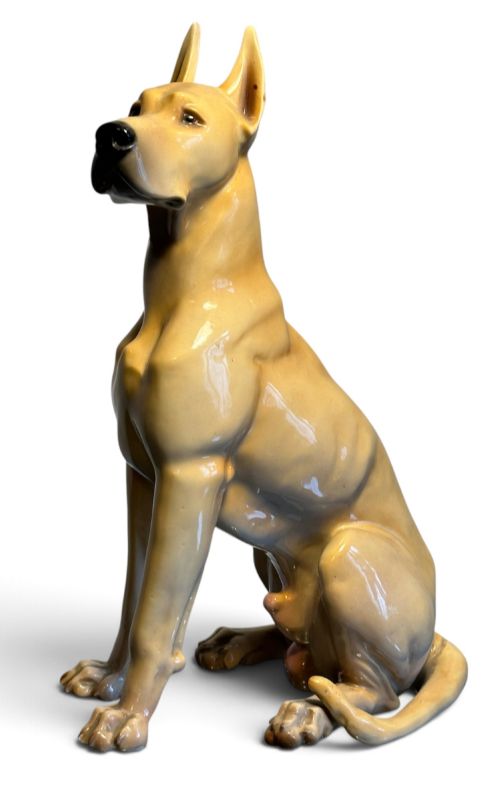
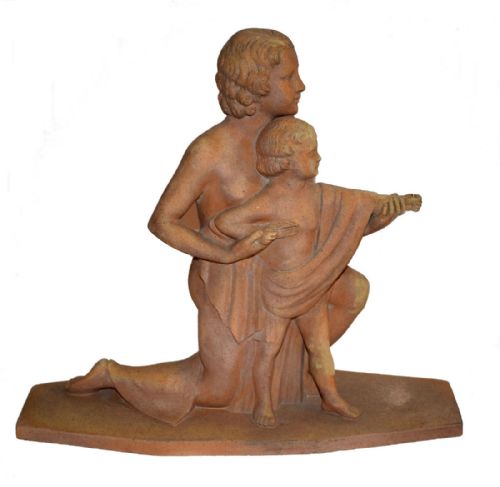
An art deco porcelain sculpture brings the stylised figures and animals of the early twentieth century into domestic spaces. These pieces take the form of dancers, elegant ladies, dogs, and exotic animals modelled with the clean geometry typical of the era.
Collectors frequently encounter figures and perfume lamps originating from French and German studios. The selection ranges from dancers caught in mid-motion to table lamps and busts produced across the nineteen-twenties, nineteen-thirties, and occasional Edwardian years.
How they were made
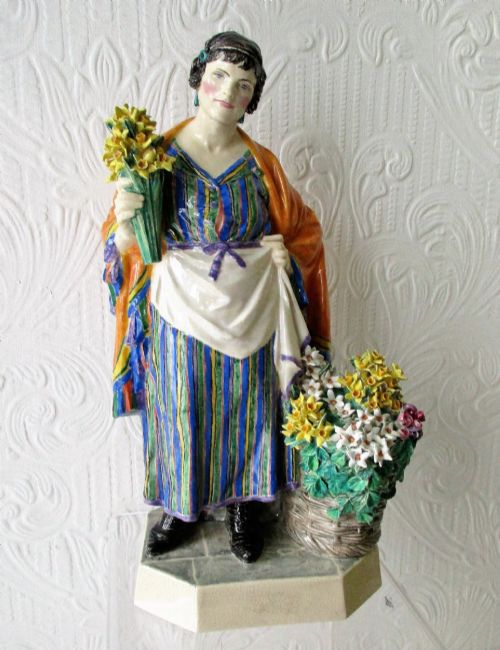
The production often involved biscuit porcelain, which lacks a shiny glaze and presents a matte, marble-like finish suited to classical nudes and dancers. Enamel was additionally applied by hand to accent the vibrant clothing and hair of female figures.
Art Deco Porcelain Sculpture Retail Price Guide 2026
Typical asking prices for art deco porcelain sculpture among the pieces listed under this phrase on Sellingantiques today, from the lower quarter to the upper quarter. They describe what is for sale here now, not the wider market.
The periods represented span from Edwardian times through the nineteen-twenties, nineteen-thirties, and nineteen-forties.
What varies in quality
The standard of modelling defines the upper tier of these works, where facial expressions and drapery appear sharp rather than softened by thick glaze. Master modellers achieved a tension in posture that lesser workshops missed, leaving ordinary figures stiff and derivative.
Painted decoration also separates standard output from superior pieces, with hand-applied enamel showing precision and subtle shading. Mass-produced items tend to display flat, uniform colours without the careful brushwork seen on signed examples.
Meissen·Paul Scheurich·Rosenthal·Argilor·Theo Voss·Le Manceau·Royal Dux·Karl Tutter·B Rezl
The Art Deco Porcelain Sculpture Glossary
- Biscuit
- Unglazed porcelain fired once to produce a matte, porous surface resembling white marble. It is frequently found on figures where smooth skin texture is desired.
- Veilleuse
- A ceramic night light or perfume lamp designed to diffuse gentle illumination through a pierced body. These lamps often double as decorative sculptures.
- Blanc de Chine
- A pure white porcelain originating from China but later adopted by European factories such as Meissen. It yields a translucent, milky appearance.
- Gilding
- The application of gold leaf or powdered gold to ceramic surfaces for decorative accent. It withstands kiln firing when properly fixed.
Art Deco Porcelain Sculpture: Frequently Asked Questions
What is an art deco porcelain sculpture?
These works are decorative ceramic figures and lamps produced during the early twentieth century, reflecting the geometric and streamlined aesthetics of the period.
They capture subjects ranging from human dancers to animals, shaped by European potteries and individual modellers.
How were perfume lamps used?
Perfume lamps served a dual purpose in homes by providing soft lighting alongside scented oil diffusion. Heat from the internal bulb warmed the fragrance reservoir placed inside the ceramic body.
They stood upon dressing tables and living room sideboards as both functional appliances and decorative ornaments.
How do I care for glazed ceramic?
Maintenance requires gentle dusting with a soft, dry cloth to prevent the accumulation of dirt within crevices. Moisture and harsh cleaning agents should be avoided to protect hand-painted enamel and gold leaf.
Placement away from direct sunlight preserves the original pigment tones over time.
How do I identify nineteen-twenties styles?
Nineteen-twenties pieces typically exhibit the dynamic poses of dancers, sleek hound dogs, and stylised female forms influenced by modernist theatre and fashion. The modelling prioritises sweeping curves and angular drapery over naturalistic detail.
Signatures or factory stamps on the base often confirm the exact decade of production.