



Art Deco Platter
An art deco platter brings the geometric precision and material luxury of the interwar years straight to the dining table.
Art Deco Platter
An art deco platter encompasses a wide variety of serving trays, decorative plates, chargers, and salvers produced primarily between the nineteen-twenties and nineteen-forties. These pieces served practical roles in entertaining and cocktail culture while doubling as striking decorative objects for the home.
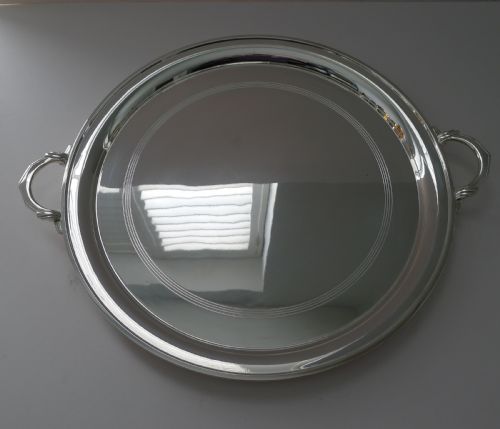
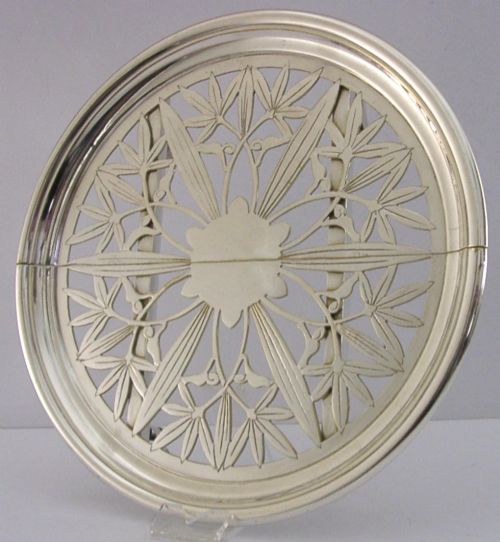
The selection on this page draws heavily from British and French design traditions, spanning silver-plated metalwork, moulded opalescent glass, and hand-decorated earthenware. Forms range from simple geometric shapes like diamonds and hexagons to large circular chargers adorned with moulded aquatic or floral motifs.
How they were made
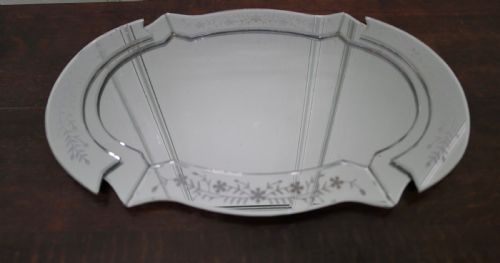
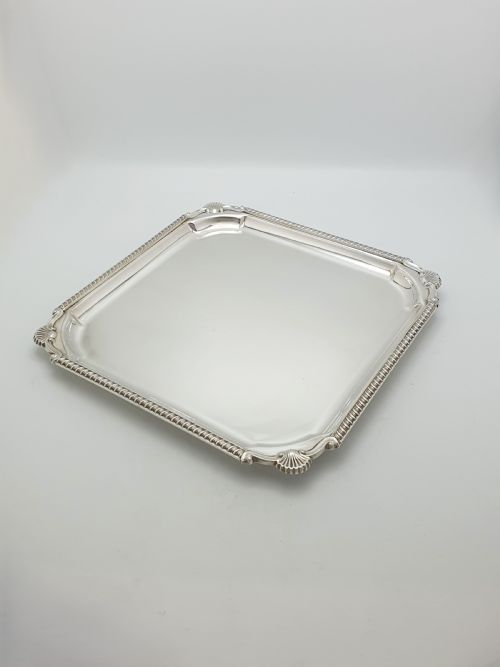
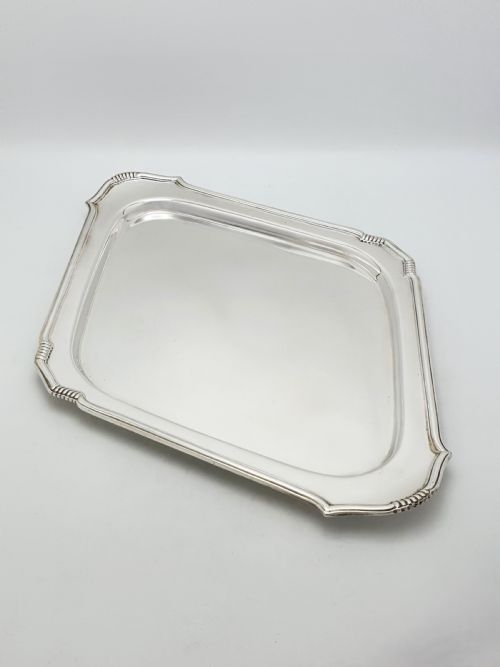
Metal pieces rely on silver plate, nickel silver, chrome, and mirror glass, often shaped into cocktail and drinks trays with engine-turned patterns, shell borders, or clean geometric lines. Makers employed heavy metalworking techniques to produce sturdy frames fitted with contrasting glass or mirrored bases.
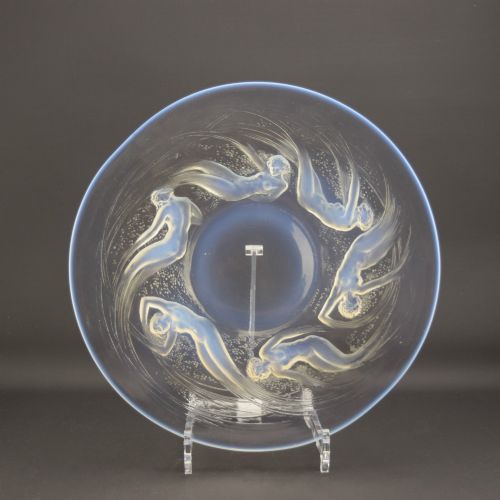
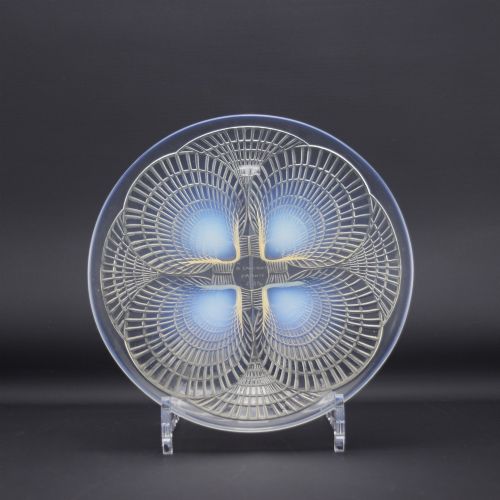
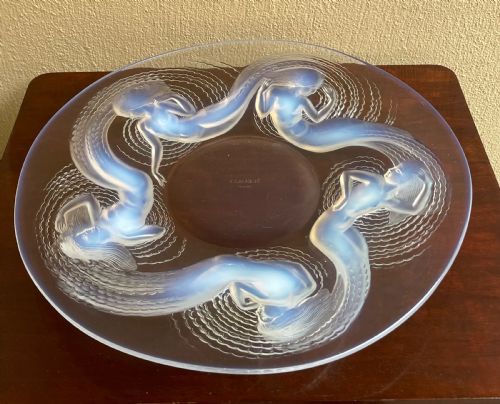
Glass platters and plates utilise press-moulding and opalescent finishes, frequently enhanced with sepia staining to highlight intricate raised reliefs of fish, shells, and dancers. Earthenware chargers employ tubelined ceramic decoration and high-fired glazes to build up colourful, stylised patterns across the clay surface.
The listings span silver plate, opalescent glass, mirror, and earthenware from the nineteen-hundreds through the nineteen-forties.
What varies in quality
The distinction between standard production items and exceptional pieces rests upon the crispness of the moulding in glass and the depth of the metalwork engraving or plating. Maker attribution plays a significant role, with recognised silversmiths and master glass artists achieving superior definition and finish.
Weight, balance, and the preservation of original mirror glass or delicate surface patination separate everyday utility wares from high-end collector pieces. The integrity of moulded glass details and the sharpness of ceramic tubelined designs dictate overall visual success.
Keith Murray For Mappin & Webb·Christofle·Rene Lalique·Charlotte Rhead Crown Ducal·J B Chatterley & Sons·Hukin & Heath·James Dixon & Sons·Roberts & Dore·Royal Doulton·Asprey London·Elkington·Roberts & Belk·Atkin Brothers·John Collyer Birmingham
The Art Deco Platter Glossary
- Opalescent glass
- Glass containing agents that create a milky, semi-translucent appearance with shimmering blue or amber highlights under the light. This technique defines many iconic French decorative plates from the period.
- Tubelined
- A ceramic decoration method where liquid clay is squeezed through a nozzle onto a pottery body to form raised outlines. These raised lines are subsequently filled with coloured glazes before firing.
- Salver
- A flat tray, typically made of silver or silver plate, traditionally used for serving drinks or presenting items. In this context, it functions as an elegant display piece or serving platter.
- Engine-turned
- A mechanical engraving technique that produces intricate, precise geometric patterns of fine lines across metal surfaces. It adds texture and reduces the visibility of surface wear.
- Charger
- A large decorative plate or platter used either as a base setting for other dishware or displayed purely for its ornamental design.
Art Deco Platter: Frequently Asked Questions
How do I clean a silver plated tray?
Clean silver-plated metal surfaces using a soft cloth and a gentle, non-abrasive polish specifically formulated for silver plate. Avoid harsh scrubbing or abrasive pads that can wear through the thin silver layer.
Store metal trays in dry environments to prevent tarnishing, and wash glass or mirrored inserts separately with mild soapy water before drying thoroughly.
Can I use these platters for serving food?
Many silver-plated and ceramic platters function well for serving dry foods, bread, or cocktail canapés during gatherings. Earthenware and glass pieces should be handled with care to protect historic glazes and delicate moulded details.
Avoid cutting directly on glass or ceramic surfaces, and hand wash all antique serving pieces rather than placing them in a dishwasher.
How do I identify a Lalique glass plate?
Examine the piece for characteristic opalescent qualities, crisp press-moulded relief designs featuring motifs like fish, flowers, or sirens, and signature markings on the underside. Many authentic pieces display moulded or etched signatures corresponding to the designer.
Inspect the weight and texture of the glass, as genuine interwar production pieces possess a distinct density and tactile relief quality.