




Art Deco Pedestal Base
An art deco pedestal base provides the foundational support for tables, desks, and lamps, combining architectural weight with streamlined geometric styling.
Art Deco Pedestal Base
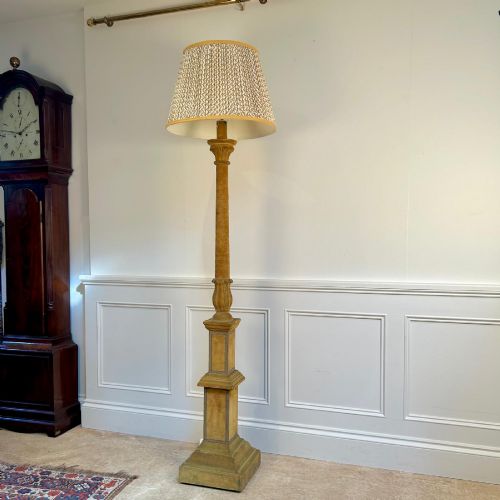
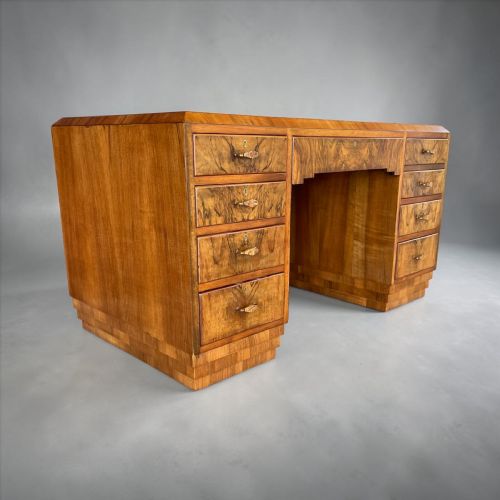
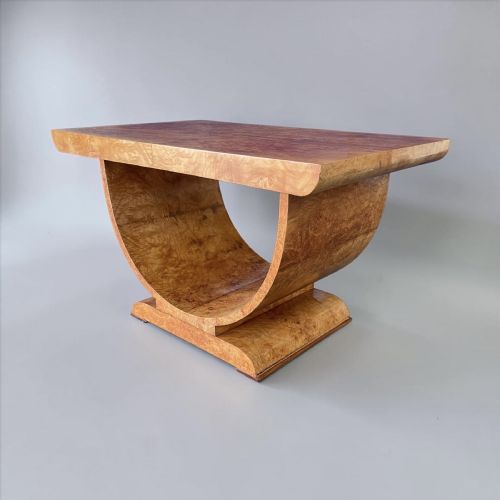
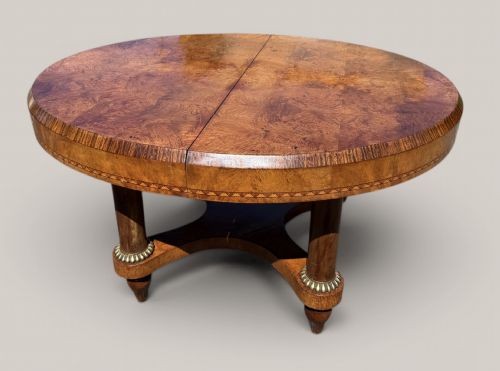
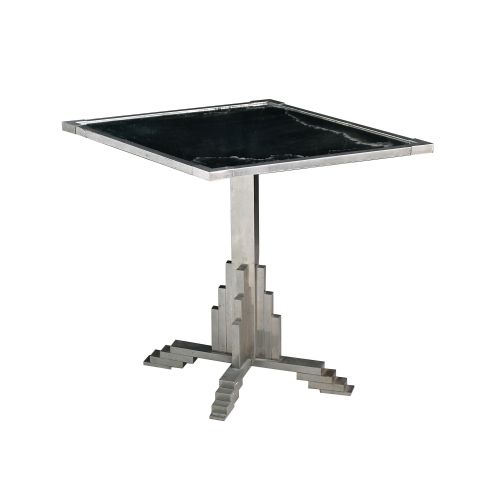
When searching for an art deco pedestal base, collectors encounter central supports utilised in coffee tables, side tables, dining tables, and desks originating from the 1920s, 1930s, and 1940s. These items showcase the characteristic aesthetic of the period, often translating geometric forms into functional furniture and lighting supports.
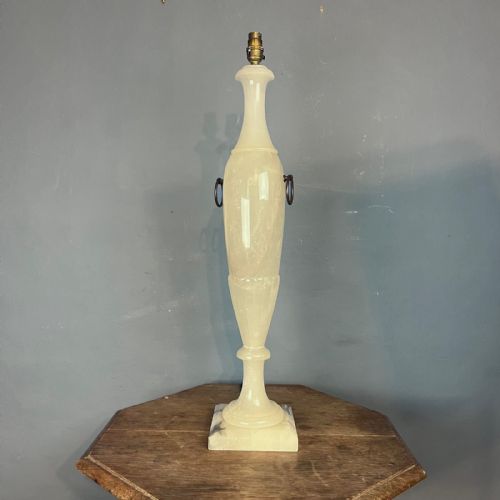
The selection here includes various forms such as centre tables, café table bases, and lamp tables where the pedestal design anchors the piece. Buyers will find British and American interpretations of the style applied to diverse domestic objects.
Materials and construction
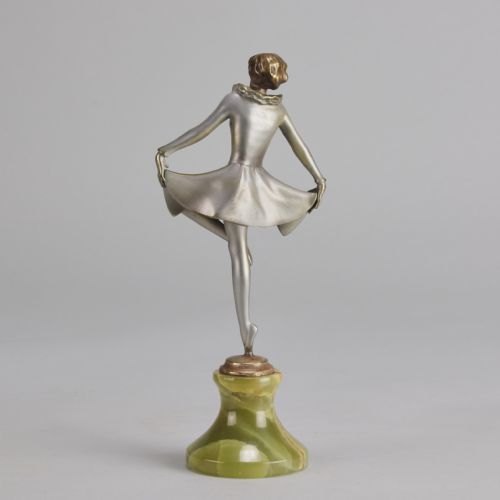
Pieces featuring an art deco pedestal base rely on a combination of rich woods, metals, and stone. Makers utilised walnut, burr walnut, burr maple, and bird's-eye maple alongside veneers, pairing timber with cast iron, brass, silver plate, and bronze.
Construction techniques from the 1920s and 1930s emphasised smooth surfaces and contrasting textures. Glass, alabaster, leather, and marble frequently complement the wooden or metallic structural elements.
Art Deco Pedestal Base Retail Price Guide 2026
Typical asking prices for art deco pedestal base among the pieces listed under this phrase on Sellingantiques today, from the lower quarter to the upper quarter. They describe what is for sale here now, not the wider market.
Materials documented across these pedestal designs include walnut, burr walnut, burr maple, bird's-eye maple, brass, cast iron, bronze, marble, and alabaster.
Assessing quality in construction
Quality in these pieces rests upon the selection of timber veneers and the structural integrity of the central support. Grain matching on burr walnut or bird's-eye maple surfaces distinguishes finer examples from simpler constructions.
The integration of mixed media, such as combining cast iron bases with wooden columns or stone elements like marble and alabaster, determines the sophistication of the manufacture.
The Art Deco Pedestal Base Glossary
- Art Deco
- A design style spanning the 1920s and 1930s characterised by geometric shapes, streamlined forms, and modern materials. It influenced furniture, sculpture, and decorative objects.
- Burr Walnut
- A figured wood grain obtained from the burl of a walnut tree, highly prized for its swirling patterns. It is frequently used as a veneer on table tops and pedestal columns.
- Pedestal Base
- A single central support that holds up a table top, desk, or lamp rather than traditional four-corner legs. This form allows for greater legroom and distinct architectural presence.
- Veneer
- A thin slice of decorative wood glued over a secondary timber base. This technique allows makers to display striking grain patterns economically.
Art Deco Pedestal Base: Frequently Asked Questions
What furniture uses an art deco pedestal base?
Coffee tables, side tables, desks, and dining tables frequently utilise a central pedestal support. These designs maximise floor space while displaying distinct geometric styling.
Such supports appear across various domestic forms from the 1920s and 1930s, including dedicated café tables and lamp stands.
Which materials appear on these pedestal pieces?
Maker materials include walnut, burr maple, bird's-eye maple, and general wood veneers. Metals such as brass, cast iron, and bronze are also common.
Additional elements like marble, alabaster, glass, and leather frequently complement the primary structural woods and metals.
How do I date an art deco pedestal base?
Dating relies on stylistic markers and material combinations from the 1920s, 1930s, and 1940s. Pieces often reflect either European or American manufacturing traditions of those decades.
Specific construction methods and the choice of veneers help narrow the period of origin within the early to mid-twentieth century.
Are these pedestal bases part of larger furniture suites?
Some pieces form part of complete dining suites that include matching chairs and extension tables. Others function as standalone accent furniture.
Tables and desks with central supports range from intimate café settings to large dining configurations designed to seat multiple people.