



Art Deco Pearl Drop
Art deco pearl drop pieces combine geometric metalwork with lustrous suspended spheres, bringing enduring elegance to any collection.
Art Deco Pearl Drop
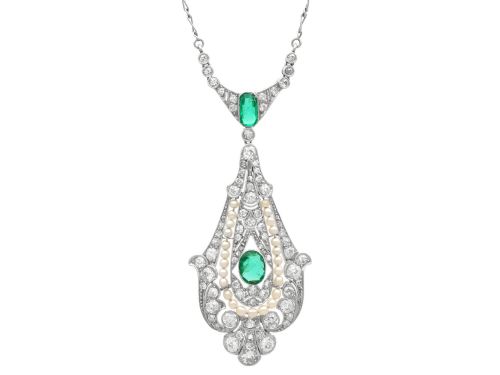
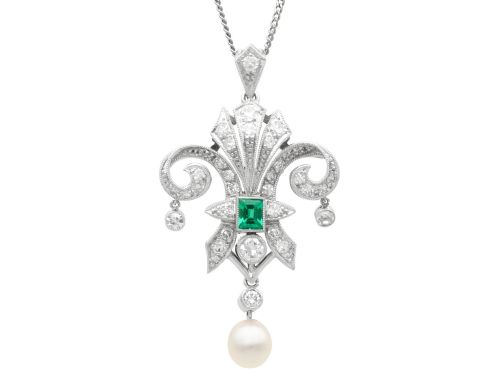
When you search for art deco pearl drop, you enter a domain of sophisticated jewellery defined by symmetry, clean lines, and dangling organic gems. These items take the form of earrings, pendants, and necklaces that showcase the distinct design vocabulary of the early to mid-twentieth century.
You are most likely to encounter platinum and gold mountings set with diamonds, emeralds, opals, or onyx, suspending lustrous pearls in drop configurations. The selection spans the Edwardian era through the nineteen-fifties, capturing both original period items and later inspired interpretations.
The objects serve primarily as decorative adornments for the neck and ears, utilising screwback or pierced fittings alongside delicate chains and secure pendant bails. Each piece reflects the shifting aesthetic preferences from the nineteen-tens onwards, moving from delicate Edwardian filigree into bold modernist geometry.
How they were made
Master jewellers constructed these items using precious metals such as platinum, nine-carat gold, fourteen-carat rose gold, and standard gold to form durable, intricate settings. Platinum provided the structural strength required for secure prong and bezel settings that held multiple diamonds without adding excessive bulk.
Gems including emeralds, opals, black onyx, jadeite, and diamonds were meticulously cut and set alongside natural saltwater pearls, seed pearls, and mother-of-pearl components. Artisans employed hand-fabrication techniques to forge delicate bezels, articulated joints, and screwback mechanisms that allowed earrings and pendants to move gracefully.
Art Deco Pearl Drop Retail Price Guide 2026
Typical asking prices for art deco pearl drop among the pieces listed under this phrase on Sellingantiques today, from the lower quarter to the upper quarter. They describe what is for sale here now, not the wider market.
Some nineteenth-century wearers converted their prized hatpins into dangling pendants simply by adding a hidden loop to the shaft.
What varies in quality
The standard of materials dictates the upper tiers of the range, distinguished by the presence of natural saltwater pearls, substantial diamond carat weights, and fine Colombian emeralds. Superior pieces exhibit harmonious stone matching and exceptional metalwork precision where every stone is securely flush or prong set.
Design execution and structural integrity separate exceptional examples from simpler commercial outputs, particularly in the articulation of drop components and the crispness of geometric motifs. The longevity of the piece depends on the original gauge of the gold or platinum and the durability of moving parts like screwbacks and clasps.
The Art Deco Pearl Drop Glossary
- Platinum
- A dense, durable precious metal prized for its white lustre and strength in fine jewellery settings. It securely holds small pavé-set diamonds without distracting from the stones.
- Seed pearl
- A very small, naturally occurring or cultured pearl, often pierced and threaded in groups. These diminutive spheres create delicate textured borders and clustered drop effects.
- Screwback
- A mechanical earring finding utilising a threaded post and a small rotating nut to secure non-pierced lobes. This hardware allows precise adjustment of pressure on the ear.
- Natural saltwater pearl
- A pearl formed organically in marine molluscs without human intervention. These stones display unique orient and depth that distinguish them from cultured alternatives.
- Bail
- The loop or ring attached to the top of a pendant that suspends it from a chain. In fine pieces, this component integrates smoothly with the primary geometric design.
Art Deco Pearl Drop: Frequently Asked Questions
How do I wear drop earrings safely?
Earrings featuring screwback mechanisms or standard posts should be fastened securely according to their specific hardware design to prevent loss during wear.
Store them flat in lined compartments away from harder items to protect dangling pearls and delicate platinum or gold settings from abrasion.
What metals are commonly used?
Makers utilised platinum alongside nine-carat gold and fourteen-carat rose gold to construct durable, supportive mountings for gemstones and pearls.
Platinum offers exceptional strength for intricate wirework and secure stone settings, while various gold alloys provide warm complementary tones to coloured gems.
Are all the pearls natural?
The inventory includes natural saltwater pearls, seed pearls, and mother-of-pearl components depending on the specific period and style of the jewellery.
Each pearl type contributes a distinct lustre and texture, ranging from the organic irregularity of seed pearls to the deep orient of saltwater specimens.
How do I clean pearl jewellery?
Pearls require gentle care using a soft, damp cloth to remove oils and residues without scratching their delicate nacre surfaces.
Avoid harsh chemical dips, ultrasonic cleaners, and abrasive brushes, as these methods can permanently damage organic pearls and weaken the metal mountings.