

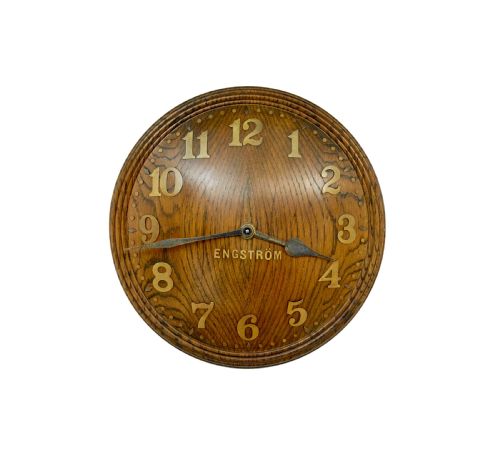


Art Deco Oak Clock
An art deco oak clock brings geometric clarity and warm grain to a room, uniting period design with dependable timekeeping.
Art Deco Oak Clock
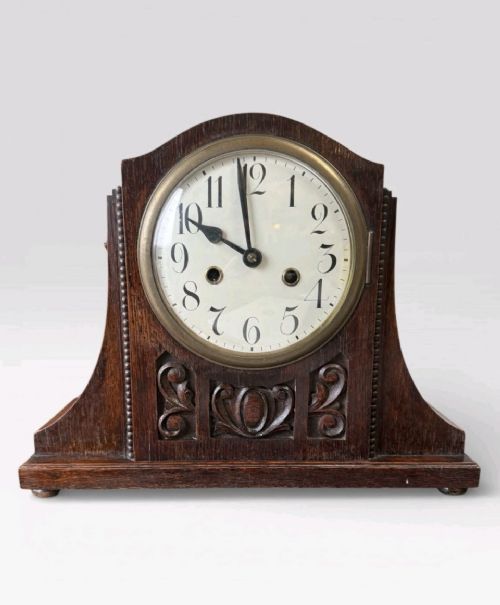
An art deco oak clock spans several practical forms, appearing most frequently as a mantel clock, a wall clock, or a tall longcase clock.
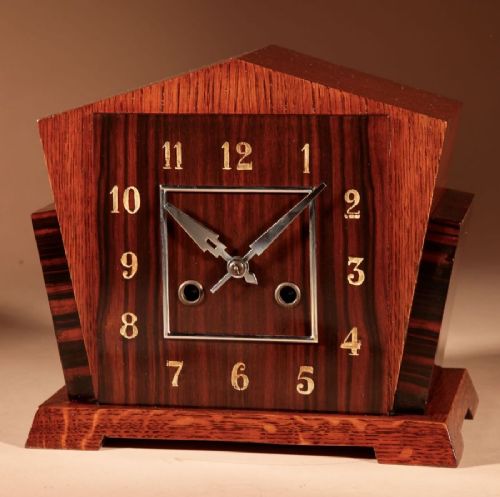
These pieces draw upon the stylistic vocabulary of the nineteen twenties and nineteen thirties, alongside Amsterdam School design and occasional Art Nouveau influences.
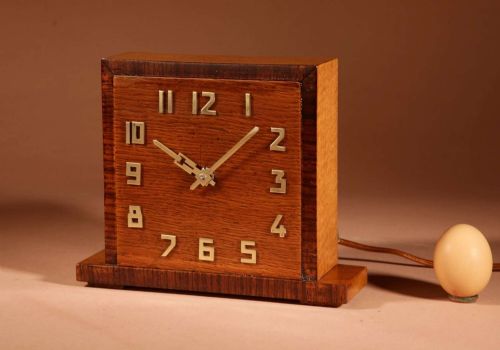
Makers housed these movements in golden, dark, or two-tone oak cases, often accented with contrasting timbers like macassar ebony or rosewood.
How they were made
Cabinetmakers constructed the primary structures from solid and veneered oak, sometimes introducing linenfold carving or geometric parquetry.
Designers incorporated glass viewing panels, brass bezels, and polished chrome or metal details to punctuate the wooden cases.
Clockmakers fitted mechanical eight-day movements, electric systems, and specialised mechanisms capable of Westminster chimes or multiple melodies.
What varies in quality
Quality rests upon the ambition of the architectural silhouette and the precision with which contrasting woods like macassar ebony are integrated into the oak grain.
The sophistication of the internal movement dictates distinction, separating standard timepieces from complex chiming mechanisms produced by established makers.
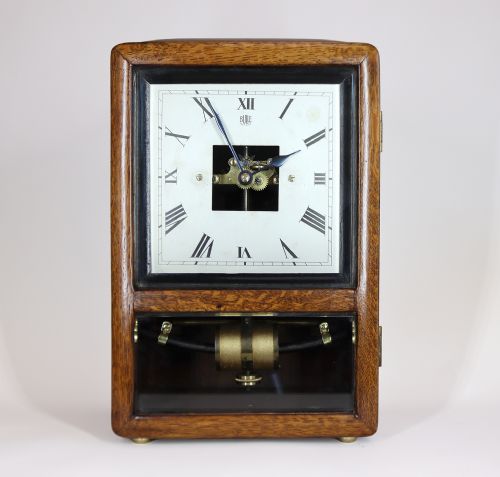
The integrity of the dial design, whether featuring bold numerals, geometric chapters, or exposed electrical components, elevates the overall execution.
Zenith·Junghans·Pfeilkreuz Junghans·Enfield·Charvet
The Art Deco Oak Clock Glossary
- Mantel clock
- A portable timekeeper designed to sit on a fireplace mantel or shelf. These compact pieces often feature geometric wooden cases.
- Longcase clock
- A tall floor-standing timekeeper, also known as a grandfather or grandmother clock. These house weighted movements within an elongated wooden trunk.
- Bulle clock
- An electrically driven clock utilising a battery and a pendulum with a built-in coil passing over a magnet. This mechanism represented a significant technological shift in the early twentieth century.
- Westminster chime
- A melodic quarter-hourly sequence of notes sounded by hammers striking gongs. This acoustic feature frequently accompanies mechanical movements in larger cases.
- Amsterdam School
- An architectural and design style defined by expressive forms, brickwork, and rich surface textures. In clock cases, this translates to dynamic, sculptural wooden geometry.
Art Deco Oak Clock: Frequently Asked Questions
How do I wind a mechanical clock?
Insert the winding key into the designated arbour on the dial face and turn it gently until resistance indicates the mainspring is fully tensioned.
Avoid over-winding, as this can strain the internal spring mechanism and affect accurate timekeeping.
Where should I place a wall clock?
Mount the clock on a stable interior wall at eye level away from direct sunlight, moisture, and temperature fluctuations that might affect the wood case.
Ensure the wall can adequately support the weight of the oak housing and any suspended pendulum.
What maintenance do these movements need?
Mechanical movements require periodic professional cleaning and lubrication to ensure the brass gears operate smoothly without excessive friction.
Keeping the oak case conditioned and the glass clear preserves the exterior appearance over decades of daily use.
How do I tell an electrical movement apart?
Early electrical models feature visible wiring, batteries, or magnetic pendulums behind the dial or glass door rather than traditional spring-wound trains.
These innovative mechanisms combine twentieth-century electrical experimentation with classic oak cabinetry.