


Art Deco Clock Case
An art deco clock case delivers striking geometric lines and industrial materials to domestic interiors, combining practical timekeeping with bold modernist design.
Art Deco Clock Case
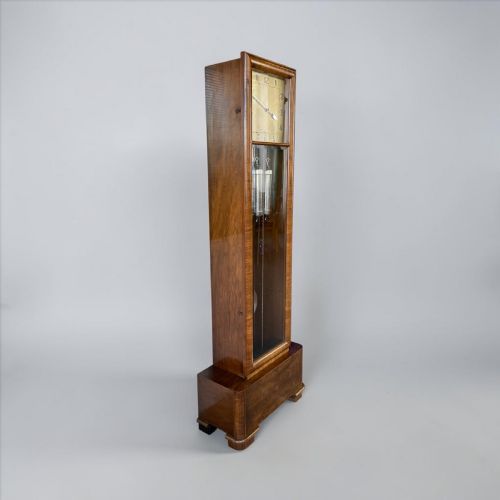
When you search for an art deco clock case, you encounter an array of architectural forms spanning tall floor-standing models to compact travel pieces. The selection on this page ranges from substantial longcase and grandfather clocks to mantel clocks and portable travel designs.
Tall examples typically utilise oak or walnut timbers, often displaying the vertical emphasis and clean lines characteristic of the period. Smaller variations appear in chrome, brass, and solid silver, alongside folding leather and enamel housings designed for mobility.
Originating largely from the nineteen-twenties and nineteen-thirties, these housings reflect the transition from Edwardian traditions into full modernist expression. Grandfather and longcase versions dominate the larger domestic spaces, while desk clocks and travel stands serve intimate settings.
Distinctions in craftsmanship
Quality reveals itself in the precision of the geometric cabinetry, the weight of the metal housings, and the integrity of the integrated mechanisms. Superior examples display crisp architectural lines without clumsy restoration, using choice veneers and substantial gauge silver or chrome.
Finer specimens often incorporate specialised movements, such as Westminster chimes or complex carillon mechanisms, housed securely within properly proportioned wooden or metal enclosures. Lesser pieces rely on standard mass-produced movements paired with plain, uninspired secondary timbers.
Travel clocks often spent decades tucked away in heavy leather luggage, emerging with their folding cases still smelling faintly of old station platforms.
Harrods of London·Junghans·Mappin and Webb·Negretti and Zambra·Smiths
The Art Deco Clock Case Glossary
- Guilloche enamel
- A decorative technique involving precise engine-turned patterns beneath a translucent coloured enamel layer. It frequently appears on portable travel clock housings from the period.
- Skyscraper style
- An architectural influence characterised by stepped vertical setbacks and towering proportions. This aesthetic defined many desk and mantel housings of the nineteen-thirties.
- Longcase clock
- A tall freestanding timekeeper housed in a wooden case that encloses the pendulum and weights. These floor-standing pieces are also frequently termed grandfather or grandmother clocks.
- Bulle clock
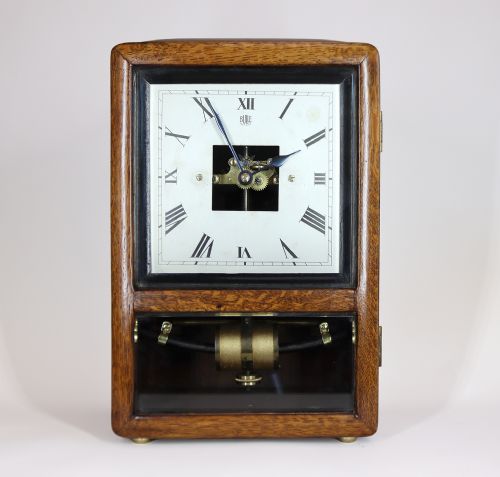
- An electrically driven clock mechanism utilising an electromagnetic pendulum. These innovative movements appeared in domestic interiors during the early twentieth century.
- Carillon
- A set of bells tuned to play a melody, often incorporated into larger chiming clock housings. They produce the distinctive quarter-hour musical sequences heard in tall domestic timepieces.
Art Deco Clock Case: Frequently Asked Questions
How do I wind an old clock?
Most mechanical timepieces require a key inserted into the dial to tension the mainspring or pull suspended weights upward. Care must be taken not to over-wind the mechanism.
Different movements require specific winding intervals, typically ranging from daily travel models to eight-day mantel versions and monthly longcase setups.
Where should I place a longcase clock?
Tall timepieces require a stable, level floor against a solid interior wall to ensure the pendulum swings evenly. Avoid damp areas and locations subject to direct sunlight or rapid temperature fluctuations.
Proper placement protects delicate wood veneers and ensures the escapement mechanism maintains accurate timekeeping without interference.
How do travel cases work?
Travel housings typically feature a hinged leather, silver, or metal shell that folds open to reveal a small clock face mounted inside. The rigid exterior protects the delicate glass and internal escapement during transit.
Many incorporate clever folding struts or easel backs that allow the protective shell to serve as a desktop stand once opened.
Are these pieces electrically powered?
While the majority rely on traditional mechanical weight-driven or spring-driven movements, certain specialty examples utilise early electric systems. These incorporate innovative electromagnetic coils and battery setups.
Mechanical versions remain the most common format encountered across both desk and floor-standing variants from this era.