



Art Deco Necklet
An art deco necklet brings geometric lines and fine stones together, offering the distinct elegance collectors seek from the period.
Art Deco Necklet
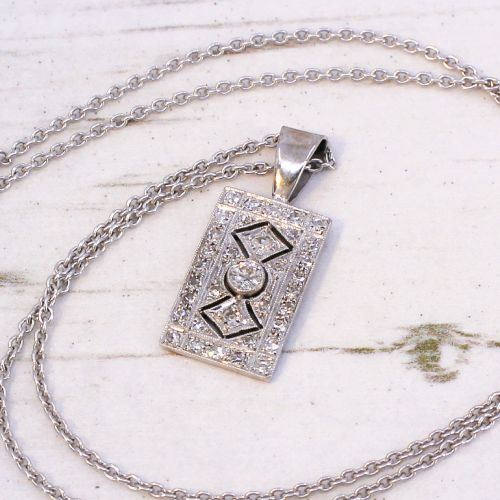
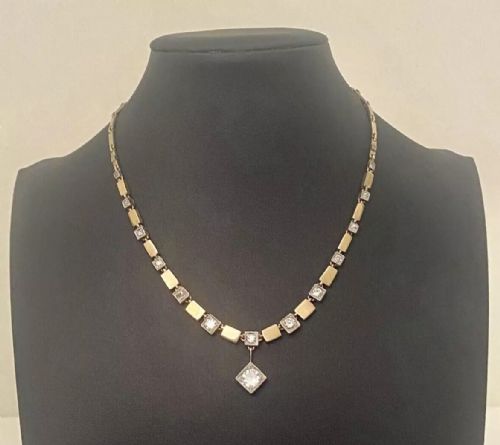
When searching for an art deco necklet, buyers encounter pendant necklaces and drop designs spanning the 1910s, 1920s, and 1930s, alongside pieces reflecting Edwardian and Victorian influences. These items feature structured drops and linear mounts designed to sit closely at the collarbone or suspend lower on fine chains.
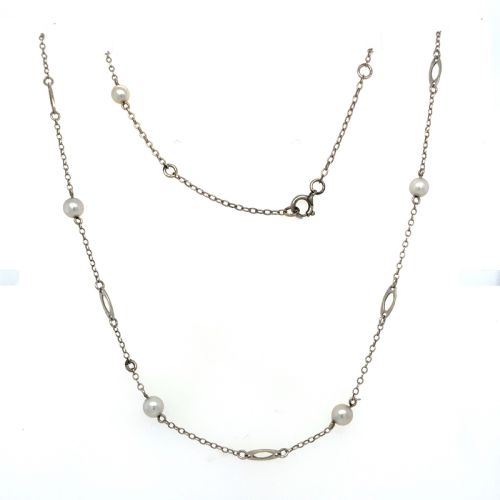
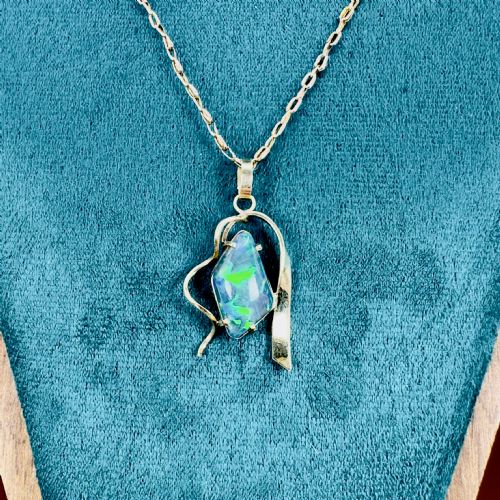
The versions most commonly met on this page range from delicate platinum and diamond pendants to bolder gold settings holding opals, pearls, and sapphires. Such pieces capture the shifting tastes of early twentieth-century design, moving from softer floral motifs towards sharp, symmetrical geometry.
Materials and construction
Platinum and white gold form the backbone of many mountings, valued for their strength in holding intricate stone settings without bulk. Yellow gold also appears, particularly in earlier or more traditional pieces from the opening decades of the century.
Gems such as diamonds, opals, and saltwater pearls are set alongside decorative elements like paste stones and marcasite. Metalwork relies on fine piercing, bezel settings, and articulated joints that allow the drop to move flexibly with the wearer.
Some stones hide secret layers, bringing together contrasting basaltic sapphires and delicate pearls in a single pendant.
Judging quality in early necklets
The distinction between standard examples and exceptional work rests on the harmony of the stones and the precision of the metalwork. Superior pieces display matched diamond cuts, secure settings, and well-balanced proportions that make the drop hang true.
Material choice also drives distinction, with heavy platinum mountings, large natural saltwater pearls, and significant diamond carat weights marking out the finest examples. Finer workmanship shows in the delicacy of the pierced galleries and the integration of secondary gems like sapphires or aquamarines.
The Art Deco Necklet Glossary
- Platinum
- A dense, durable white metal prized for fine jewellery manufacture. It allows for ultra-slim claws and delicate piercing.
- Saltwater Pearl
- An organic gem formed in marine molluscs. These pearls possess a characteristic deep orient and lustre compared to freshwater varieties.
- Doublet
- A composite stone made of two joined sections. Often used to display a thin slice of precious opal backed by a sturdier material.
- Marcasite
- Small faceted crystals of iron pyrite set into silver mounts. They provide a dark metallic sparkle reminiscent of cut steel.
Art Deco Necklet: Frequently Asked Questions
How do I date an art deco necklet?
Dating relies on stylistic clues, metal types, and stone cuts rather than strict boundary lines. Pieces from the nineteen-twenties and thirties often favour stark symmetry, while earlier examples retain Edwardian floral softness.
The choice of platinum or white gold alongside yellow gold helps narrow the decade of manufacture. Hallmarks, where present, offer further confirmation of the assay year and maker.
Are these necklets suitable for daily wear?
Many antique necklets tolerate regular wear if handled with appropriate care. Delicate chains and antique settings benefit from gentle treatment and safe storage away from harder items.
Platinum mountings provide robust security for diamonds, but softer gems like opals and pearls require extra mindfulness. Removing the necklace before sleeping or strenuous activity preserves the setting.
What is the difference between a pendant and a necklace?
A necklace refers generally to any ornament worn around the neck, including beaded strands and continuous metal chains. A pendant specifically designates a suspended ornament hanging from a chain or collar.
Many listings combine these terms as pendant necklaces when the drop is permanently fixed or sold together with its original chain.