


Art Deco Marcasite Jewellery
Art deco marcasite jewellery brings bright silver settings and shimmering iron pyrite crystals together for striking twentieth-century style.
Art Deco Marcasite Jewellery
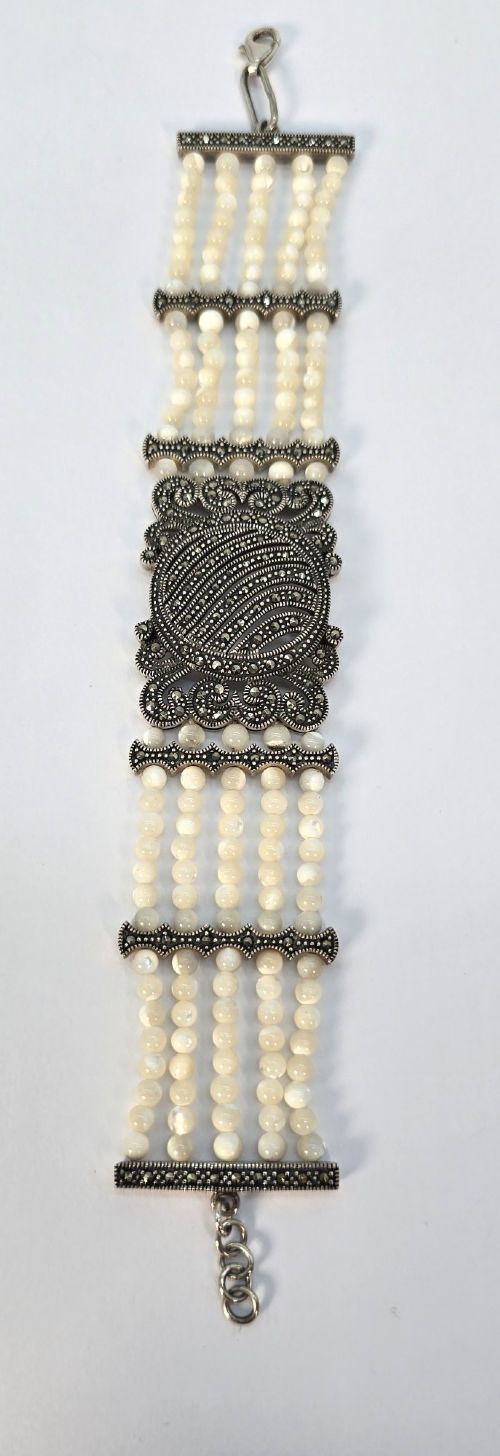
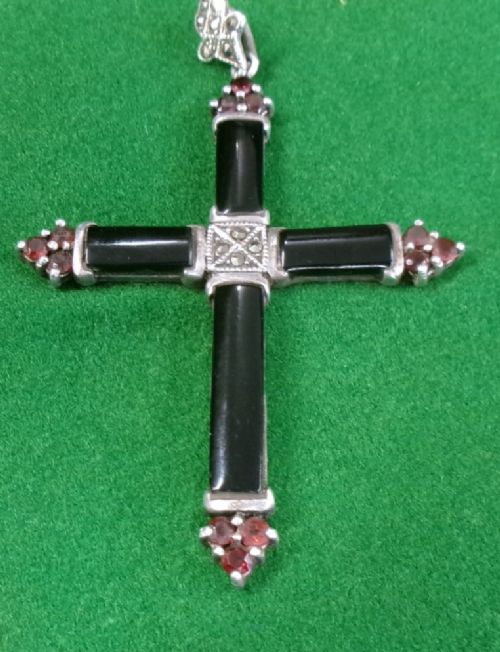
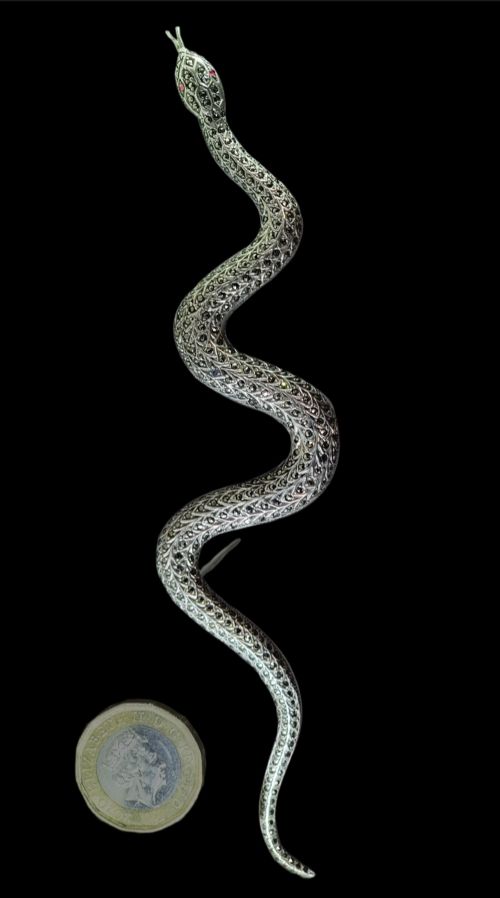
Art deco marcasite jewellery encompasses necklaces, bracelets, earrings, brooches, and cocktail rings designed during the interwar decades and adjacent periods. Pieces range from small stud elements to large floral intaglio pendants and crucifixes.
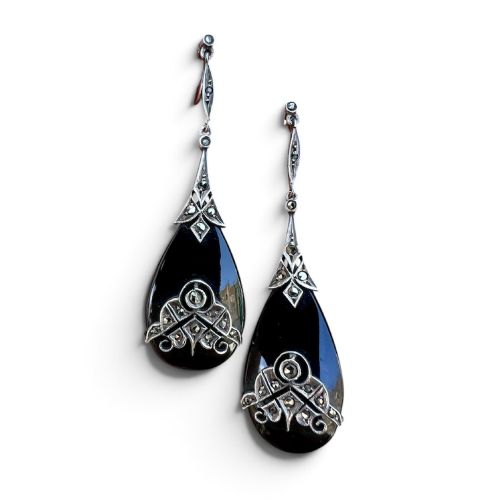
Most examples found here date from the 1920s and 1930s, constructed in silver or sterling silver to hold cut marcasite stones alongside coloured gems. The selection spans distinct styles including Art Deco, Gothic Revival, and Edwardian origins.
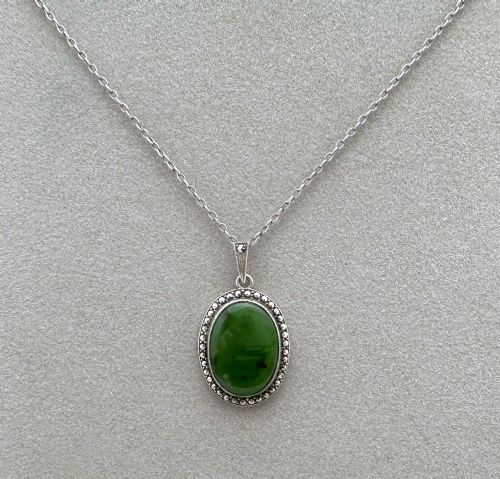
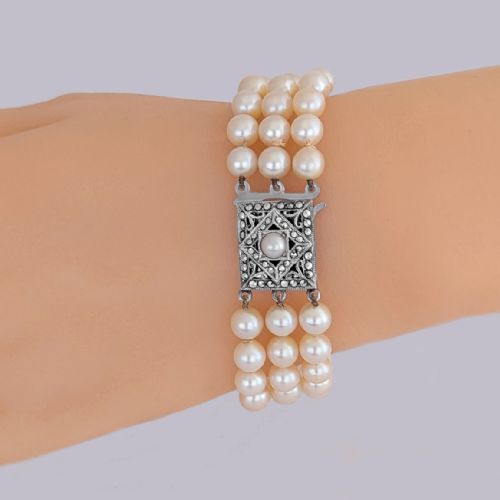
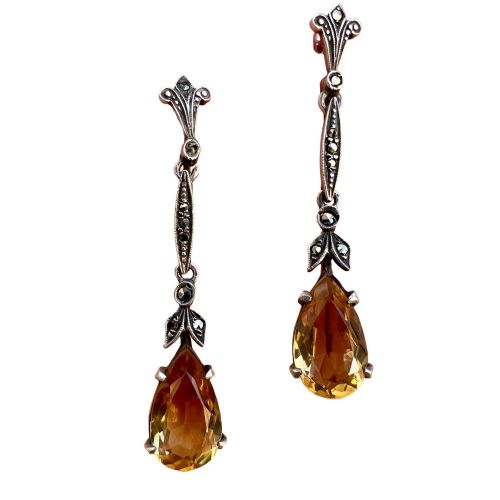
Buyers encounter items set with onyx, jade, cultured pearl, citrine, mother of pearl, chrysoprase, amazonite, chalcedony, and blue stones. These combinations create sharp geometric and floral contrasts typical of early twentieth-century design.
How these pieces were made
Makers set small faceted marcasite crystals into silver or sterling silver channels, securing each stone closely alongside others to form a continuous pavé surface. This technique produces a metallic sparkle that mimics steel or diamond brilliance.
Selected works incorporate additional materials such as 9ct gold, enamel, paste, and natural gemstones like amethyst or zircon. Metal mounts often feature intricate wirework, screwback fittings, or stamped hallmarks denoting standard silver purity.
What varies in quality
Quality shows in the uniformity of stone setting and the precision of the silver work holding each marcasite crystal. Tighter clusters and secure claw or bezel mountings distinguish superior examples from simpler production.
The choice of central gemstone elevates a piece, shifting standard silver work toward finer items featuring jade, chrysoprase, or citrine. Original clasps, boxes, and well-preserved enamel or intaglio details also distinguish better pieces.
The Art Deco Marcasite Jewellery Glossary
- Marcasite
- Pyrite crystals cut with multiple facets and set into jewellery to provide a dark metallic glitter. These stones are traditionally glued or pegged into silver mounts rather than faceted as precious gems.
- Sterling silver
- An alloy of silver containing 92.5 percent pure silver and 7.5 percent other metals, usually copper. This composition provides the durability required for intricate art deco settings.
- Intaglio
- A design carved into the flat surface of a gemstone or glass, creating a sunken relief. This technique is often seen in larger pendants from the period.
- Paste
- Hand-cut glass used as a gemstone substitute in antique jewellery. High-grade paste stones are foiled at the back to enhance their colour and brilliance.
- Screwback
- A mechanical earring finding utilising a threaded post and small nut to secure the piece on unpierced lobes. This closure type is common on vintage earrings from the interwar years.
Art Deco Marcasite Jewellery: Frequently Asked Questions
How do I clean marcasite jewellery?
Clean silver and marcasite items gently using a dry soft cloth to remove surface dust. Avoid submerging pieces in liquid cleaners, as moisture loosens the adhesive holding the small pyrite stones in place.
Keep settings away from ultrasonic jewellery baths and harsh chemical dips. A soft brush can clear trapped debris from around the stone settings without damaging the metal.
Are these pieces made of real silver?
Many items feature solid silver or sterling silver construction, frequently stamped with numerical marks such as 925. The metal provides a sturdy foundation for the dense cluster of pyrite stones.
Some older examples incorporate mixed metals, including 9ct gold combinations alongside silver mounts. Examining the reverse of the piece usually reveals the hallmark or metal characteristics.
What is the difference between marcasite and pyrite?
Jewellery marketed as marcasite actually uses small faceted pieces of iron pyrite, a mineral chemically distinct from true marcasite but physically stable for mounting. Pyrite resists tarnishing better and holds multiple flat facets securely.
Craftspeople adopted the term marcasite historically to describe these brilliant grey metallic stones. The tradition persists among collectors and dealers today.
How should I store my vintage jewellery?
Store items in individual fabric pouches or lined compartments to prevent the silver settings from scratching adjacent pieces. Limiting exposure to air helps slow the natural tarnishing process of the metal.
Keep collections away from damp environments and direct sunlight. Original boxes provide suitable storage when lined with soft materials.