









Art Deco Marble Desk Statue
An art deco marble desk statue brings sharp twentieth-century glamour to your study, combining heavy stone plinths with animated metal figures.
Art Deco Marble Desk Statue
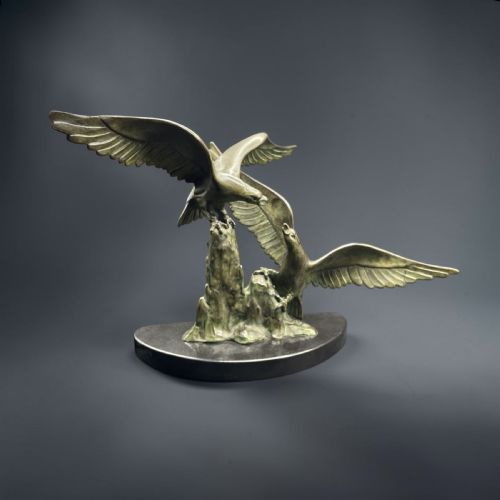
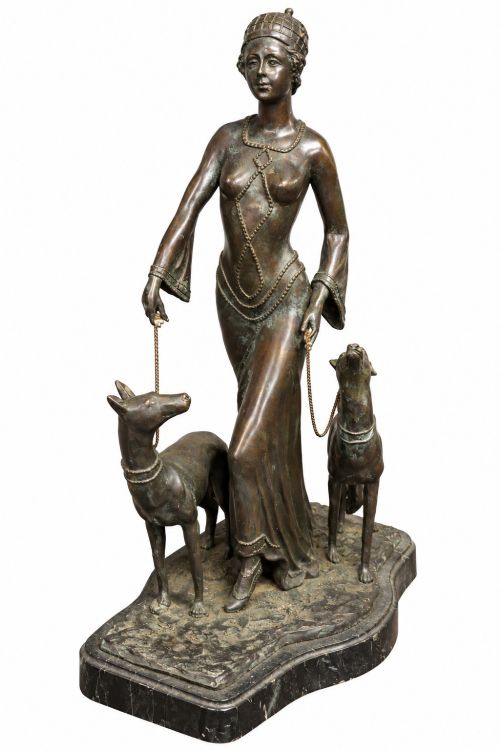
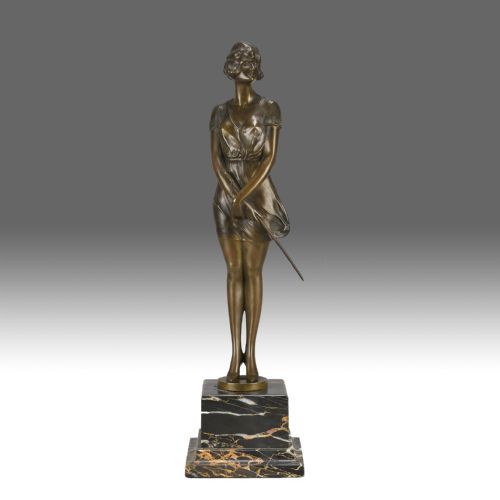
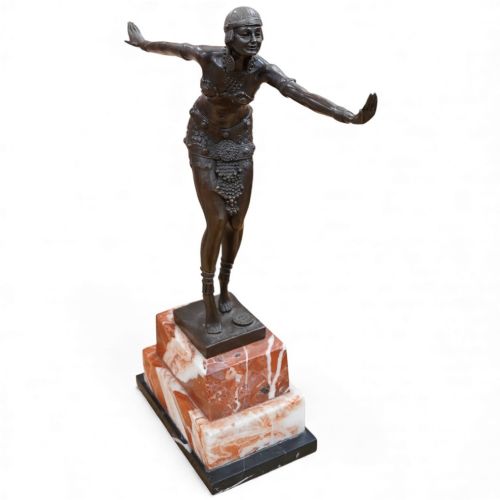
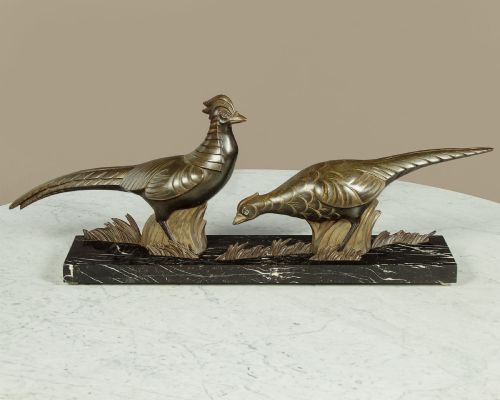
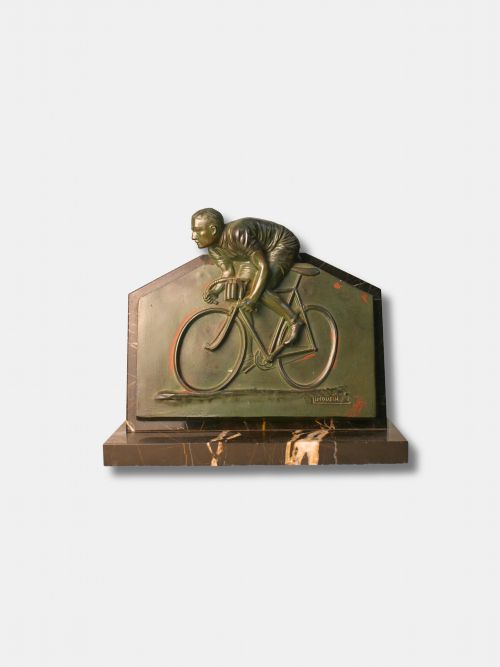
When you search for an art deco marble desk statue, you encounter substantial desktop pieces that anchor figures of dancers, animals, and athletes onto weighty bases of dark or variegated stone. These decorative objects emerge principally from the 1920s and 1930s, reflecting the aerodynamic lines and vigorous motion characteristic of the period.
The most common iterations on this page pair patinated metal or spelter figures with solid marble and onyx plinths. You will frequently find animals such as panthers and birds, alongside human subjects like dancers and sporting figures, mounted securely to rectangular or stepped stone blocks.
Beyond standard sculptural ornaments, the selection encompasses practical desk accessories including bookends, figural lamps, and automobile mascots adapted for display. Each piece utilises the natural weight of stone to ground dynamic sculptural compositions designed specifically for desktop viewing.
Materials and construction
Sculptors of this era relied on a combination of cast metals and heavy quarried stone. Figures were cast in bronze, silvered bronze, brass, or lower-cost spelter, then finished with patinated or plated surfaces to resemble precious metals.
The stone elements, predominantly marble and onyx, were cut, shaped, and polished to create solid plinths and bases. Figures were then mechanically fixed to these heavy stone foundations to ensure stability on a desk or table.
Art Deco Marble Desk Statue Retail Price Guide 2026
Typical asking prices for art deco marble desk statue among the pieces listed under this phrase on Sellingantiques today, from the lower quarter to the upper quarter. They describe what is for sale here now, not the wider market.
Listings feature periods spanning 1910 to 1930, uniting marble, bronze, spelter, onyx, and brass in sculptural forms.
Assessing quality and finish
The selection of the stone plinth also distinguishes the tier of a piece. Dense, finely polished marble and rich onyx bases demonstrate superior craftsmanship compared to basic, roughly cut stone slabs.
Bruno Zach·Aurore Onu·Zoldan Kovats·P. Sega·H. Chiparus·Pierre Laurel·H. Bal·Eugène Désiré Piron·Louis Lejeune·R Henn·C Neuhaus·Geo Maxim
The Art Deco Marble Desk Statue Glossary
- Spelter
- A zinc alloy frequently utilised as a cost-effective substitute for bronze in decorative figures. It accepts patination readily to imitate more expensive metals.
- Onyx
- A banded variety of chalcedony prized for its translucent layers and variegated colouration. It forms polished plinths for sculptural figures.
- Patinated metal
- Metal treated with chemical solutions to produce a surface finish ranging from dark brown to green. This treatment enhances sculptural depth and protects the underlying material.
- Bookends
- Paired heavy objects designed to support upright volumes on a shelf or desk. They often feature matching figural groups mounted on stone bases.
Art Deco Marble Desk Statue: Frequently Asked Questions
What periods do these pieces date from?
These decorative items originate predominantly from the 1920s and 1930s, capturing the height of the Art Deco movement.
A smaller number trace back to the 1910s, reflecting late Art Nouveau sensibilities before the geometric styles took hold.
How do I distinguish bronze from spelter?
Bronze is a heavier, harder copper alloy that retains crisp detail and cold metallic properties. Spelter is a softer zinc alloy that feels lighter and can show wear or bubbling beneath the patination.
Looking underneath the base often reveals the lighter, greyish metal of spelter where the patination has rubbed away.
How should I clean marble and onyx bases?
Dust the stone regularly with a soft, dry cloth to prevent dirt accumulation. Avoid harsh chemical cleaners or excess water, which can damage the polished surface and seep into the metal joints.
For stubborn marks, a damp cloth with mild soap followed by immediate drying is sufficient.
Were these objects purely decorative?
Many items served dual purposes as functional desktop accessories. Bookends organised reading materials, while figural lamps provided illumination alongside their sculptural appeal.
Automobile mascots and night lights similarly combined utility with the sleek aesthetic of the era.