





Green Spelter Sculpture
These green spelter sculpture pieces capture the metallic lustre and stylised energy of early twentieth-century metalwork, offering striking display forms for collectors of antique decorative objects.
Green Spelter Sculpture
A green spelter sculpture combines cast zinc alloy figures with patinated finishes, frequently mounted on heavy stone plinths to create balanced decorative objects. When you search for green spelter sculpture, you find figural and animal subjects spanning the late nineteenth century through to the interwar period.
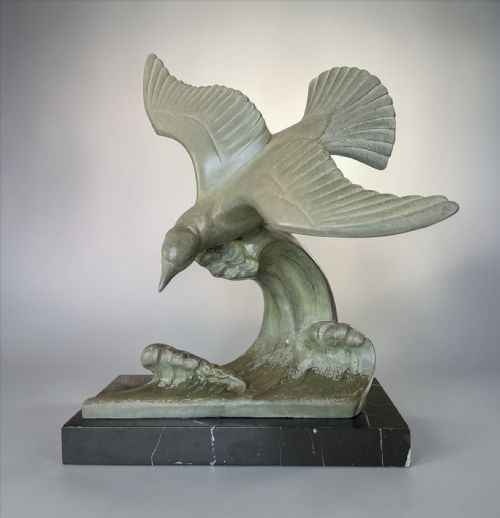
The objects on this page include animal studies such as panthers, seagulls, and dogs alongside female figures and clock garnitures. Art Deco and Art Nouveau styles dominate the selection, showing the shift from flowing organic lines to geometric vigour.
French workshops produced many of these figures, often pairing patinated spelter with bases of onyx, black marble, or Verdi green marble. These pieces served as mantel ornaments and desk sculptures, reflecting the domestic tastes of their respective eras.
Materials and construction
Spelter, an alloy primarily composed of zinc, provided a malleable medium for founders to cast detailed figures at a lower production cost than solid bronze. Artisans applied patinas, including green finishes, to simulate the appearance of aged bronze or to achieve specific decorative effects.
Founders mounted these cast metal figures onto contrasting plinths made from natural stone such as onyx and various marbles. The weight of the stone base grounded the lighter spelter superstructure, providing stability for display on furniture.
Green Spelter Sculpture Retail Price Guide 2026
Typical asking prices for green spelter sculpture among the pieces listed under this phrase on Sellingantiques today, from the lower quarter to the upper quarter. They describe what is for sale here now, not the wider market.
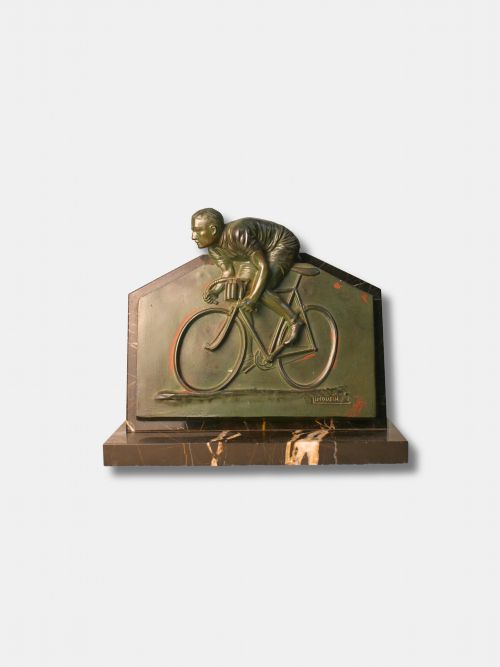
A Tour de France cycling figure proves that even zinc alloy can be pressed into service to celebrate a breakaway hero.
Assessing quality and craftsmanship
The choice of mounting material also distinguishes the range, with dense onyx and figured marble plinths indicating a higher grade of manufacture. The integration between the metal figure and its stone base demonstrates the original maker's attention to proportion.
Auguste Moreau·C Masson·P Sega·PLAGNET
The Green Spelter Sculpture Glossary
- Spelter
- A zinc alloy used as a cost-effective substitute for bronze in decorative figures and clock cases. It takes patination well but is softer than copper-based metals.
- Patination
- The surface treatment or chemical colouring applied to metal to impart an aged or specific decorative finish. In these pieces, green patinas emulate oxidized metals.
- Art Deco
- A design style of the 1920s and 1930s characterised by streamlined geometric forms and stylized representations of animals and humans. It succeeded the more organic curves of Art Nouveau.
- Onyx
- A banded variety of chalcedony used frequently as a heavy plinth material for decorative metal sculptures. Its layered stone patterns provide a contrasting base for the metal figure above.
- Garniture
- A set of decorative objects, typically comprising a clock and matching side ornaments, designed to be displayed together on a mantelpiece.
Green Spelter Sculpture: Frequently Asked Questions
What is spelter made of?
Spelter is primarily an alloy of zinc, sometimes mixed with lead or tin to aid in the casting process. It is softer and more brittle than bronze.
Founders used it extensively for decorative domestic objects because it melted at lower temperatures and flowed easily into detailed moulds.
How do I clean green spelter sculpture?
Dust these pieces gently with a dry, soft cloth to prevent accumulation in the crevices of the casting. Avoid liquid cleaners and chemical solvents, which can strip the patinated finish from the metal.
Keep the stone bases protected from moisture and oils to preserve their polished surface.
How do I distinguish Art Deco from Art Nouveau?
Art Nouveau pieces, generally from the late nineteenth and early twentieth centuries, feature flowing lines inspired by natural plant forms and organic curves. Female figures from this period often display long, cascading hair.
Art Deco works from the 1920s and 1930s favour clean geometric shapes, symmetrical layouts, and stylized, dynamic representations of animals and human figures.
Were these sculptures signed?
Some pieces bear signatures or foundry marks stamped directly into the metal base or cast along the edge of the figure. These signatures often represent the sculptor who modelled the original work rather than the foundry that cast the metal.
Many commercial production pieces remain unsigned, manufactured in volume for the domestic market.