








Art Deco Mantel Figure
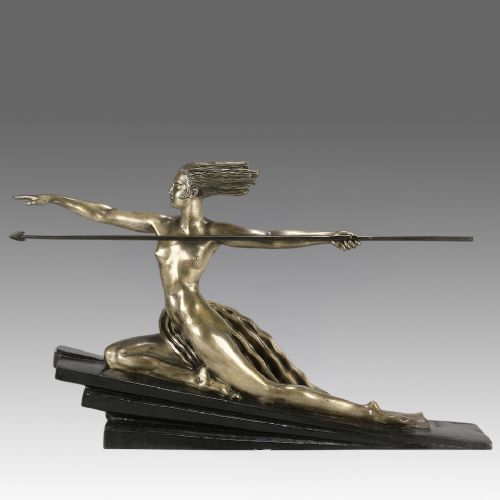
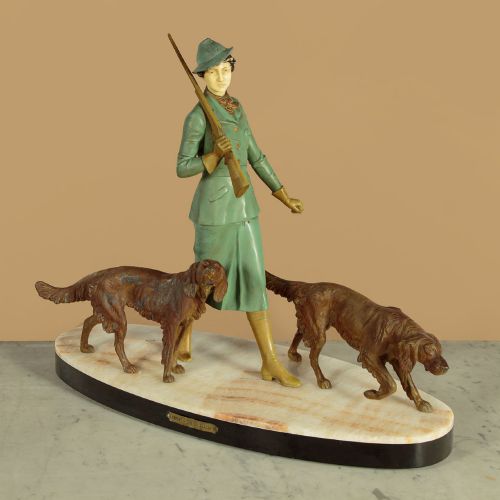
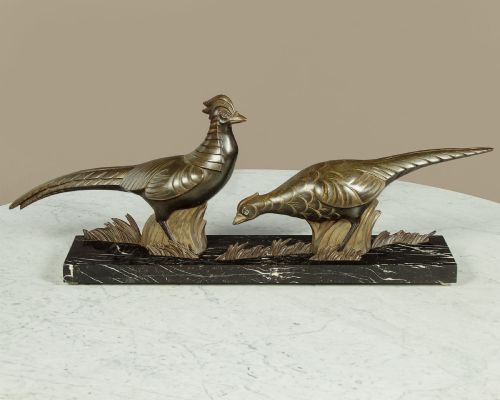
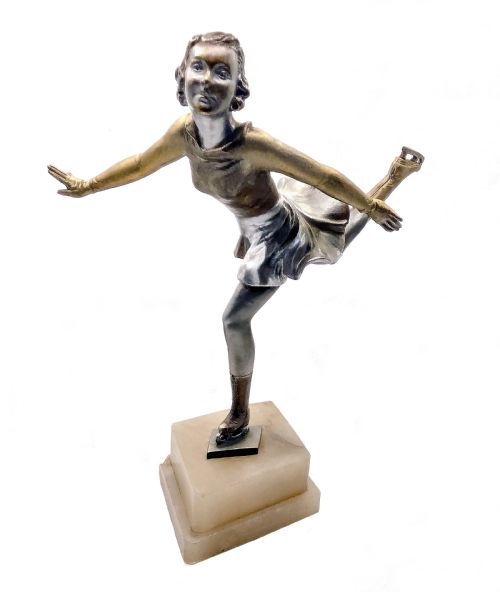
An art deco mantel figure brings the distinctive lines and kinetic energy of the interwar years straight onto a shelf or sideboard.
Art Deco Mantel Figure
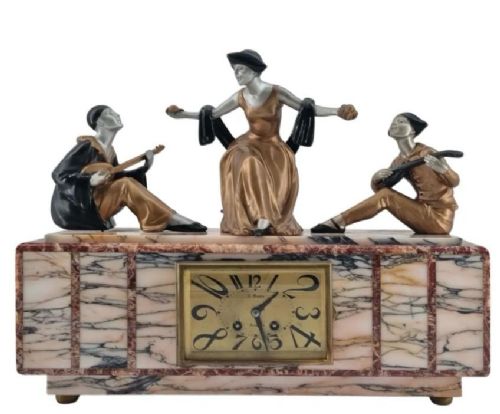
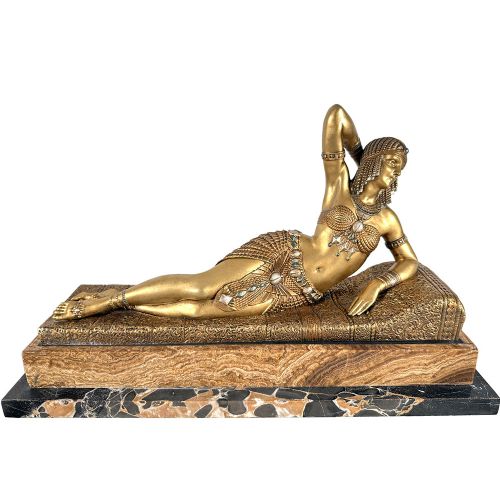
An art deco mantel figure is a sculptural ornament designed to sit atop a fireplace mantel or surface, capturing the aesthetic spirit of the early twentieth century. These pieces emerge predominantly from the 1920s and 1930s, reflecting the modernist impulses of French and European workshops.
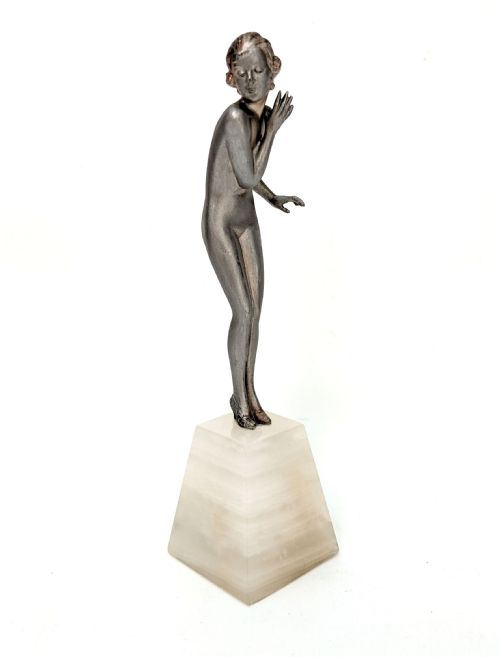
The subjects on this page range from sleek female dancers and mythological scenes to athletic animals like whippets, stags, and panthers. Many examples incorporate bases of marble, onyx, or alabaster to elevate the main subject.
The most common formats met here are standalone figurines, figural clock garnitures, and table lamps or night lights. They combine decorative appeal with the functional architecture of period interiors.
How they were made
Makers utilised a variety of metals, casting bronze, silvered bronze, and spelter into dynamic forms that defined the style. Spelter served as a common, accessible alternative to solid bronze, often receiving patinated or cold painted finishes to imitate more costly metals.
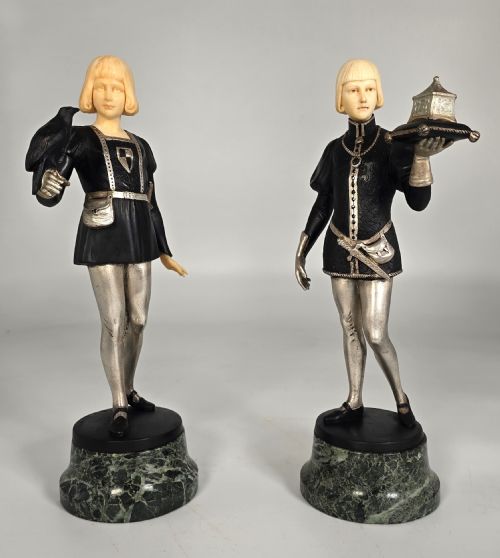
Many finer works combined bronze with carved ivory in the chryselephantine technique, particularly for faces and hands. Heavy stone bases in marble, onyx, or alabaster anchored the lighter metal and ivory figures.
Art Deco Mantel Figure Retail Price Guide 2026
Typical asking prices for art deco mantel figure among the pieces listed under this phrase on Sellingantiques today, from the lower quarter to the upper quarter. They describe what is for sale here now, not the wider market.
Listings combine bronze, spelter, and patinated metal with stone bases of marble, onyx, and alabaster.
What varies in quality
The distinction between tiers rests in the precision of the casting and the fidelity of the finish. Master modellers produced crisp details in the facial expressions, drapery, and musculature, whereas secondary castings often lose definition in the secondary chasing.
Material choice marks another clear division, separating solid cast bronze and carved ivory works from mass-produced spelter mounted on simple stone. The weight, stability, and integrity of the marble or onyx base further signal the standard of production.
Lavroff·Josef Lorenzl·Sega·Demetre Chiparus·Gotthilf Jaeger·Paul Philippe·Pierre Le Faguays·Claire Colinet·Paul Joris·Michel Decoux·Ferdinand Priess·I. Rochard·B. Rezl·Geo Maxim
The Art Deco Mantel Figure Glossary
- Spelter
- A zinc alloy commonly used as a cost-effective substitute for bronze in interwar decorative figures. It accepts patination and cold painting well, though it remains softer than bronze.
- Chryselephantine
- A term describing sculptures combining metalwork with carved ivory. This technique was frequently deployed for luxurious female dancer and mythological figures.
- Patination
- The chemical treatment or natural ageing applied to metal surfaces to produce a specific colour or finish. It protects the metal while enhancing the sculptural contours.
- Garniture
- A matching set of ornamental objects, typically comprising a central clock flanked by two matching side figures or vases. They formed a balanced display on period mantelpieces.
- Cold painted
- A method where paint is applied to a metal object without heat firing. It allows for vibrant multi-coloured finishes on bronze and spelter sculptures.
Art Deco Mantel Figure: Frequently Asked Questions
What materials make up an art deco mantel figure?
The listings show figures cast in bronze, silvered bronze, patinated metal, and spelter. These metals frequently pair with carved ivory or rest upon heavy bases of marble, onyx, and alabaster.
Selecting a piece involves considering how these contrasting materials interact visually and structurally within a room setting.
How do I date a mantel figure from this era?
Dating relies on stylistic markers of the 1920s and 1930s, such as geometric clothing folds, stylised animal anatomies, and the integration of stone bases. Many examples carry signatures or workshop attributions from known modellers.
Examining the casting quality and the type of metal or stone used helps anchor the piece within the interwar period.
Where should I place a figure in my home?
These sculptures suit traditional mantelpieces, sideboards, or console tables where their vertical lines can draw the eye. Clock garnitures and matching pairs work particularly well as symmetrical centrepieces.
Placing them away from direct heat sources helps preserve the stability of stone bases and any delicate surface finishes.
Are these figures signed by the artists?
Some pieces bear the cast signature of prominent sculptors on the bronze or stone base, while others remain unsigned or attribute their design to a specific hand. Unsigned works were often produced in greater numbers by commercial foundries.
A signature adds notable context but does not diminish the decorative impact of a well-executed period casting.