




Art Deco Makeup Table
An art deco makeup table brings geometric lines and striking veneers straight into the bedroom.
Art Deco Makeup Table
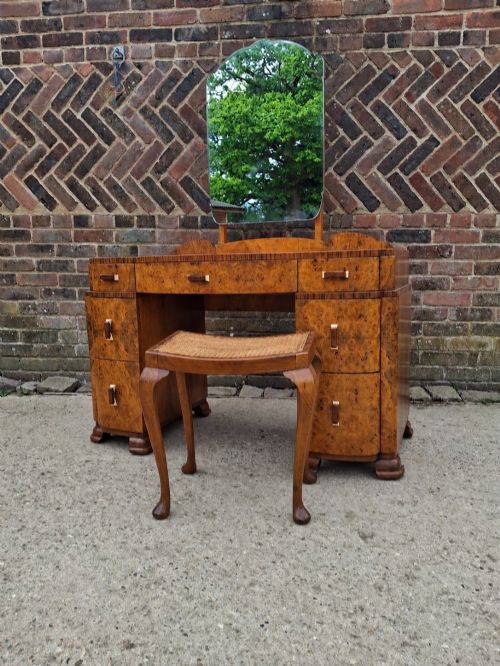
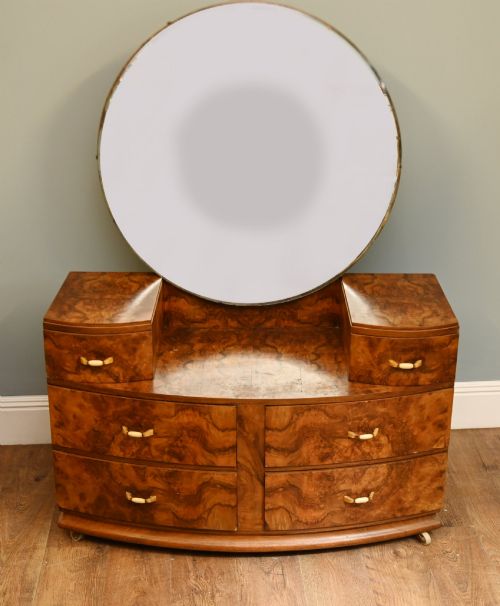
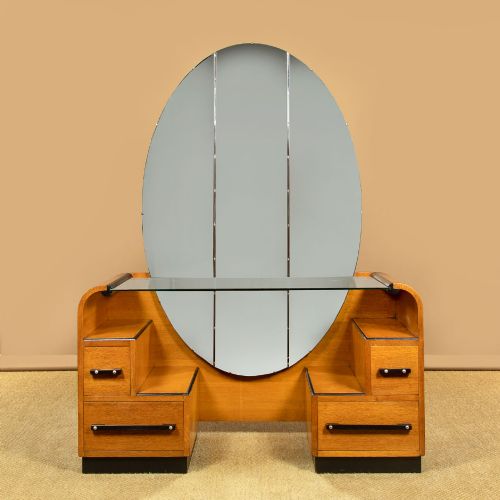
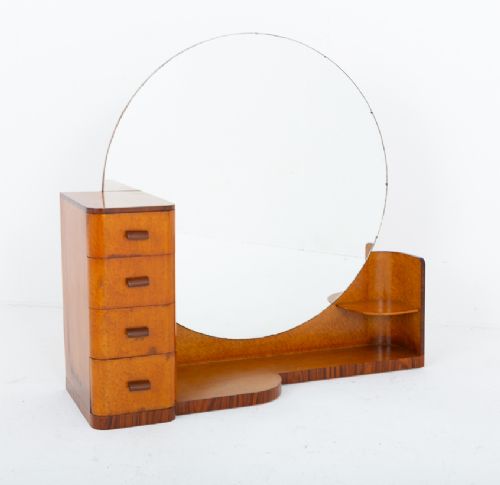
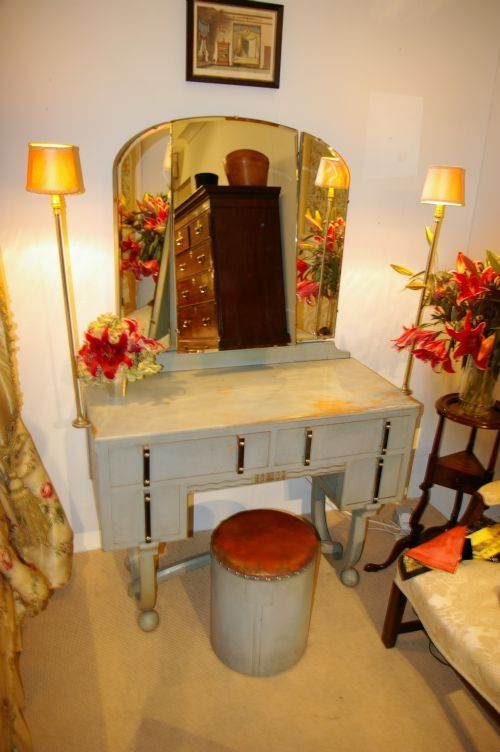
An art deco makeup table serves as a striking focal point in the bedroom, combining practical surface space with bold geometric design. When searching for an art deco makeup table, buyers encounter various forms including pedestal dressing chests, vanity tables complete with mirrors, and matching stools. Most pieces found here date from the 1920s and 1930s, reflecting the height of the modernist design movement.
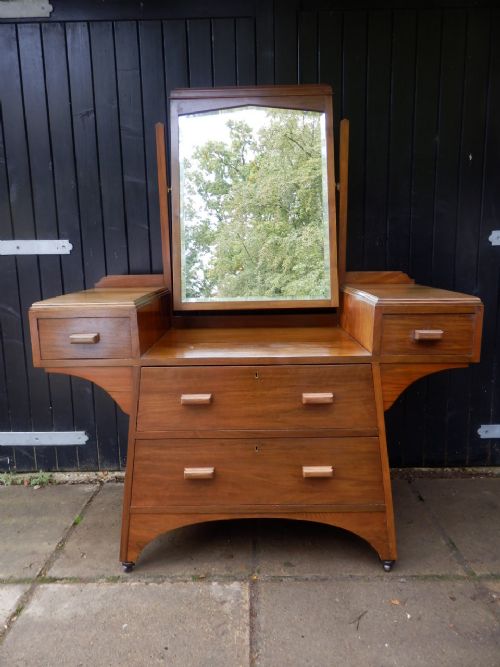
The construction of these pieces often incorporates twin pedestals or streamlined central mirrors, offering both function and architectural presence. Alongside full dressing tables, the selection includes smaller vanity mirrors and companion chairs designed to complete the suite. Walnut, burr walnut, and exotic maples dominate the forms, capturing the luxurious aesthetic of the interwar period.
How they were made
Cabinet makers of the period utilised figured timbers like burr walnut, birds eye maple, and sycamore to create rich visual patterns across flat surfaces and curved pedestals. These decorative veneers were carefully matched and applied to a stable wood core, often accented with contrasting banding or polished glass elements. The integration of mirror glass, whether in large pivoting frames or smaller easel backs, formed an essential part of the structural composition.
Metal components and specialised hardware appeared alongside traditional joinery to give these dressing tables their characteristic industrial yet refined edge. Workshops employed skilled techniques in wood-bending and marquetry to achieve the sweeping curves and symmetrical layouts demanded by the style. Every element, from the primary wood selection to the supporting stool frames, was built to showcase modern elegance.
Art Deco Makeup Table Retail Price Guide 2026
Typical asking prices for art deco makeup table among the pieces listed under this phrase on Sellingantiques today, from the lower quarter to the upper quarter. They describe what is for sale here now, not the wider market.
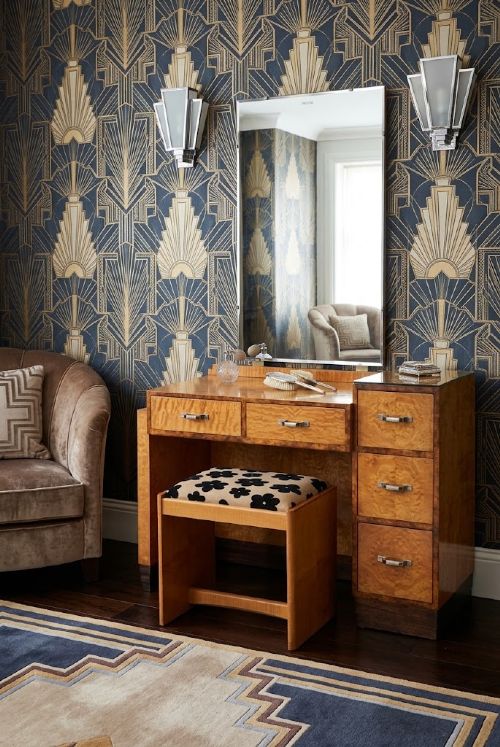
Some dressing tables arrive with flowery new top covers on their stools, proving that comfort occasionally trumps strict period accuracy.
What varies in quality
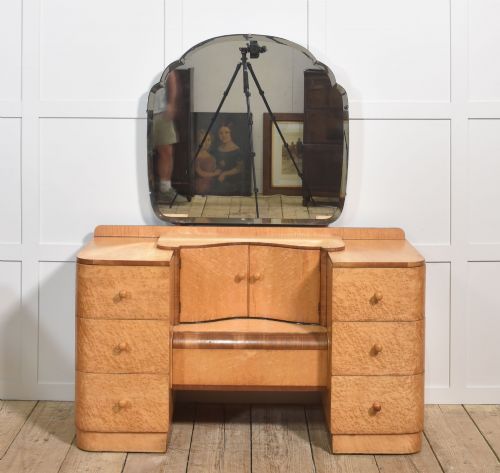
The standard of an art deco makeup table rests heavily on the choice and execution of its veneers, with book-matched burr walnut or birds eye maple representing the upper tier. Master cabinet makers achieved superior visual rhythm through careful grain alignment across drawers and pedestals, whereas simpler pieces relied on plain mahogany or standard oak. The integration of original mirror glass and complementary seating further distinguishes exceptional studio pieces from standard production items.
Structural complexity also defines the grade of a vanity table, ranging from straightforward single-pedestal chests to expansive multi-part suites. Pieces bearing documented workshop attributions or designer signatures demonstrate higher levels of bespoke craftsmanship in their curved framework and hardware details. Ultimately, the cohesion of the wood selection and the preservation of the original finish separate ordinary examples from the finest works.
Maurice Adams·Harry and Lou Epstein·Betty Joel·Rowley Gallery
The Art Deco Makeup Table Glossary
- Burr walnut
- A highly figured wood veneer harvested from the wart-like growths on walnut trees, prized for its swirling grain patterns. It provides a luxurious surface texture typical of high-end interwar furniture.
- Birds Eye Maple
- A patterned maple timber featuring small, swirling dots that resemble tiny eyes across the light wood. This material adds a distinctive, luminous quality to modernist dressing tables.
- Pedestal dressing chest
- A form of furniture featuring banks of drawers supporting the main surface and mirror above. This layout maximises storage while maintaining a balanced geometric silhouette.
- Vanity mirror
- A looking glass designed specifically for grooming, often mounted on an easel back or fixed to a dressing table frame. These mirrors frequently incorporate bevelled edges or shaped glass panels.
Art Deco Makeup Table: Frequently Asked Questions
What is an art deco makeup table?
An art deco makeup table is a functional dressing surface from the 1920s or 1930s characterised by geometric lines and decorative wood veneers. These pieces typically include integrated mirrors and matching pedestals.
Designed for personal grooming, they reflect the modernist aesthetic of the interwar period through streamlined shapes and luxurious materials like burr walnut.
How do I date an art deco makeup table?
Dating these tables involves examining the primary woods, construction techniques, and hardware styles typical of the interwar decades. Pieces from the 1920s often feature distinct transitional shapes, while 1930s examples lean towards bolder waterfall curves and exotic veneers.
Matching chairs, mirrors, and recorded workshop attributions also help narrow down the manufacturing period.
How do I style a vintage vanity table?
A vintage vanity table works best when allowed to stand as a focal point within a bedroom or dressing room. Pairing the table with its original stool or a complementary modern seat highlights the architectural lines of the piece.
Keeping the surface uncluttered preserves the visual impact of the figured walnut or maple grain.
Are these tables sturdy enough for daily use?
These tables were constructed by skilled cabinet makers using robust hardwoods and stable veneer cores designed for everyday practicality. Their solid frames and substantial pedestals offer reliable support for daily grooming routines.
Care should be taken to protect polished wood surfaces and original mirror glass from excessive moisture.