




Art Deco Guilloche Enamel Box
An art deco guilloche enamel box brings geometric punch and translucent colour to a dressing table.
Art Deco Guilloche Enamel Box
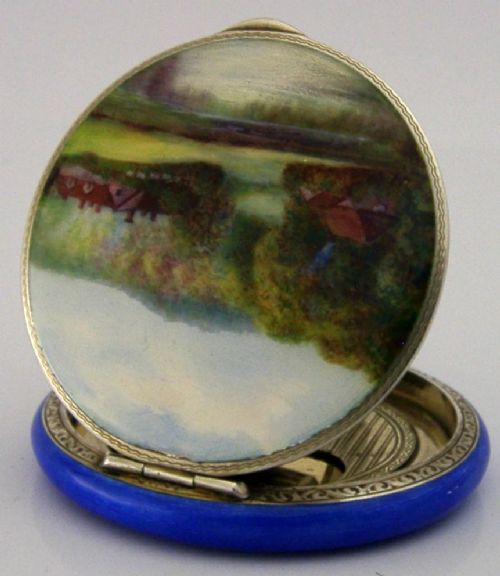
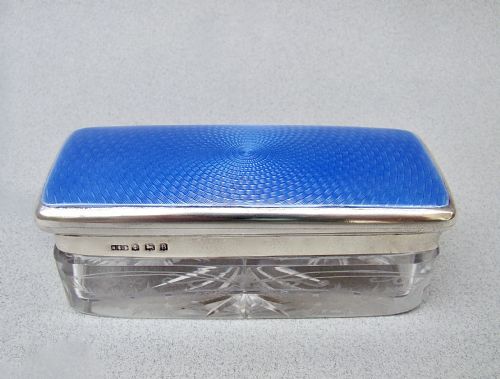
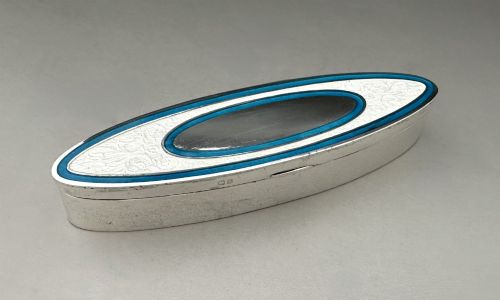
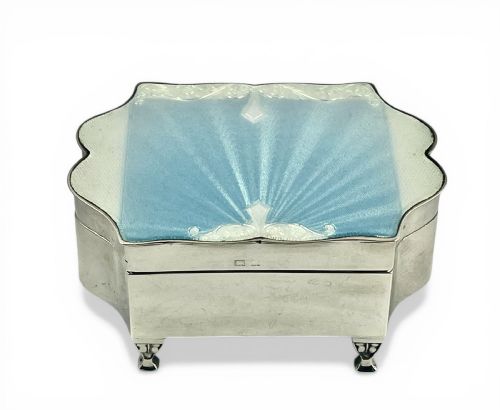
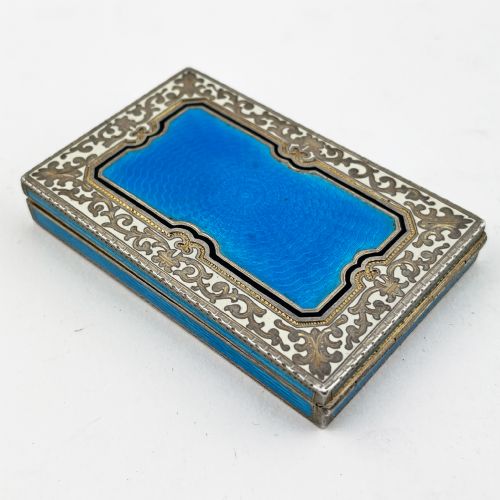
When searching for an art deco guilloche enamel box, a buyer encounters small receptacles designed for vanity and travel, including powder compacts, pill boxes, dressing table jars, and jewellery boxes. These pieces combine compact functionality with vibrant coloured glass-like surfaces, often featuring machined geometric patterns beneath the translucent glaze.
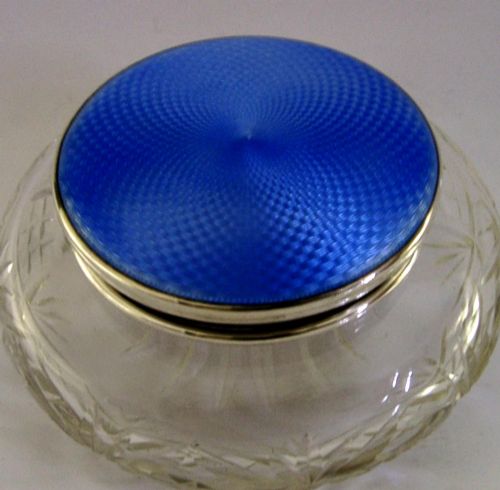
Most examples found here hail from the 1920s and 1930s, reflecting the height of the modernist design movement alongside occasional Edwardian precursors. The form usually pairs a solid sterling silver or silver-gilt base and collar with a patterned enamel lid, sometimes incorporating cut glass or crystal bodies.
Makers utilised various functional shapes, from circular rouge pots and oblong trinket boxes to tall jars and handheld compacts. The surviving items demonstrate how daily accessories of the interwar period turned utilitarian objects into vibrant desktop and dressing table ornaments.
Materials and construction methods
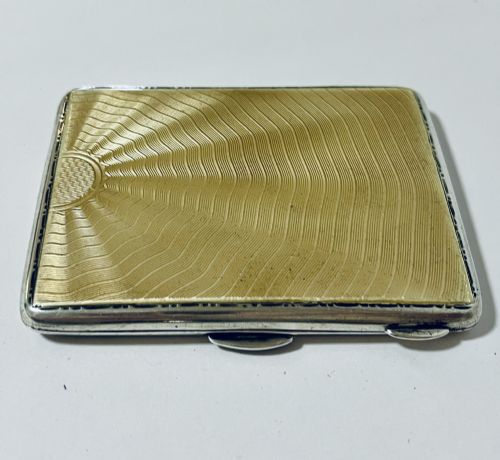
Craftsmen built these containers using sterling silver, gilt metal, or cut glass as the structural body, applying vitreous enamel to the metal lids. The signature guilloche effect involved machining precise, repeating geometric patterns into the metal substrate using a rose engine lathe before fusing coloured enamel over the top.
The translucent properties of the enamel allowed light to pass through the glassy layer and bounce off the engraved metal cuts beneath, creating a shimmering moiré or sunburst visual effect. Artisans then polished the finished lid flush with the silver mounts to achieve a smooth, tactile surface.
Birmingham assay office marks appear frequently across these silver and enamel items, alongside London hallmarks.
Assessing craftsmanship and execution
Quality in these pieces rests upon the precision of the underlying machine turning and the clarity of the vitreous enamel layer. Finer examples display deep, perfectly centred engine-turned patterns that interact cleanly with the translucent glaze, whereas lesser specimens feature muddy colours or uneven enamel thickness.
The weight and gauge of the sterling silver housing also signal standard, with thicker mounts and crisp hallmarks indicating superior workshop production. Artisans who executed clean hinges, tight lid closures, and unblemished glass bodies elevated a simple container into a durable luxury article.
Henry Clifford Davis·Henry Matthews·Goldsmith's and Silversmith's Co.·Deakin & Francis·Turner & Simpson·F B Reynolds·Cohen & Charles·Elkington & Co
The Art Deco Guilloche Enamel Box Glossary
- Guilloche
- A decorative technique where a mechanical lathe engraves precise geometric patterns into metal. This engine-turned design serves as the reflective base beneath translucent enamel.
- Vitreous enamel
- Glass powder fused to a metal surface at high temperatures. It creates a hard, glossy coloured coating that resists scratching.
- Silver-gilt
- Sterling silver that has been plated with a thin layer of gold. This treatment provides a warm internal glow to transparent enamel finishes.
- Dressing table jar
- A small lidded container meant to hold cosmetics, pins, or trinkets. They frequently feature heavy cut glass bodies paired with decorated silver lids.
Art Deco Guilloche Enamel Box: Frequently Asked Questions
What were these boxes used for?
These containers served practical functions on dressing tables and inside handbags during the early twentieth century. Owners stored cosmetics, face powder, pins, pills, or cigarettes inside them.
Their portable nature meant people carried compacts and pill boxes daily, while larger jars and trinket boxes remained stationary on dressing chests.
How do I date an enamel box?
Dating relies primarily on the assay office hallmarks stamped into the silver mounts. British pieces feature maker's marks, standard marks, and date letters that pinpoint the exact year of manufacture.
Stylistic cues such as bold geometric lines or pastel colour palettes also help distinguish 1920s modernist items from earlier Edwardian work.
Are the bodies made of glass or metal?
The construction varies depending on the specific object type and intended use. Many powder boxes and dressing jars feature heavy cut glass or crystal bodies topped with decorated metal lids.
Compact cases, pill boxes, and cigarette carriers are typically fabricated entirely from solid sterling silver or gilt metal.
How should I clean my enamel box?
Enamel requires gentle care to preserve its glossy vitreous surface and delicate metal mounts. Warm water and mild soap applied with a soft cloth will remove surface dust.
Harsh silver dips or abrasive polishes must be kept away from the enamel and hinges to prevent scratching or chemical degradation.