


Art Deco Glass Ceiling Shade
An art deco glass ceiling shade brings geometric light and period character overhead, capturing the spirit of the interwar years.
Art Deco Glass Ceiling Shade
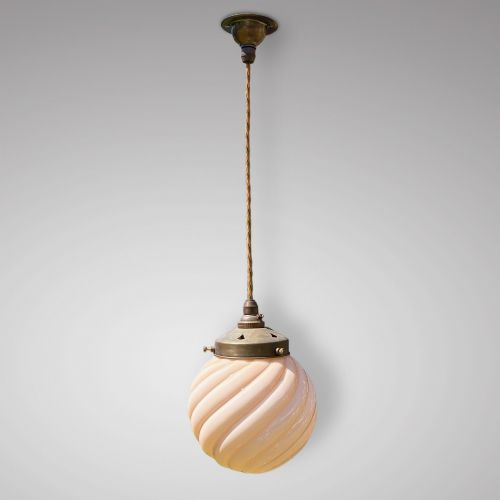
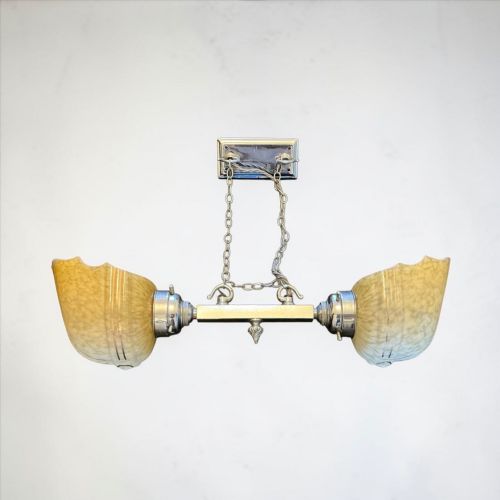
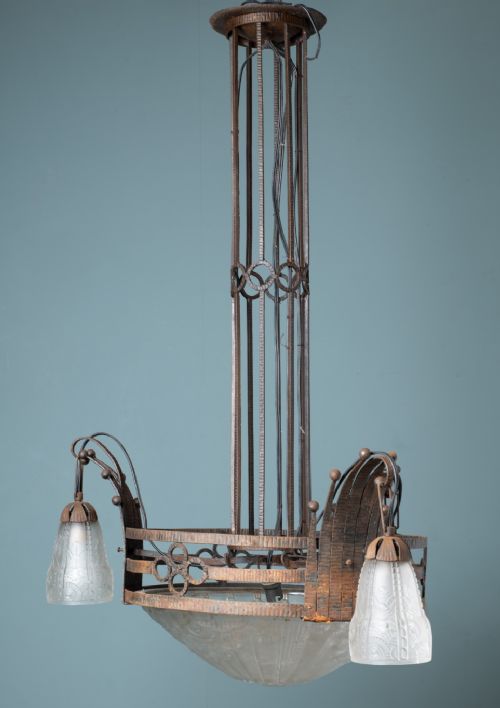
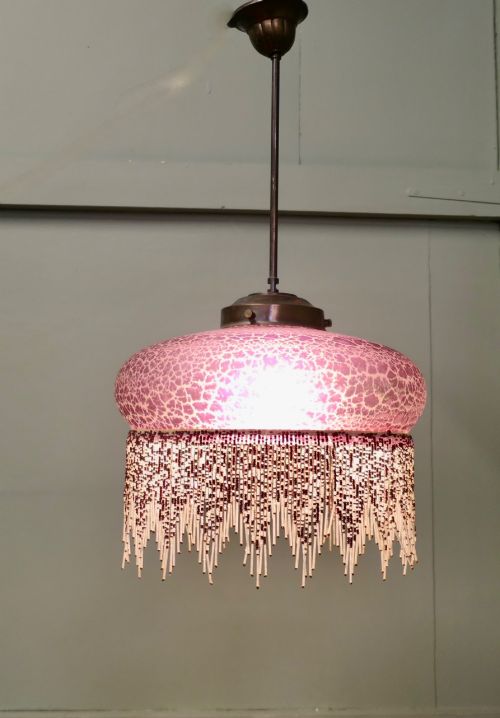
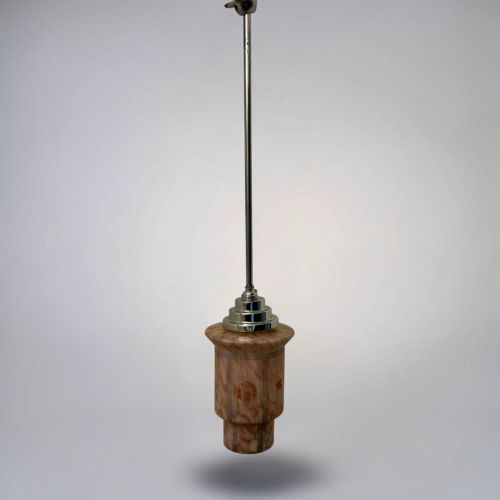
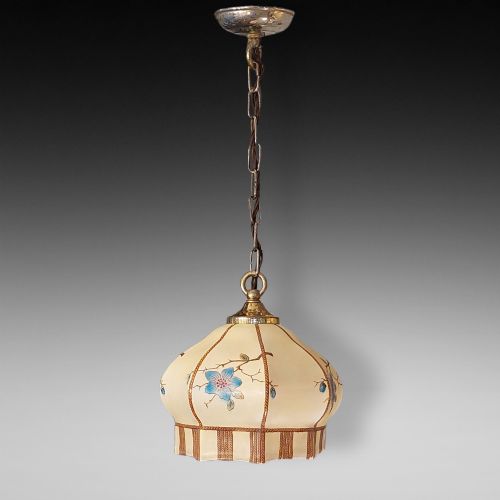
When you search for an art deco glass ceiling shade, you encounter overhead lighting from the 1920s, 1930s, and occasionally the Edwardian era or 19th Century. These pieces take the form of pendant lights, chandeliers, hall lanterns, and individual lampshades designed to diffuse illumination across a room.
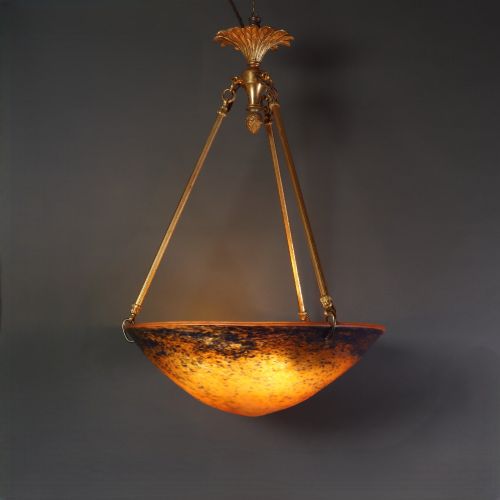
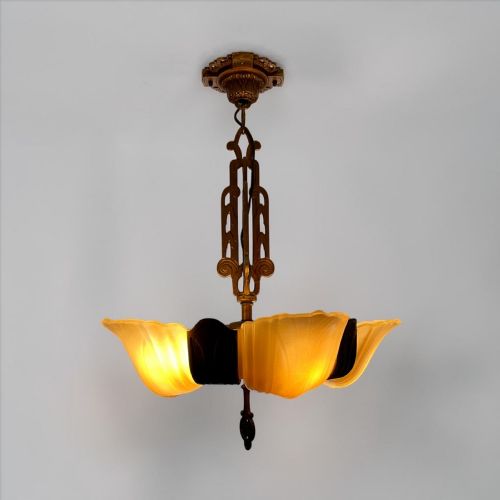
The most common examples on this page date from 1920 and 1930, reflecting the height of the movement. They appear as moulded globes, slip shades, and pressed satin glass bowls held by metal galleries.
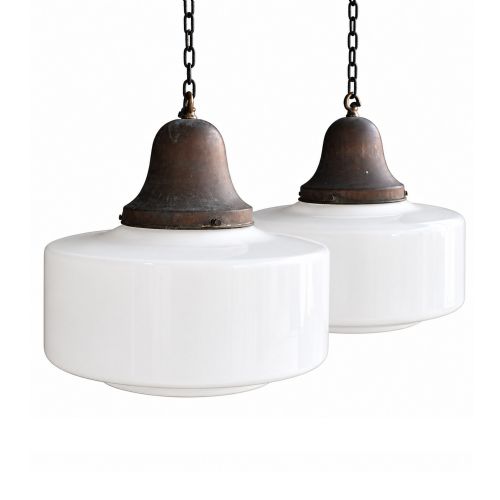
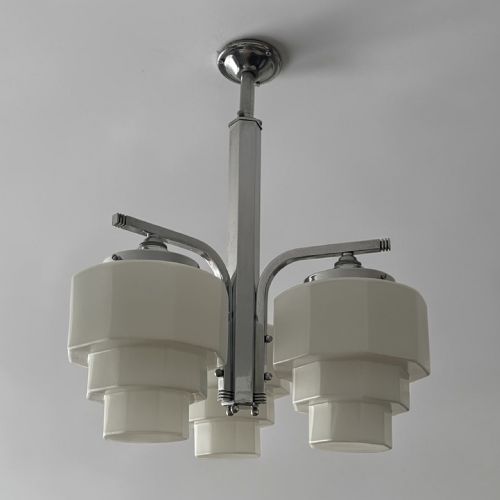
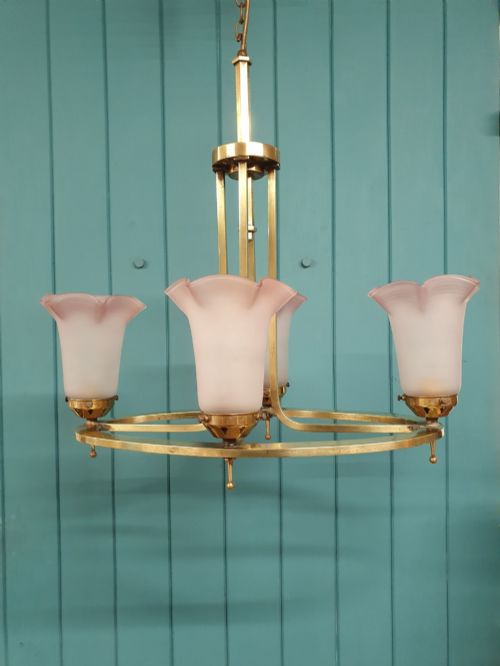
Makers and designers working in France and America feature prominently, alongside robust British and European commercial lighting. A buyer finds everything from single opaline pendants to large multi-bulb chandeliers.
Materials and Construction
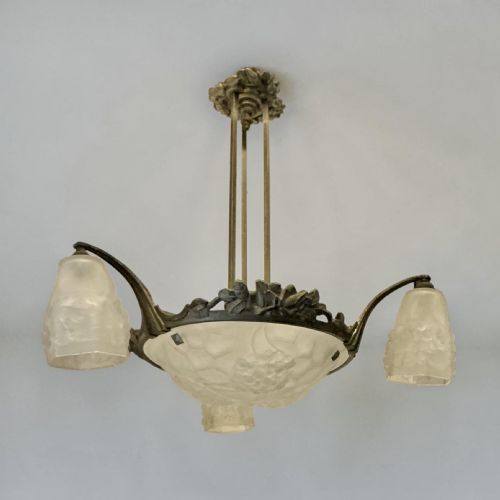
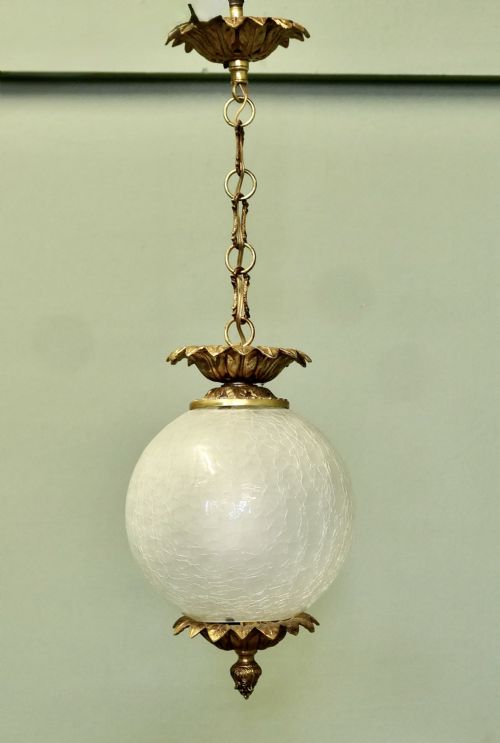
Glass forms the heart of these pieces, utilising frosted, opaline, crackle, opalescent, cut, and pressed satin varieties to soften glare. Manufacturers shaped the glass through moulding, blowing, or pressing to achieve distinct textures like fish scale patterns, clamshell curves, and reeded designs.
Metal components provide structural support, with brass, chrome, copper, and general metalwork forming the galleries, chains, and ceiling roses. These metals were spun, cast, or hammered to frame the glass securely while matching the aesthetic of the period.
Art Deco Glass Ceiling Shade Retail Price Guide 2026
Typical asking prices for art deco glass ceiling shade among the pieces listed under this phrase on Sellingantiques today, from the lower quarter to the upper quarter. They describe what is for sale here now, not the wider market.
Fish scale glass textures proved remarkably popular for diffusing kitchen and hallway light without revealing the bulb within.
Distinctions in Quality
Quality rests in the depth of modelling and the sophistication of the glass treatment. Heavy pressed satin glass, complex opalescent finishes, and thick mouldings distinguish finer examples from standard commercial production.
The integration between metalwork and glass defines the superior pieces. Solid brass or chrome galleries designed specifically for the shade demonstrate better craftsmanship than generic replacement fittings.
Émile-Jacques Ruhlmann·René Lalique·Jean Gauthier·Loys Lucha
The Art Deco Glass Ceiling Shade Glossary
- Plafonnier
- A ceiling light that sits flush or very close to the ceiling surface. These often feature a large glass bowl held by visible metal clips or a central mount.
- Slip Shade
- A type of shade where individual pressed glass panels slip into a metal frame or basket. They form a complete conical or geometric bowl around the bulbs.
- Opaline Glass
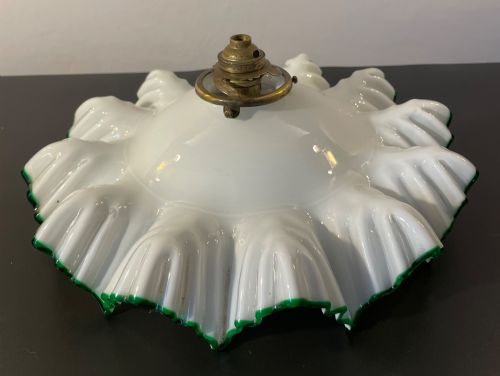
- A milky, semi-translucent glass that diffuses light evenly without harsh glare. It appears frequently in white, pink, and pale tones across 1930s pendants.
- Gallery
- The metal collar or rim that grips the top of a lampshade and connects it to the suspension rod or chain. Galleries often display period ornamentation.
- Holophane
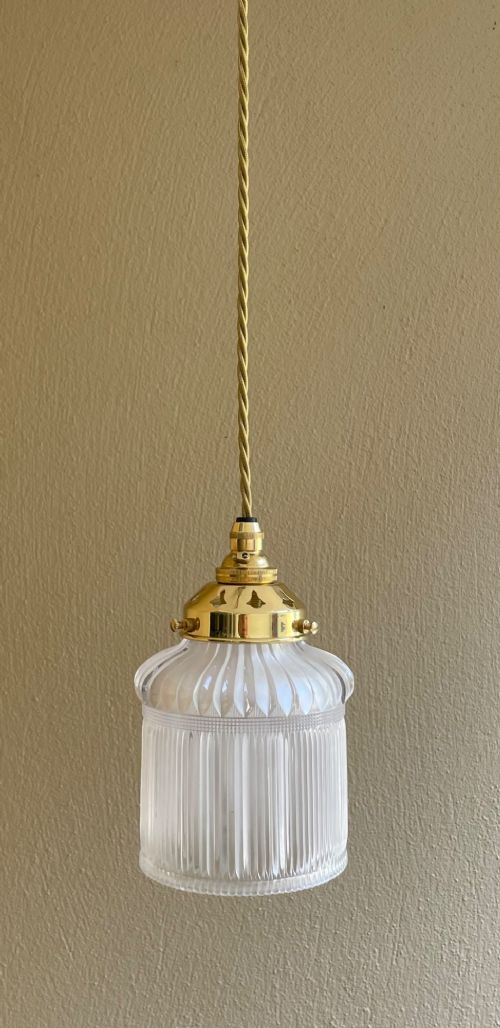
- A brand and style of prismatic glass designed to direct and distribute light efficiently. These shades feature distinctive ribbed patterns on the exterior.
Art Deco Glass Ceiling Shade: Frequently Asked Questions
How do I hang a heavy glass shade?
These fixtures require secure fixing to a ceiling joist using a suitable metal hook or bracket that can bear the combined weight of the glass and metal.
Professional installation by an electrician ensures the wiring matches modern safety standards while supporting the brass or chrome suspension safely.
Were these lights rewired for modern homes?
Many surviving pieces have been rewired with modern cable to meet current electrical regulations while retaining their original galleries and ceiling roses.
Checking the listing details confirms whether the internal lampholders and wiring are contemporary updates or preserved historical components.
How do I identify a 1920s shade from a 1930s one?
Pieces from the 1920s often embrace ornate French styling, opalescent finishes, and delicate pressed motifs like clamshells or floral patterns.
By contrast, 1930s designs frequently lean towards streamlined industrial shapes, slip shades, and robust opaline or frosted glass configurations.
Can I find matching sets of these lights?
Multi-light chandeliers, suites of frosted glass shades, and paired hall lanterns occasionally appear together as complete matching sets.
These grouped pieces suit larger rooms or hallways requiring consistent overhead illumination in a unified period style.