

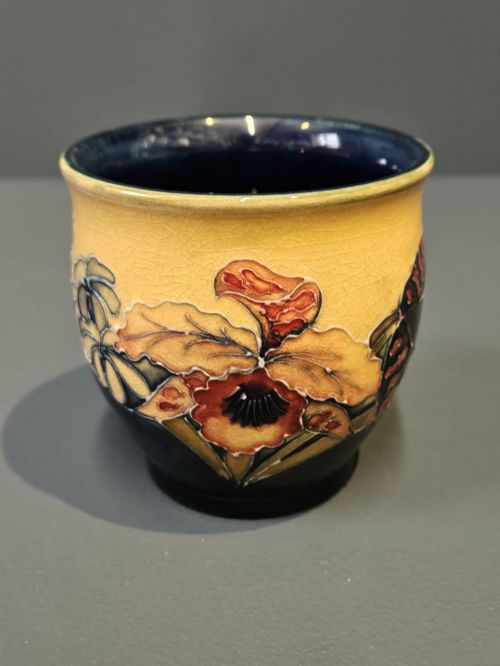


Art Deco Floral Earthenware
Art deco floral earthenware brings together bright geometric energy and natural plant motifs in vibrant ceramic pieces that brighten any room.
Art Deco Floral Earthenware
Art deco floral earthenware encompasses ceramic items produced primarily during the 1920 and 1930 decades, combining striking modernist geometry with colourful botanical decoration. Buyers seeking art deco floral earthenware will find vessels decorated with painted or tubelined flowers such as orchids, tulips, and berries.
The objects available on this page include vases, decorative bowls, jugs, and tea sets, originating from major English potteries of the era. These domestic and decorative items display characteristic floral patterns rendered through bright enamel colours and glazed finishes.
How they were made
Potters shaped earthenware clay using throwing or moulding techniques before applying ground ceramic glaze and fired colours. Many examples incorporate hand-painted enamel decoration alongside specialised glaze mixtures to achieve rich surface textures.
Certain workshop methods utilised gold leaf or raised slip lines, known as tubelining, to outline floral motifs distinctly against coloured backgrounds. Kiln firing fixed these ceramic glazes permanently, producing the glossy or satin surfaces seen across the period.
Art Deco Floral Earthenware Retail Price Guide 2026
Typical asking prices for art deco floral earthenware among the pieces listed under this phrase on Sellingantiques today, from the lower quarter to the upper quarter. They describe what is for sale here now, not the wider market.
Charlotte Rhead was known for working so quickly with her tubeline bag that she reportedly kept up a steady stream of conversation while piping intricate floral trellises.
What varies in quality
Quality in these ceramics depends upon the crispness of the painted or tubelined floral design and the richness of the enamel palette. Finer examples display confident brushwork and harmonious colour saturation across the glazed earthenware body.
The reputation of the pottery and the skill of the individual decorator or designer influence the standing of each piece within the range. Well-executed patterns and balanced forms separate standard production items from masterworks of the period.
Moorcroft·Clarice Cliff·Maling·Charlotte Rhead·Royal Doulton·Royal Winton·Carter Stabler Adams
The Art Deco Floral Earthenware Glossary
- Earthenware
- Porous pottery fired at lower temperatures than stoneware or porcelain, requiring a vitreous glaze to hold liquids. This is the primary ceramic body used for these items.
- Enamel
- Opaque vitreous composition applied to ceramics as surface decoration and fired to a hard finish. It provides the vivid reds, yellows, and greens seen on floral patterns.
- Tubelining
- A decorative technique where liquid clay is squeezed through a nozzle onto the vessel to outline a pattern before glazing. This creates raised borders that contain the enamel colours.
- Glaze
- A glassy coating fused to the ceramic surface during kiln firing to seal the porous earthenware body. Glazes vary from glossy finishes to satin lustres.
- Celadon
- A pale green jade-like glaze originating in Chinese ceramics and adopted by European potteries. It provides a subtle monochromatic background for botanical designs.
Art Deco Floral Earthenware: Frequently Asked Questions
How do I clean my art deco floral earthenware?
Dust gently with a soft dry cloth to protect the painted enamel and gold leaf details from abrasion.
Avoid submerging older earthenware in water for long periods, as moisture can penetrate through tiny crazing lines in the glaze.
Can I use these vases for fresh flowers?
Most glazed earthenware vessels hold water safely, but antique pottery can be sensitive to prolonged internal moisture.
It is wise to check the interior for existing hairline cracks before filling any antique vase with water.
How do I distinguish 1920s from 1930s pieces?
Pieces from the nineteen twenties often lean towards softer forms or transitional art nouveau styles with muted celadon grounds.
Nineteen thirties items typically feature bolder geometric borders, brighter enamel palettes, and stylised floral motifs.
Where were these ceramics manufactured?
The majority of these pieces originate from established English pottery districts such as Stoke-on-Trent and surrounding manufacturing towns.
Regional potteries employed specialised designers and decorators who signed or stamped their work on the underside.