
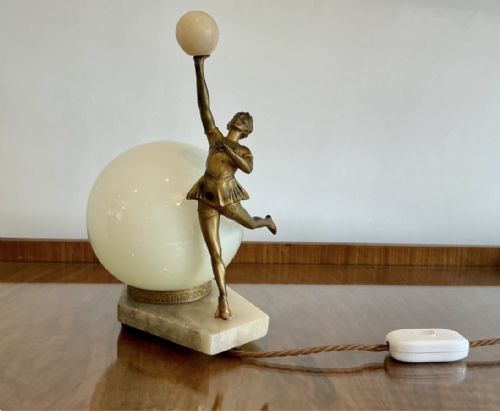


Art Deco Female Figural Lamp
These art deco female figural lamps combine sculptural grace with practical light, offering an authentic slice of 1920s and 1930s interior style.
Art Deco Female Figural Lamp
When you search for an art deco female figural lamp, you encounter table lamps that feature sculpted women as the central column or base. These pieces originate primarily from the 1920s, 1930s, and 1940s, capturing the iconic design language of the period.
The most common versions on this page are single and twin lady lamps that incorporate materials like marble, chrome, and frosted glass. Figures stand on balls or support shades, ranging from patinated metal to porcelain constructions.
Originating from English and international workshops of the interwar years, these table and desk lamps serve as both functional lighting and sculptural art. They reflect the streamlined, modernist aesthetic that defined the era's domestic spaces.
Materials and construction
Makers constructed these figures using cast metals such as spelter, brass, and silver plate, often applying patinated finishes to highlight the contours of the form. Bases frequently incorporate contrasting natural materials like heavy marble and alabaster to ground the composition.
Lighting elements rely on delicate glass components, specifically utilising frosted glass and opaline glass for shades and globes. Chrome plating also appears on later 1930s examples, bringing a bright, industrial sheen to the figural supports.
Materials documented across these pieces include marble, alabaster, chrome, spelter, and opaline glass.
Distinctions in quality
The integration of the glass components elevates the overall standard of the piece, particularly where moulded frosted or opaline glass complements the metallic finish. Superior examples maintain a balanced proportion between the sculptural figure and the functional lamp assembly.
The Art Deco Female Figural Lamp Glossary
- Spelter
- A zinc alloy commonly used as a base metal for figural castings during the early twentieth century. It accepts patination readily to simulate bronze.
- Opaline glass
- A semi-opaque glass with a milky appearance, frequently utilised for decorative lamp shades in the interwar period. It diffuses light softly across the room.
- Patinated metal
- Metal treated with chemical solutions to produce a coloured surface finish or aged appearance. This technique accentuates the sculptural details of the female figures.
- Alabaster
- A fine-grained stone used for lamp bases, prized for its translucent quality and natural veining. It provides a heavy, stable foundation for tall figural designs.
Art Deco Female Figural Lamp: Frequently Asked Questions
How do I wire an antique figural lamp?
Older electrical components generally require updating to meet modern safety standards before regular daily use. A qualified electrician can rewire the internal cord while preserving the original metal or stone housing.
Retaining the original sockets and switches is sometimes possible if they pass safety testing, though modern internal rewiring ensures safe household operation.
Where should I place a figural lamp?
These pieces function well as accent lighting on sideboards, desks, or living room tables where the sculptural base remains visible. Their height and design make them focal points in a room rather than hidden reading lights.
Positioning the lamp away from high-traffic edges protects the delicate glass shades and the softer metal or stone surfaces from accidental knocks.
How do I date these lamps?
Stylistic cues, material choices, and construction methods help narrow the production era between the 1920s and 1940s. The presence of chrome points towards the 1930s, while earlier pieces often feature heavy patinated metal or porcelain.
Consulting the specific casting marks or mounting hardware can provide further clues regarding the manufacturing origin and approximate decade.