


Art Deco Dress Clip
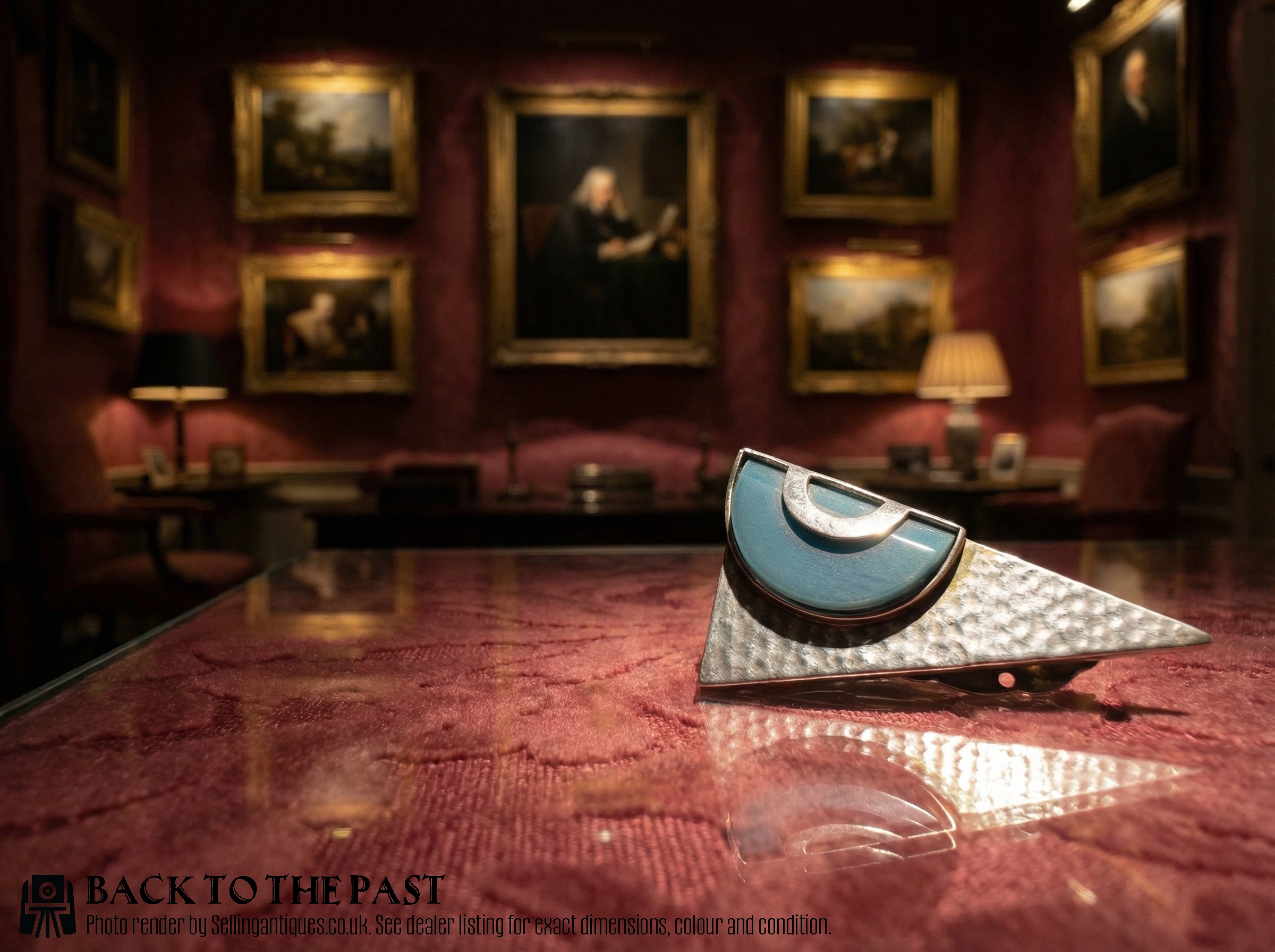
These art deco dress clip examples bring the sharp geometry and bright industrial styling of the interwar period straight to a lapel or neckline.
Art Deco Dress Clip
An art deco dress clip is a versatile piece of jewellery designed to fasten to clothing without piercing the fabric, often functioning as a standalone ornament or paired with a matching frame. The pieces gathered under this heading span the 1920s and 1930s, capturing the transition from lavish platinum and diamond formations to bold modernist creations.
Most examples you encounter on this page take the form of brooches, convertible clip pairs, or individual dress clips featuring marcasite, silver, glass paste, and colourful synthetic materials. These ornaments were originally pinned or clamped onto necklines, fur pelisses, hat brims, and evening gowns to add a touch of mechanical symmetry.
The selection ranges from delicate paste-set silver circles to substantial industrial modernist designs by makers such as Jakob Bengel. Whether rendered in precious metals with old-cut diamonds or playful celluloid and Galalith, each item reflects the streamlined aesthetic of the interwar decades.
How they were made
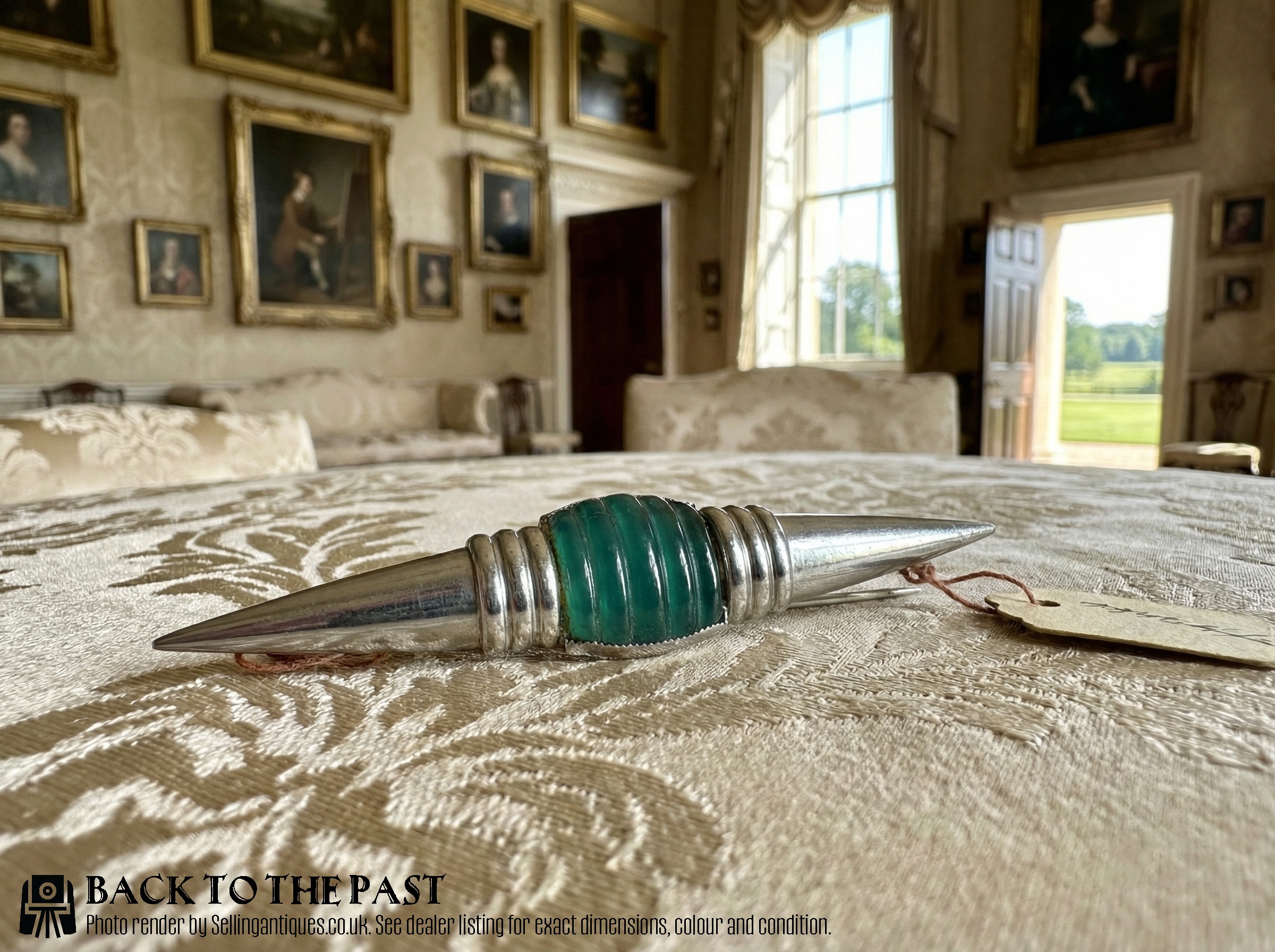
The construction of these pieces combines traditional jewellery techniques with the industrial materials of the machine age. Metal components in silver, platinum, and 18ct gold provide the structural foundation for intricate stone settings and geometric motifs.
Makers utilised synthetic materials like Galalith and celluloid alongside glass paste, marcasite, and enamel to create high-contrast patterns without relying entirely on precious gems. Enamel work and stone embedding were executed by hand to achieve the sharp lines characteristic of the period.
Many items incorporate specialised mechanical fastenings, such as sturdy fur clip mechanisms or dual-purpose frames that allowed a single pair of clips to transform into a brooch. This engineering ensured the ornaments remained securely attached to heavy winter fabrics and delicate silks alike.
Art Deco Dress Clip Retail Price Guide 2026
Typical asking prices for art deco dress clip among the pieces listed under this phrase on Sellingantiques today, from the lower quarter to the upper quarter. They describe what is for sale here now, not the wider market.
Listings feature items spanning the 1920s and 1930s, utilising silver, platinum, 18ct gold, Galalith, enamel, and glass paste.
What varies in quality
Quality in these ornaments is defined by the integrity of the materials and the precision of the metalwork. Pieces fashioned from platinum and set with old-cut diamonds sit at the upper end of the scale, demonstrating superior gem-setting and substantial weight.
The execution of secondary materials also dictates value and distinction. Finely graded marcasite settings, crisp enamel application, and clean modernist chrome or silver plating separate master-work pieces from mass-produced novelty items.
Design attribution plays a significant role, as documented pieces by identified workshops like Jakob Bengel display a rigorous attention to industrial geometry that elevates them above standard anonymous production.
Jakob Bengel
The Art Deco Dress Clip Glossary
- Galalith
- A semi-synthetic plastic made from casein and formaldehyde, widely utilised in interwar jewellery for its ability to be dyed in vibrant colours. It offers a smooth, dense finish that resembles horn or ivory.
- Glass paste
- Hand-cut and polished glass used to imitate precious gemstones in period jewellery. It provides deep colour and high refractive index without the cost of natural stones.
- Marcasite
- Small faceted pieces of pyrite set closely together into silver mountings to create a sparkling, metallic texture. This technique was a favourite for adding dark, glittering borders to geometric designs.
- Duette brooch
- A patented double-clip mechanism that allows two matching dress clips to lock together into a single brooch frame. It offers versatility in how the jewellery can be worn on an outfit.
- Old-cut diamond
- A vintage diamond cutting style characterised by a small table, high crown, and open culet, designed to catch the flickering light of gas and early electric lamps.
Art Deco Dress Clip: Frequently Asked Questions
How do dress clips attach to clothing?
Dress clips feature a hinged, toothed mechanism on the reverse that clamps firmly onto fabric without requiring a pin to pierce the material. This allowed women to adorn delicate silks and heavy furs alike without causing damage.
The sturdy dual-prong bite holds the ornament securely in place along necklines, lapels, or waistbands throughout the course of an evening.
Can dress clips be worn as brooches?
Many examples are designed with versatile mountings that allow individual clips to slide onto a dedicated frame, transforming them into a traditional brooch. Alternatively, single clips can be pinned directly onto garments on their own.
This modular approach was particularly popular during the interwar period, offering multiple styling options from a single purchase.
How do I date an art deco dress clip?
Dating relies on identifying the characteristic geometric motifs, material combinations, and fastening patents typical of the 1920s and 1930s. The presence of Galalith, celluloid, and modernist chrome often points directly to the 1930s.
Finer platinum and diamond configurations tend to reflect the opulent tastes of the 1920s, while hallmarks and maker attributions provide precise chronological markers.