


Art Deco Display Shelf
An art deco display shelf brings geometric discipline and rich timbers into a room, holding books and objects with architectural authority.
Art Deco Display Shelf
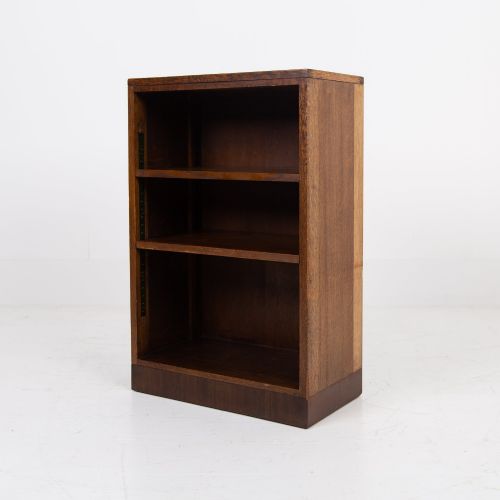
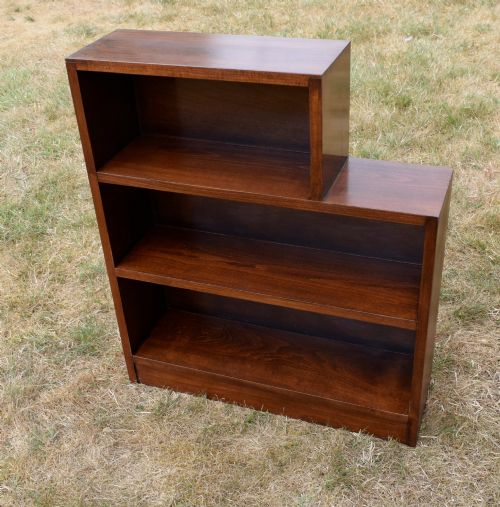
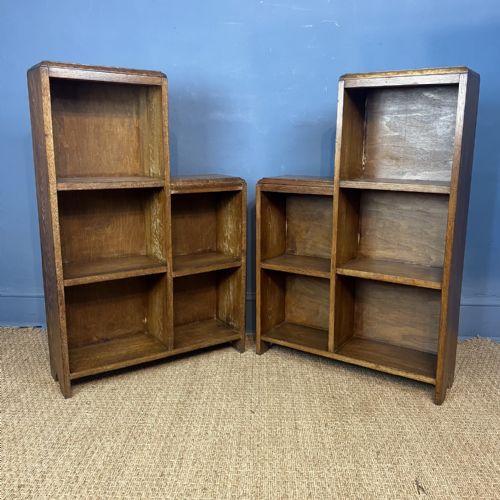
An art deco display shelf combines functional storage with the bold, clean lines characteristic of early twentieth-century design. You will encounter these pieces primarily as open bookcases, stepped shelving units, and glass-fronted cabinets originating from the nineteen-twenties and nineteen-thirties.
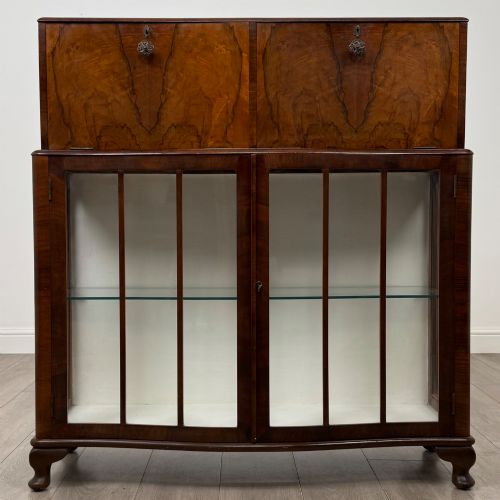
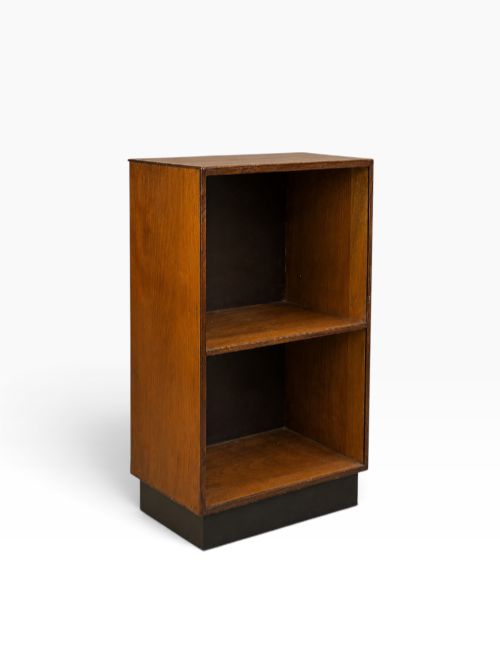
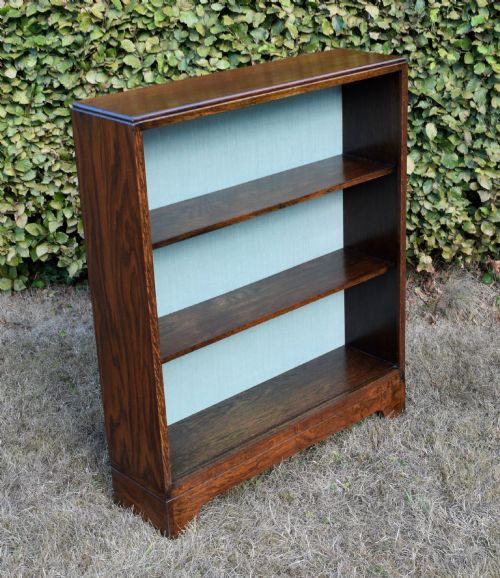
The selection ranges from compact oak and mahogany open shelves to elaborate burr walnut and sycamore cabinets fitted with internal storage. Makers and workshops of the period utilised these forms to maximise display space while maintaining strict architectural profiles.
Alongside dedicated shelving units, the evidence shows related forms such as bureau cabinets, side tables with storage, and countertop display stands. These variations offer distinct ways to introduce period storage into domestic and retail spaces.
How they were made
Cabinet makers constructed these pieces using a foundation of solid timbers such as oak, mahogany, and ash, frequently overlaying them with decorative veneers like walnut and satinwood. The application of figured grain patterns created striking visual movement across flat surfaces and stepped mouldings.
Glazing, brass detailing, and occasional bronze or ebonised finishes served to accent the structural geometry of the shelves. Joinery techniques from the period ensured stability in multi-tiered stacking bookcases and fitted cabinets without relying on extraneous ornamentation.
Listings feature pieces spanning from nineteen-ten to nineteen-forty, encompassing Edwardian survivals and Swedish Grace designs alongside core Art Deco furniture.
What varies in quality
The choice of timber and veneer selection dictates the primary tier of quality among these pieces, with highly figured burr walnut and exotic grain alignments sitting at the upper end. Plain oak or mahogany examples offer robust utility but display a more restrained visual texture.
Construction complexity also separates standard production items from workshop pieces bearing specific maker attribution. Stepped profiles, integrated mouldings, and specialised hardware reflect the level of design ambition invested by the maker.
Heal s·Betty Joel·Epstein·Sandberg Co
The Art Deco Display Shelf Glossary
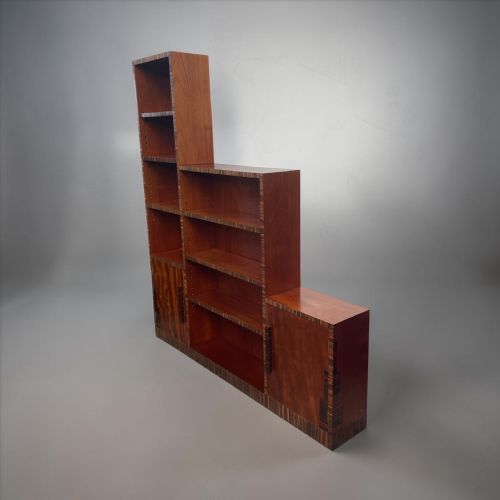
- Stepped bookcase
- A shelving unit where the tiers decrease in width or height toward the top, creating a profile resembling a ziggurat. This geometric arrangement is a defining motif of the period.
- Burr walnut
- A wood veneer harvested from the burl growth of a walnut tree, yielding a swirling, highly decorative grain pattern. Cabinet makers prized this material for prominent door panels and primary display surfaces.
- Stacking bookcase
- A modular shelving system composed of individual sections that sit vertically upon one another, often featuring glass lift-up doors. It allows the owner to reconfigure or expand the storage capacity.
- Bureau cabinet
- A hybrid furniture form combining a writing desk compartment with enclosed shelving or display space above. These pieces utilise drop-front desks paired with fitted interior drawers.
Art Deco Display Shelf: Frequently Asked Questions
Where should I place an art deco display shelf?
These pieces suit living rooms, studies, or hallways where their linear geometry can anchor a wall space. Open versions work well for accessible book storage, while glazed cabinets protect delicate objects.
Consider the surrounding room proportions, as stepped shelving units draw the eye upward and require clearance to display their silhouette effectively.
How do I care for walnut and oak shelves?
Maintain the wood by dusting with a dry, soft cloth and occasionally applying a suitable beeswax to nourish the timber grain. Avoid placing furniture in direct sunlight or near heat sources to prevent veneer lifting.
Keep glass panels clean with standard glass cleaner applied to a cloth rather than sprayed directly, protecting the surrounding wood frame from moisture.
Are these shelves suitable for heavy books?
Solid timber open bookcases and fitted oak units provide robust support for heavy volumes. Lighter display shelving and glass-fronted cabinets are better suited to lighter collections and decorative objects.
Inspect the internal shelf supports and fixed partitions to gauge the weight capacity before loading each tier.
How do I distinguish 1920s pieces from 1930s pieces?
Pieces from the nineteen-twenties often retain transitional Edwardian influences alongside emerging geometric forms, including simpler oak and bronze configurations. The nineteen-thirties introduced more pronounced stepped silhouettes and elaborate veneer work.
Review the structural hardware and timber choices, as exotic veneers and complex stacking mechanisms became more prevalent toward the middle of the interwar period.