



Art Deco Dining
Art deco dining brings together tables, sideboards and suites shaped by the distinctive geometry and rich timbers of the interwar decades.
Art Deco Dining
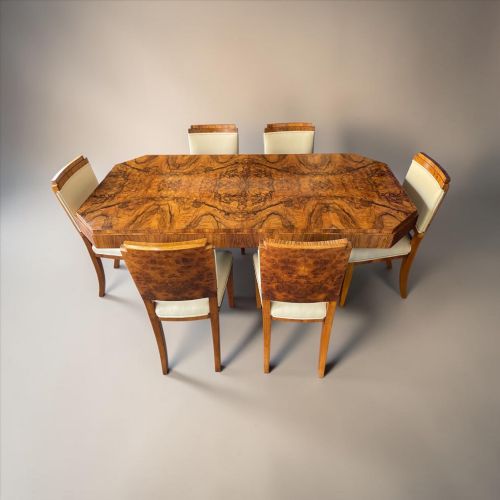
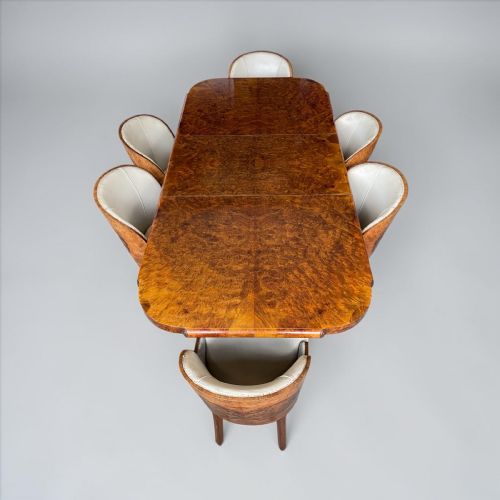
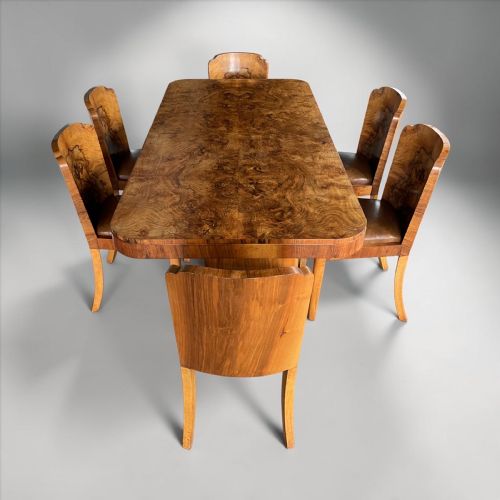
Art deco dining centres on the furniture and tableware created during the 1920s, 1930s and 1940s to serve the dining room. The selection spans complete dining suites, extending tables, sideboards, side chairs and sterling silver napkin rings and sauce boats.
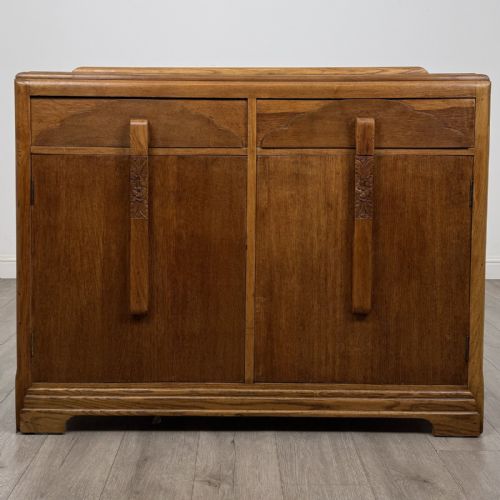
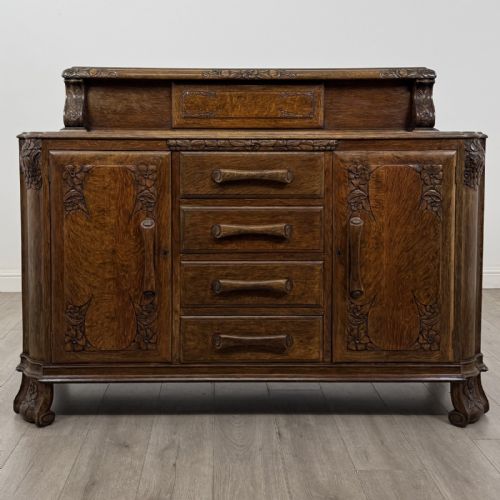
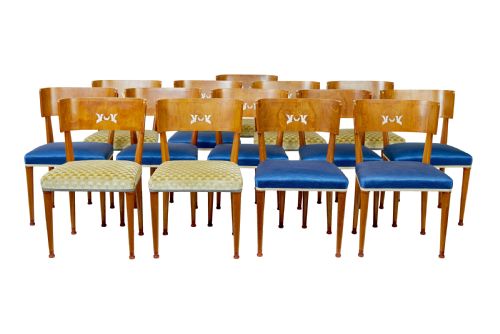
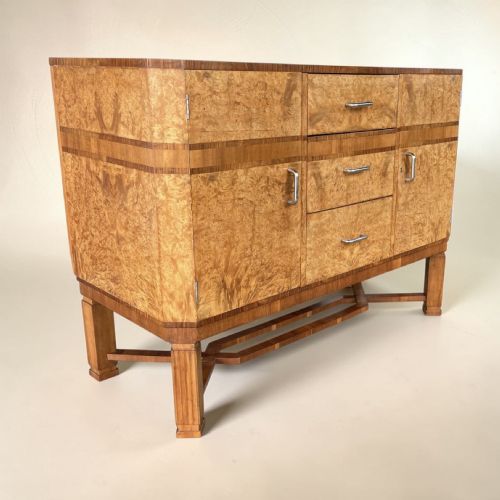
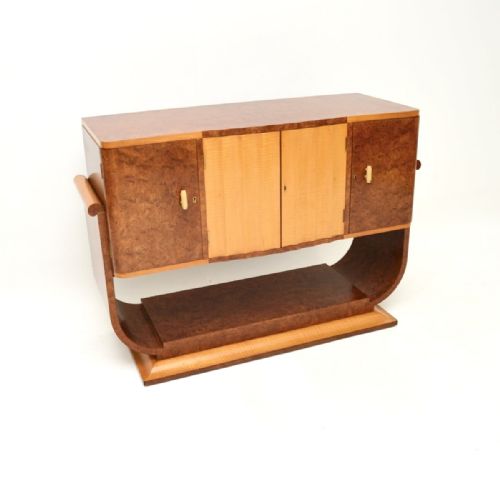
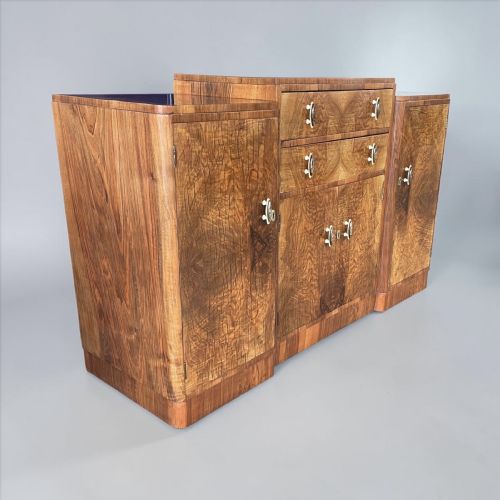
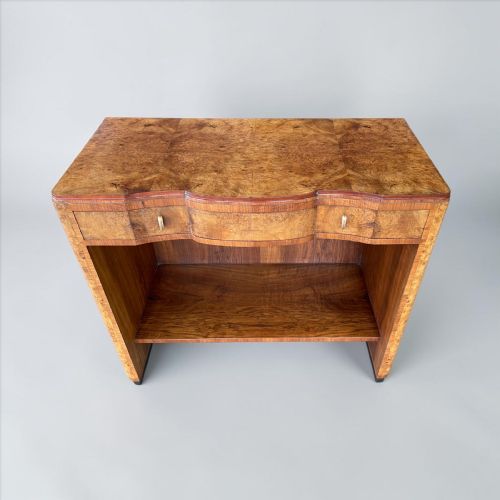
Sideboards and dining suites dominate the selection, often combining matching tables and chairs designed as cohesive sets. Pieces range from British oak and walnut examples to French rosewood and fruitwood forms.
The aesthetic bridges several related movements, including French art deco, Swedish Grace, Scandinavian art deco and mid-century modern. Pieces appear in various woods alongside glass, brass, leather and sterling silver.
How They Were Made
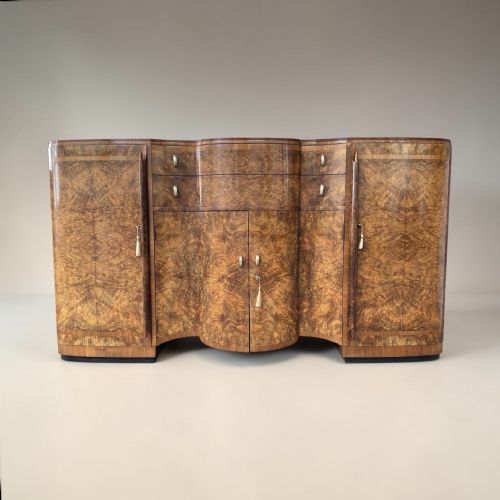
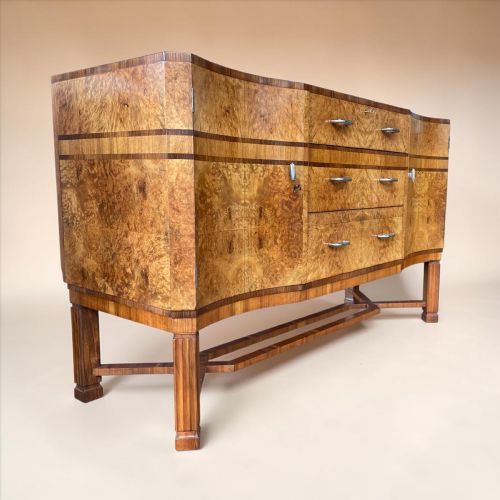
Cabinet makers utilised decorative veneers such as burr walnut, sycamore, mahogany, satinwood and maple over solid frames of oak or fruitwood. Surfaces display contrasting grain patterns arranged in sunburst or geometric motifs.
Seating frames utilise elm, oak or satinwood, paired with original leather upholstery or woven elements like klismos forms. Metal components appear in polished brass fittings and solid sterling silver tableware.
Art Deco Dining Retail Price Guide 2026
Typical asking prices for art deco dining among the pieces listed under this phrase on Sellingantiques today, from the lower quarter to the upper quarter. They describe what is for sale here now, not the wider market.
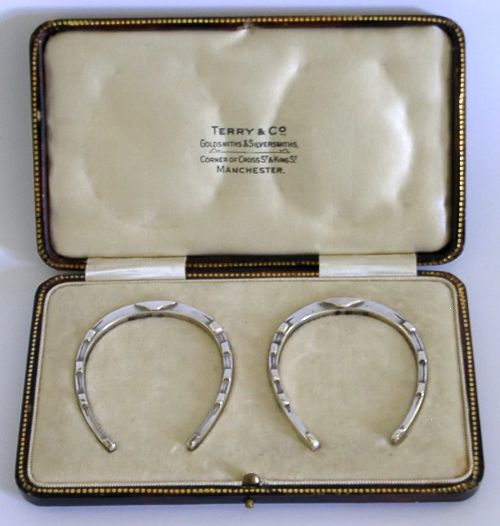
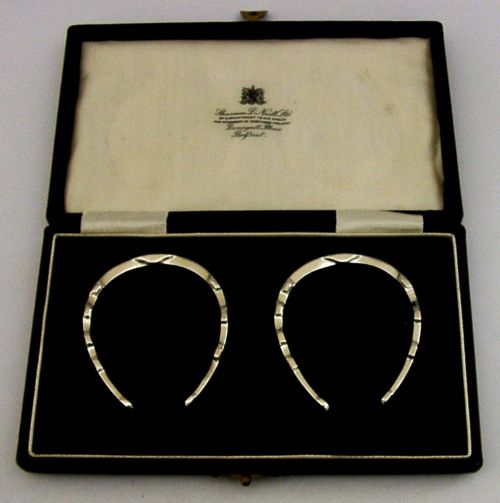
Horseshoe-shaped sterling silver napkin rings bring a touch of equine luck to the breakfast table.
What Varies in Quality
Quality rests in the calibre of the timber selection and the precision of the veneer work, particularly in complex sunburst patterns on tabletops and sideboard doors. Named cabinet makers and prominent workshops distinguish finer examples from standard commercial production.
The integrity of the structural joinery and the preservation of original finishes, leather and hardware dictate the standard of each piece. Cohesive dining suites matching tables with uniform chairs represent a higher degree of original design intent.
Maurice Adams·Gomme·R. E. Stone·Christofle Gallia·Hille·Harry and Lou Epstein·Heals·Bath Cabinet Makers·Tiffany
The Art Deco Dining Glossary
- Sideboard
- A large dining room cabinet used for storing tableware and serving food. These pieces often feature central cupboards flanked by drawers or side compartments.
- Veneer
- A thin layer of figured wood applied to a solid timber base. This technique allows cabinet makers to create symmetrical grain patterns across large surfaces.
- Klismos chair
- An ancient Greek chair form reinterpreted by 20th-century designers with curved backrests and splayed legs. These chairs appear in elm within Scandinavian designs.
- Sterling silver
- A silver alloy containing 92.5 percent pure silver by mass. This material appears frequently in cased napkin rings and sauce boats from the period.
Art Deco Dining: Frequently Asked Questions
What pieces make up an art deco dining suite?
An art deco dining suite typically comprises a matching dining table and a set of side chairs, often accompanied by a coordinating sideboard or serving table.
These suites ensure uniform design across the room, sharing timber selections such as walnut, oak or mahogany.
How do French art deco tables differ from British ones?
French art deco dining tables frequently employ exotic timbers like rosewood and fruitwood with curved extending mechanisms. British equivalents tend to rely on oak, walnut or satinwood with linear geometric profiles.
Both regional styles date predominantly from the 1920s and 1930s.
How do I care for burr walnut veneer?
Burr walnut surfaces require protection from direct sunlight and excessive moisture to prevent fading and veneer lifting. Regular dusting with a soft cloth maintains the polished finish.
Avoid placing hot dishes directly onto wooden tabletops.