
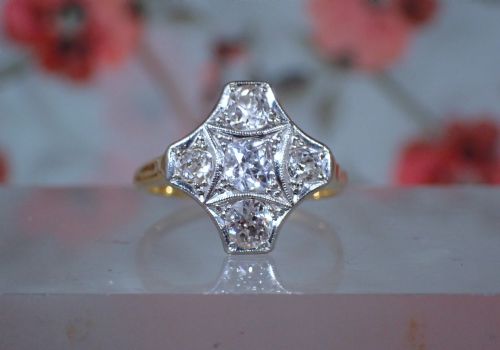
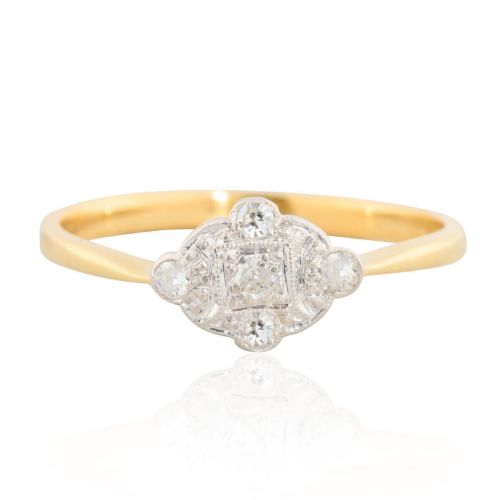


Art Deco Diamond Plaque
An art deco diamond plaque offers a flat, geometric face of glittering stones set on the finger.
Art Deco Diamond Plaque
An art deco diamond plaque centres on a flat, low-profile face of geometric metalwork encrusted with diamonds. These items appear primarily as finger rings and brooches originating predominantly from the 1920s and 1930s.
Makers integrated contrasting colour through calibration-cut sapphires, rubies, and black onyx framing the central diamonds. The surviving examples demonstrate the architectural preoccupation of the period through pierced millegrain ornamentation.
Materials and construction
Platinum emerged as the preferred metal for securing stones with minimal visible framing, allowing light to pass through the diamonds from multiple angles. Goldsmiths combined this with 18ct yellow and white gold to provide structural strength and contrasting tones.
Lapidaries shaped diamonds into old mine cuts, old European cuts, and rose cuts, which display smaller tables and broader facet patterns than modern stones. Gemstones such as calibre-cut sapphires and rubies were specifically shaped by hand to fit tight geometric channels alongside black onyx and rock crystal quartz.
Listings feature items spanning the Edwardian era through the 1960s, constructed in platinum, yellow gold, and white gold.
Distinctions in quality
The standard of execution rests on the precision of the piercing and the crispness of the millegrain beadwork edging the metal. Superior items maintain absolute symmetry across complex geometric motifs without irregularity in the hand-cut channel stones.
The selection of the diamonds themselves dictates the calibre of the piece, particularly where old cut stones match uniformly in colour and internal purity across an extended plaque. Heavier platinum gauge work prevents warping of the flat face during everyday wear.
The Art Deco Diamond Plaque Glossary
- Plaque
- A flat, ornamentally pierced panel of metal set with gemstones, designed to lie flush or low against the skin. This term defines the signature tablet shape of the era.
- Millegrain
- A decorative technique involving a row of tiny raised metal beads along the edges of a setting. This softens the metal outline and adds texture.
- Old cut
- A diamond facet arrangement shaped by hand before modern optical calculations were standardised. These stones exhibit smaller tables and high crowns.
- Calibre cut
- Coloured gemstones individually shaped and cut to fit a specific geometric channel in a mounting. This method creates continuous lines of colour without visible gaps.
- Tricolour
- Jewellery incorporating three distinct shades of gold within a single design, frequently yellow, white, and rose. This combination highlights the structural sections of the mount.
Art Deco Diamond Plaque: Frequently Asked Questions
What is an art deco diamond plaque?
An art deco diamond plaque is a piece of jewellery featuring a flat, geometric panel covered in diamonds and occasionally accented with coloured stones like sapphire or ruby. These items sit low on the hand or garment.
The style relies on architectural symmetry, clean lines, and platinum or gold settings that showcase the stones over the metalwork.
How do I wear a plaque ring?
Plaque rings sit flat on the finger, making them comfortable for regular wear despite their sometimes substantial surface area. Their geometric shape pairs well with simple bands.
Care should be taken with older prong settings and delicate millegrain edges during manual tasks to protect the stones.
How are periods identified?
Dating relies on material combinations, gemstone cuts like old European and rose cuts, and the specific geometric motifs characteristic of the interwar decades. Platinum dominance and specific colour contrasts point directly to the 1920s and 1930s.
Maker marks and French control stamps stamped on the metal provide additional chronological markers.
What maintenance do they require?
These items benefit from gentle cleaning in warm soapy water using a soft brush to remove debris trapped beneath the flat plaque settings. Avoid harsh ultrasonic cleaners which can loosen old cut stones.
Periodic inspection by a jeweller ensures the platinum or gold claws holding the diamonds remain secure.