
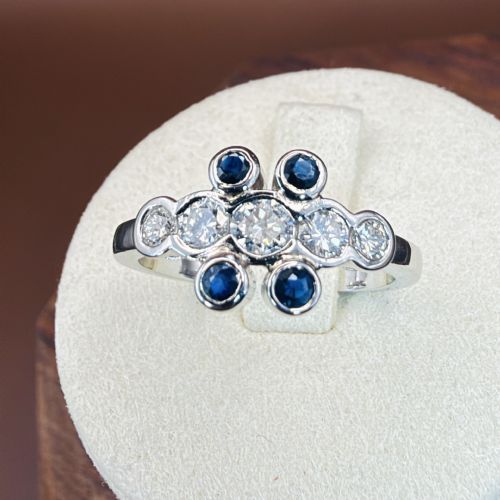
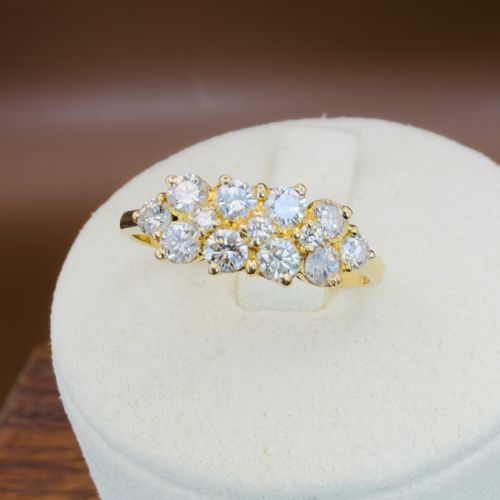
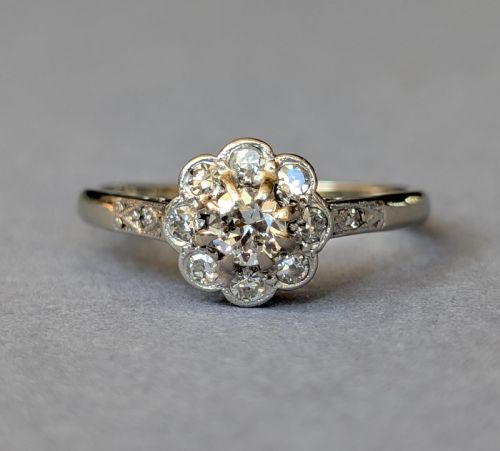
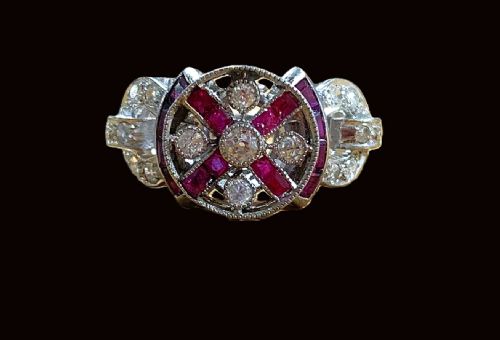
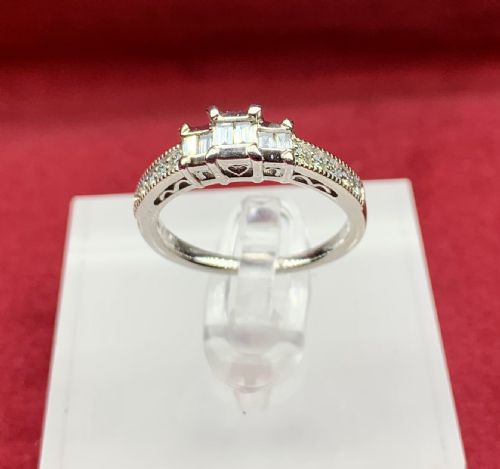
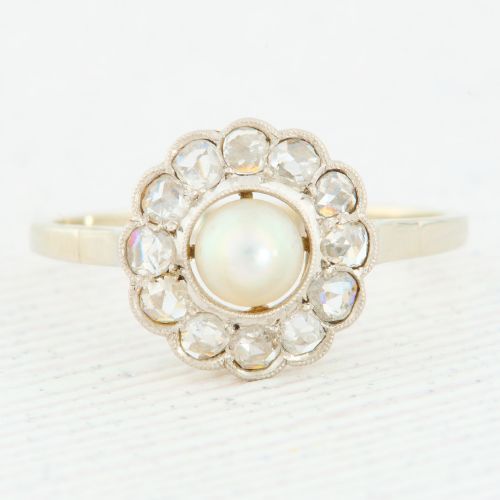
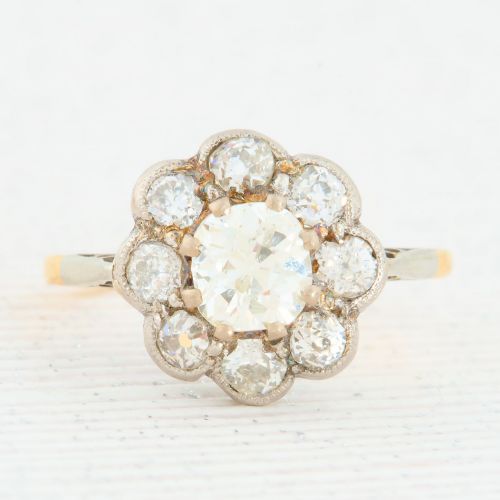
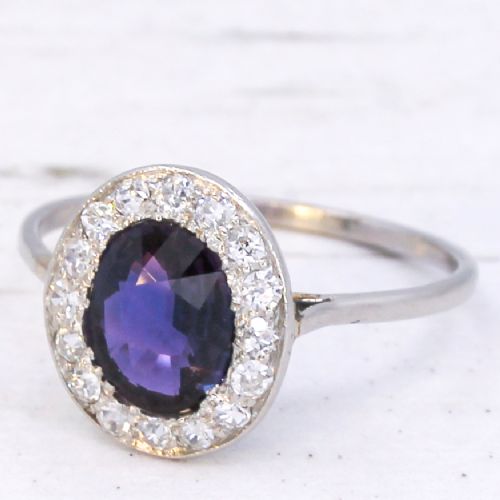
Art Deco Diamond Cluster Ring
An art deco diamond cluster ring brings geometric precision and brilliant contrast to the hand through period craftsmanship.
Materials and construction
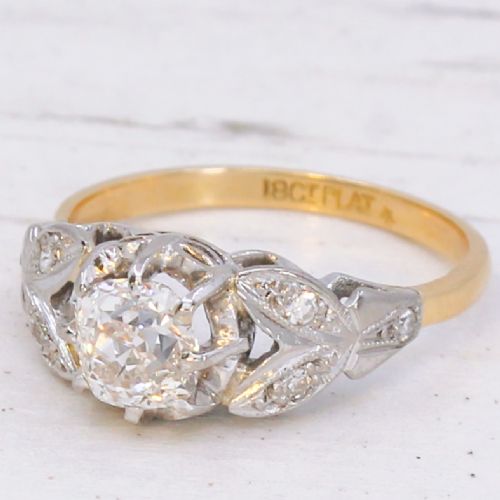
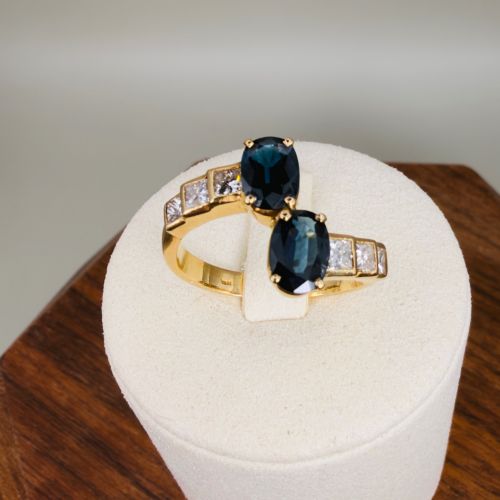
Goldsmiths paired durable platinum with 18ct yellow, white, and yellow gold to mount the stones securely while minimising visible metal around the gems. Platinum gained widespread favour during the period for its strength, allowing intricate openwork galleries and knife-edge bands.
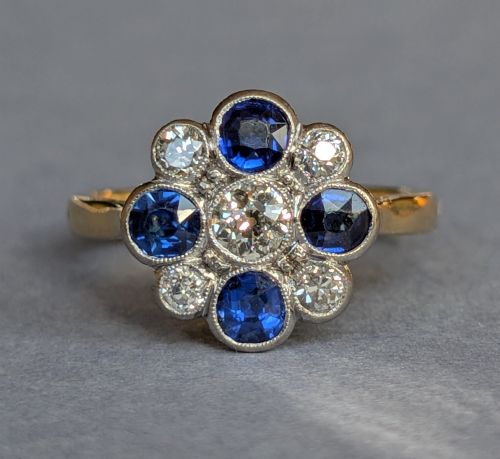
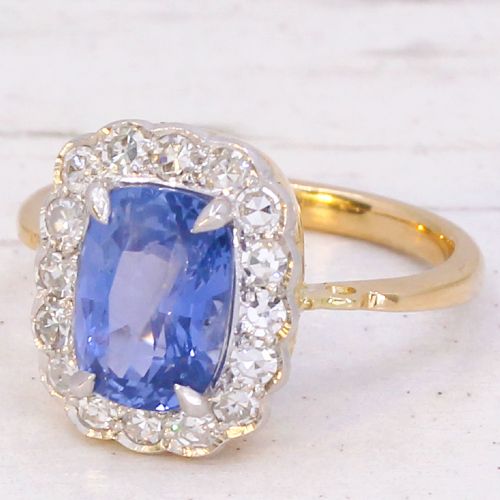
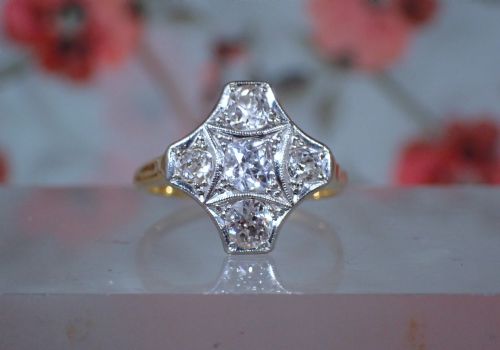
Gemstone cutting defined the silhouette of these rings, utilising old European cuts, old mine cuts, and transitional cuts alongside calibrated sapphires, rubies, and emeralds shaped to fit tight geometric channels. Setters utilised grain settings, bezel settings, and claw configurations to maximise light entry through the stones.
Factors of quality
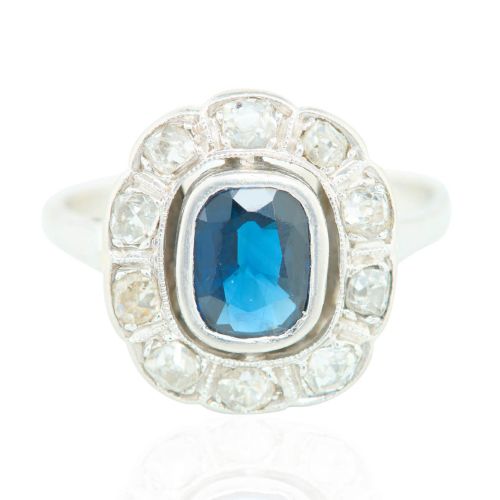
Quality rests in the precision of the geometric layout and the matching of the surrounding stones to the central gem. Superior examples display harmonious proportions where the metalwork supports the stones without dominating the design.
The choice of materials also elevates a piece, particularly when unheated sapphires, untreated emeralds, or higher-carat old cut diamonds are present. Original unalterable hallmarks and intact French or British assay marks further distinguish finer examples.
Navette rings stretch gracefully along the finger, proving that historical jewellers understood the art of making a hand look impossibly elegant.
The Art Deco Diamond Cluster Ring Glossary
- Old European cut
- A round diamond cutting style prevalent in the late nineteenth and early twentieth centuries featuring a small table, high crown, and open culet. This cut produces a distinctive pattern of broad light flashes compared to modern brilliant cuts.
- Calibre cut
- Gemstones specifically shaped and cut to fit tightly together in geometric rows or borders without visible metal gaps. This technique requires exceptional skill from the lapidary.
- Navette
- A boat-shaped ring design that tapers to points at either end along the finger. The term derives from the French word for a small shuttle.
- Cluster ring
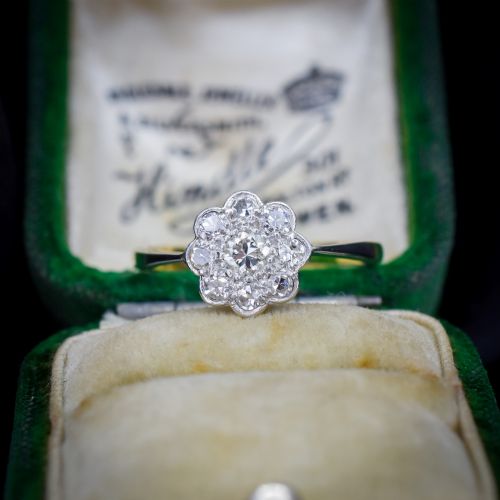
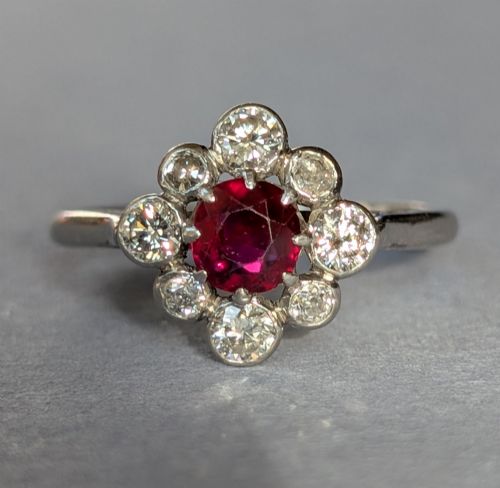
- A ring configuration featuring a central stone encircled by a group of smaller gems. This arrangement magnifies overall visual impact.
- Target ring
- A concentric circular cluster ring design where contrasting coloured gemstone rings encircle a central diamond. The pattern mimics a bullseye motif.
Art Deco Diamond Cluster Ring: Frequently Asked Questions
How do I know if a ring is original period work?
Original period rings show construction methods, wear patterns, and cuts consistent with the 1920s and 1930s, such as old European cut diamonds.
Assay marks and hallmarks stamped inside the band often provide clues to the country of origin and metal purity.
Can I wear an antique cluster ring daily?
Daily wear is possible with proper care, though robust settings like platinum offer better durability for frequent use.
Owners should remove delicate rings during manual tasks and have the settings inspected periodically by a jeweller.
What is the difference between old cut and modern diamonds?
Old cut diamonds were shaped by hand, resulting in smaller tables, higher crowns, and larger facets that create softer light dispersion.
Modern brilliant cuts follow strict mathematical proportions designed for maximum electrical brilliance under artificial lighting.