
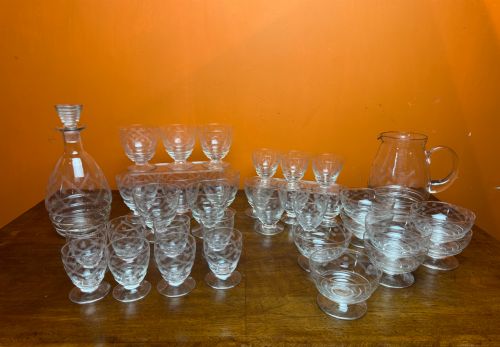


Art Deco Decanter Set
An art deco decanter set brings the sharp geometry and cocktail culture of the interwar period straight onto a modern sideboard.
Art Deco Decanter Set
An art deco decanter set comprises a matching container and cups designed for serving spirits or liqueurs during the interwar period. These drinking vessels emerge predominantly from the 1920 and 1930 decades, reflecting the prevailing aesthetic of the time.
The most common version met on this page is the Czech production originating from Bohemia, often consisting of a geometric decanter accompanied by six matching glasses on a matching tray. French suites and English silver-mounted cruets also appear alongside these Bohemian works.
Forms extend beyond simple bottles into complex tantalus frames and whisky sets designed for entertaining. Buyers searching for an art deco decanter set encounter matching glassware suites configured for display and use.
How they were made
Maker operations utilised lead crystal, clear glass, black glass, and coloured glass such as amber, blue, and uranium variants. Artisans shaped these materials through cutting, engraving, and hand enamelling to achieve sharp geometric motifs.
Metal components incorporate chrome and sterling silver to construct frames, trays, and locking mechanisms like the tantalus. These elements combine glass and metal craftsmanship typical of the modernist period.
Listings feature lead crystal, chrome, and uranium glass shaped into decanter sets during the 1920 and 1930 periods.
What varies in quality
The sophistication of the enamel work and the precision of the glass cutting separate standard items from superior examples. Hand-painted geometric patterns executed with clean lines indicate higher workmanship.
The presence of a matching tray and a full complement of undamaged matching glasses elevates a grouping. Completeness and factory attribution, such as documented Bohemian or French studio work, define the upper tier.
Karl Palda·Jacques Adnet·Val Saint Lambert·Schlevogt and Hoffman·Mosey
The Art Deco Decanter Set Glossary
- Tantalus
- A locking wooden or chrome frame that holds decanters securely while displaying the contents without allowing access. This device kept expensive spirits secure from domestic staff.
- Lead crystal
- A heavy glass variety containing metal oxide that increases brilliance and weight. This material allows for deep, sharp geometric cuts.
- Uranium glass
- Glass containing trace amounts of uranium oxide that glows bright green under ultraviolet light. Makers utilised this compound during the 1930 era for vibrant colour.
- Cruet set
- A matched group of small bottles or jars for oils, vinegars, and condiments. These arrangements frequently feature silver mounts and structured trays.
- Enamelling
- The application of fused glass powder or paint onto the surface of a vessel. Artisans cured these pigments with heat to create opaque geometric designs.
Art Deco Decanter Set: Frequently Asked Questions
What is an art deco decanter set?
It is a matching assembly of glassware designed for serving liquor, produced primarily during the 1920 and 1930 periods.
These groupings typically feature a central bottle and matching drinking vessels intended for display on a sideboard or drinks trolley.
Where were most of these sets made?
A large proportion originate from Bohemia in Czechoslovakia, which was a major hub for cut and enamelled glass during the interwar years.
Other notable examples stem from French glasshouses and English silver workshops.
How do I identify a Czech piece?
Czech pieces frequently display sharp geometric acid cuts, black glass panels, and hand-applied enamel decoration in contrasting colours.
Many of these suites were produced in Bohemia around 1930 with matching trays and shot glasses.
Can I use these sets for serving drinks?
These historical glass items are suitable for serving spirits, though hand washing protects the delicate enamelling and vintage glass.
Checking stoppers and glass interiors ensures they remain ready for modern entertaining.