


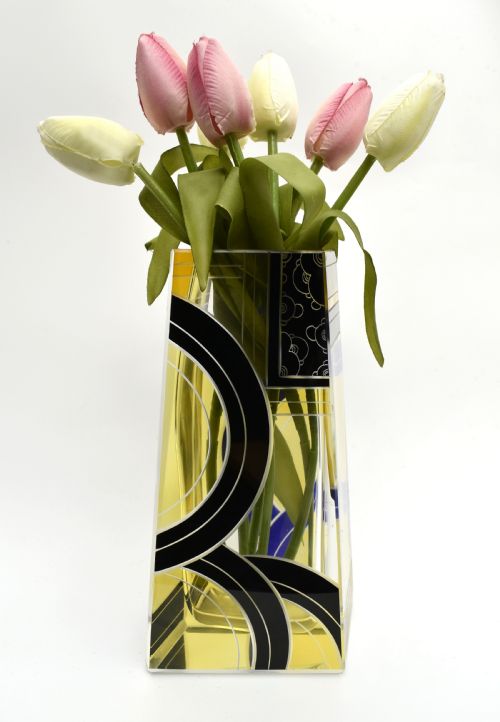


1930s Czech Glass Glassware
These 1930s czech glass glassware pieces bring bold Art Deco geometric lines and vibrant colour into a room.
1930s Czech Glass Glassware
When you search for 1930s czech glass glassware, you encounter striking Art Deco forms originating from Bohemia and surrounding regions. The selection on this page centres primarily on functional and decorative items designed to catch the eye.
Vases and complete decanter sets dominate the available forms, often accompanied by matching glasses and trays. These pieces reflect the modernist design movements of the 1920s and 1930s, translating architectural shapes into domestic objects.
Mould-pressed techniques and lead crystal provide the substance for these vessels, frequently finished with contrasting enamel or etched details. Collectors seek out these specific configurations for their distinct period character and utility.
How these pieces were made
The manufacture of 1930s czech glass glassware relies heavily on pressed glass and lead crystal, shaped within intricate metal moulds to achieve sharp geometric profiles. Workers utilised opaque glass, coloured glass, and stained glass to build rich visual depth into simple vessel structures.
Surface ornamentation involved black enamel and acid etching to create striking contrasts against the body of the vase or decanter. Chrome fittings occasionally complemented the glassware in sets, adding a metallic edge characteristic of the era's barware.
Listings feature lead crystal and coloured glass formed into geometric vases and complete decanter sets.
What varies in quality
The distinction between standard production and superior examples lies in the crispness of the mould work and the precision of the hand-applied enamel. Finer pieces demonstrate cleaner geometric lines and deeper, more deliberate etching on the glass surface.
Completeness dictates the standing of decanter sets and drinksware, where matching trays and a full complement of glasses elevate the integrity of the ensemble. The weight of the lead crystal and the saturation of coloured or opaque glass further differentiate the tier of manufacture.
Karl Palda·Libochovice
The 1930s Czech Glass Glassware Glossary
- Pressed glass
- Glass shaped by pressing molten metal into a mould with a plunger. This technique allowed for rapid production of patterned items during the interwar period.
- Lead crystal
- Glass containing lead oxide to increase brilliance and weight. It provides the clarity and resonance found in higher-end decanter sets.
- Enamel
- Opaque vitreous composition fused to the surface of the glass through firing. It supplies the bold black and coloured accents on Art Deco vases.
- Etched glass
- Glass treated with acid to create frosted designs beneath the surface. This method produced the intricate geometric patterns seen on tall vessels.
- Decanter set
- A matched grouping comprising a serving vessel and drinking glasses, frequently supplied with a tray. These items formed the centrepiece of 1930s barware.
1930s Czech Glass Glassware: Frequently Asked Questions
What defines 1930s czech glass glassware?
These pieces are characterised by strong Art Deco geometries, striking colour combinations, and innovative surface treatments like enamel and etching. They bridge decorative arts and functional barware.
Most items originate from the interwar period, reflecting the modernist design ethos of Bohemian manufacturers.
How were decanter sets used?
Decanter sets served drinks from matching vessels into small glasses, often displayed on coordinating trays as part of home entertaining. They occupied prominent positions on sideboards and cocktail cabinets.
The inclusion of six matching glasses ensured a uniform presentation for guests during the 1930s.
How do I care for enamelled glass?
Enamelled and etched surfaces require gentle hand washing in lukewarm water with mild soap. Avoid abrasive sponges or harsh chemicals that can degrade the surface decoration.
Proper handling preserves the integrity of the black enamel and delicate acid-etched patterns over time.
Are all pieces marked with a maker?
Many productions from this era carry paper labels rather than permanent acid stamps or moulded signatures. The absence of a signature does not diminish the authenticity of a recognised design.
Stylistic markers such as specific geometric cuts and enamel palettes serve to identify the origin.