






Art Deco Cuff Bracelet
These art deco cuff bracelet pieces bring geometric punch and fine metals to the wrist, offering a sharp slice of twentieth-century design.
Art Deco Cuff Bracelet
An art deco cuff bracelet is a bold wrist ornament defined by clean lines, symmetry, and striking materials from the interwar decades. You will mostly encounter silver, platinum, and chrome pieces that span the nineteen twenties and nineteen thirties.
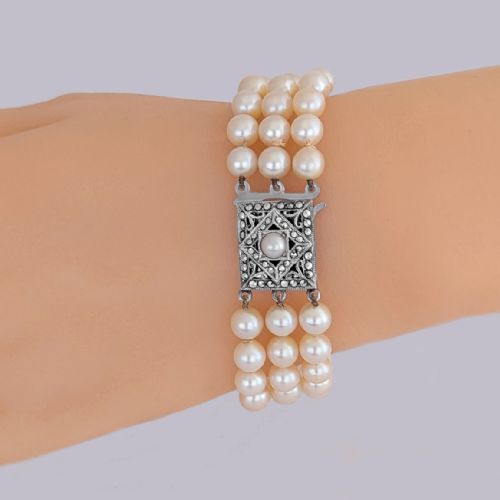
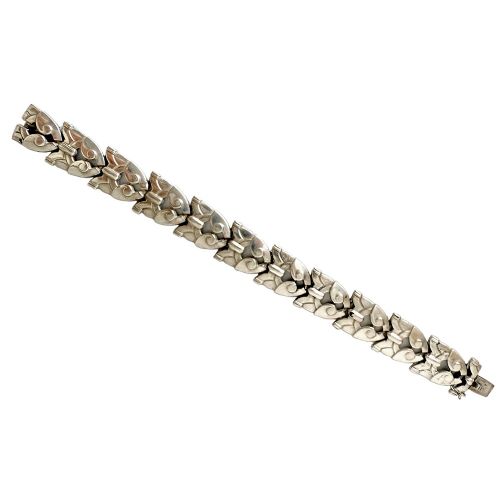
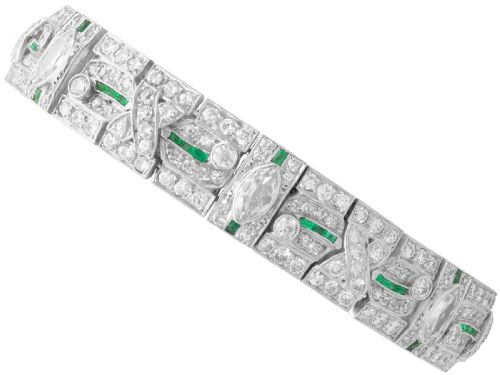
Makers utilised contrasting stones and metals to create geometric impact, pairing diamonds with emeralds, sapphires, or dark enamel. These items range from rigid bangles and slave bangles to articulated linked bracelets and pearl strands with decorative clasps.
How they were made
Platinum and gold form the precious foundation for gemstone-heavy designs, while sterling silver, chrome, and chromium provide industrial alternatives. Stones such as diamonds, emeralds, sapphires, and marcasite are set securely into pierced filigree or geometric channels.
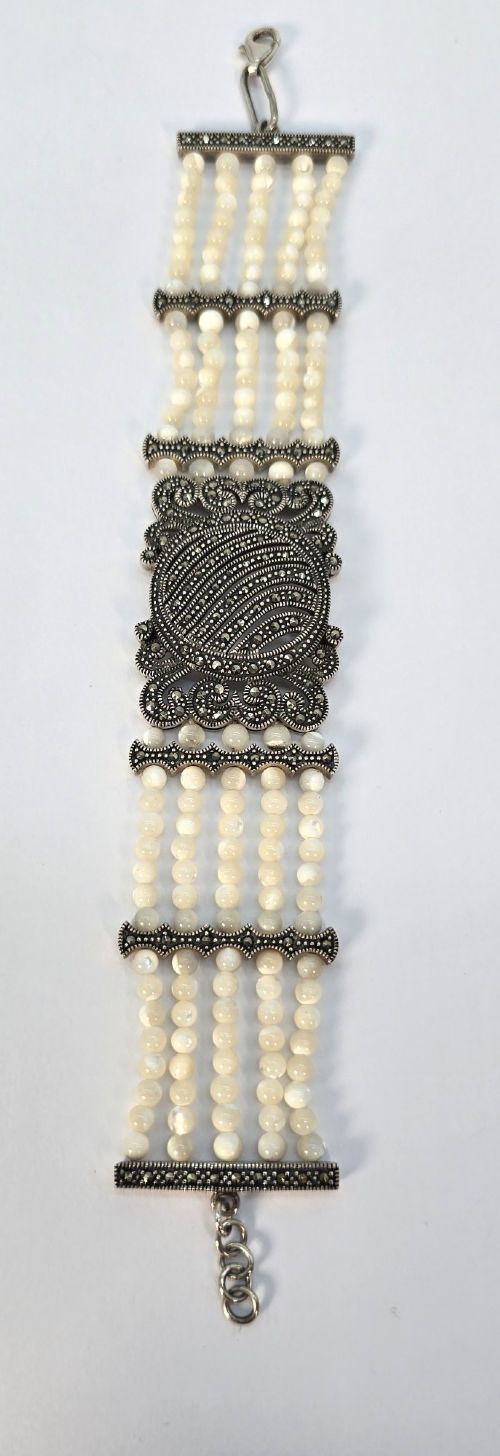
Makers introduced contrasting colour through enamel work, onyx, and mother of pearl, sometimes pairing them with Bakelite or glass. Engraved tank links and pierced metalwork demonstrate precise mechanical and manual construction.
Arrow slave bangles brought swift romantic symbolism straight to the wrist.
What varies in quality
The choice of materials dictates the tier of the piece, moving from chromium and base metal alloys up to platinum set with substantial diamond and emerald carats. Precision in the pierced filigree and the crispness of geometric engraving separate standard workshop output from finer high-end items.
The integration of side materials like enamel, onyx, or marcasite shows the maker's hand, where smooth finishes and secure stone settings elevate the overall weight and presence of the jewel.
Jakob Bengel
The Art Deco Cuff Bracelet Glossary
- Platinum
- A dense, durable white metal used for high-value settings that securely hold heavy diamond and emerald arrangements without bulky claws.
- Marcasite
- Small, faceted pyrite stones cut and polished to resemble steel, traditionally set in silver for a glittering metallic effect.
- Filigree
- Delicate metalwork formed from fine twisted wire soldered together in openwork patterns, common in pierced settings.
- Bakelite
- An early synthetic thermosetting plastic utilised for moulded bangles during the twentieth century.
- Slave bangle
- A rigid circular band designed to be worn openly on the wrist or forearm, often rendered in silver paste during the interwar period.
Art Deco Cuff Bracelet: Frequently Asked Questions
What materials are used in art deco bracelets?
The evidence shows items fashioned from platinum, sterling silver, gold, and chrome. These metals are frequently combined with diamonds, emeralds, sapphires, marcasite, enamel, onyx, and mother of pearl.
Some pieces also incorporate Bakelite, glass, and cultured pearls to achieve distinct twentieth-century textures and tones.
How do I date an art deco bracelet?
Dating relies on stylistic markers and material combinations pointing to the nineteen twenties and nineteen thirties. Geometric link work, platinum diamond settings, and chromium industrial pairings typically anchor pieces to this interwar window.
Later mid-century additions like silver pierced filigree settings extend into the nineteen fifties and sixties, reflecting lingering design motifs.
What is the difference between a bangle and a link bracelet?
Banglestake a rigid form, such as solid slave bangles or Bakelite cuffs that slip directly over the hand. They maintain a fixed circular shape on the wrist.
Link bracelets utilise articulated joints to drape flexibly around the arm, often featuring decorative clasps or gemstone-set plaques.
Are these bracelets made of solid platinum?
Many of the diamond and gemstone pieces from the nineteen twenties and thirties use solid platinum to mount heavy carat stones. Platinum provided the structural strength needed for intricate, low-profile geometric designs.
Other tiers utilise gold, sterling silver, or chrome depending on the target aesthetic and secondary materials like enamel.