




Vintage Enamel Bangle
A vintage enamel bangle offers a distinct splash of coloured metalwork and glass, bringing period style directly to the wrist.
Vintage Enamel Bangle
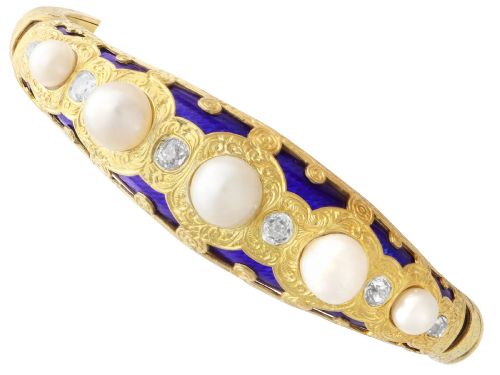
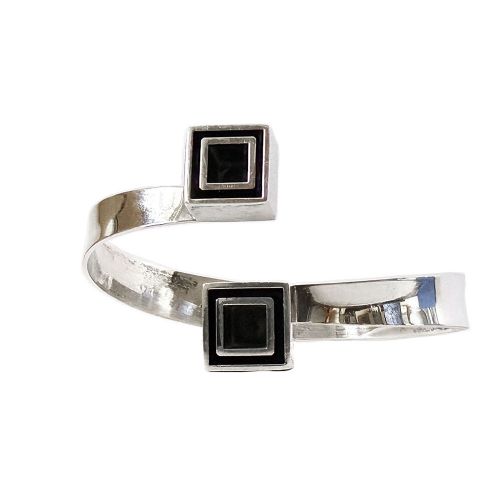
A vintage enamel bangle covers rigid wrist ornaments finished with fired vitreous or industrial enamelling, alongside closely related link bracelets sharing the same materials. The selection spans distinct historical aesthetics, from the geometric lines of Art Deco pieces to ornate Victorian hinged designs and mid-century Scandinavian silver work.
Origins represented in these items stretch across Britain, Germany, Austria-Hungary, and Scandinavia. Each region brings distinct manufacturing traditions, such as German chrome metalwork or Austro-Hungarian pearl and enamel combinations.
Materials and construction methods
Makers constructed these pieces using silver, sterling silver, chromium, and base metal, frequently combining them with coloured glass, chalcedony, and pearls. Artisans applied vitreous enamel pastes onto metal surfaces before firing them at high temperatures to achieve a durable, glossy coloured finish.
Construction techniques range from hand-formed silver filigree wirework to industrial chrome stamping associated with mid-century German workshops. Hinged mechanisms, secure clasps, and individual metal links allow rigid bangles and flexible bracelets to sit comfortably on the wrist.
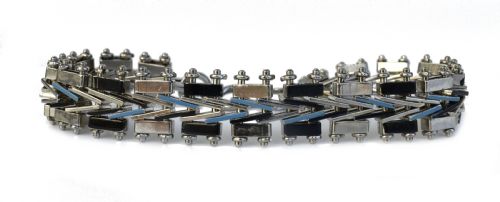
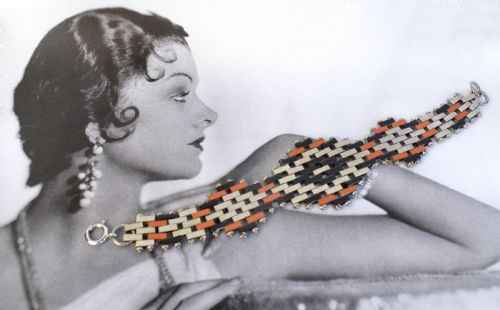
Geometric brickwork patterns on German chrome bracelets bring miniature industrial architecture straight to the wrist.
Distinguishing quality across examples
Quality rests upon the precision of the metalwork and the complexity of the enamelling, distinguishing mass-produced items from meticulous workshop creations. Superior pieces display even colour distribution across the enamel without pitting, alongside crisp stamping or delicate hand-soldered filigree wire.
The integrity of the structural components, such as tight hinges, secure box clasps, and well-matched stones like chalcedony or pearls, defines the upper tier of the range. Masterful design integration, particularly in signed German industrial or Scandinavian modern pieces, separates standard commercial items from collectible works.
Jakob Bengel·Alton·Fahrner and Bennett
The Vintage Enamel Bangle Glossary
- Enamel
- A glassy substance fused to metal through high-temperature firing to provide decorative colour. It forms the primary visual element across these bracelets.
- Filigree
- Delicate openwork jewellery created by twisting fine threads of metal, typically silver, into intricate patterns. This technique appears frequently in Austro-Hungarian and Victorian designs.
- Chromium
- A hard, corrosion-resistant metallic element used for plating or structural components. It defines the industrial aesthetic of nineteen-thirtys German pieces.
- Chalcedony
- A cryptocrystalline form of silica used as a decorative gemstone in period jewellery. It adds natural mineral texture alongside coloured enamel work.
- Art Deco
- A design style characterised by sleek geometric shapes, streamlined forms, and bold colours popular during the nineteen-twenties and nineteen-thirties. Many listed bangles reflect this aesthetic.
Vintage Enamel Bangle: Frequently Asked Questions
What periods do these bangles cover?
The pieces span several decades and eras, reaching from Victorian and Jugendstil items through Art Deco productions of the nineteen-thirties to mid-century Scandinavian and nineteen-sixties modernism.
Each period utilises distinct materials and motifs, allowing collectors to identify the era through the combination of metalwork style and enamel techniques.
Are all these items rigid bangles?
While the selection includes rigid hinged bangles, it also encompasses flexible link bracelets constructed from multiple articulated panels. Both forms incorporate similar enamelling and metalwork characteristics.
Rigid examples often feature secure clasps or hinged designs, whereas bracelets rely on connected components for wrist flexibility.
How do I care for an enamel bracelet?
Vireous enamel requires careful handling to prevent scratching or chipping against hard surfaces. Store individual pieces separately in soft pouches away from other jewellery.
Clean the metal and glass gently using a soft cloth without abrasive polishes or harsh chemical dips that might damage the enamel surface.
What metals are typically used?
Makers utilised sterling silver, standard silver, chrome, and base metal for the structural foundations of these ornaments. Silver frequently appears alongside filigree wirework, while chrome is common in industrial German designs.
Some pieces combine multiple metals with glass, pearls, or chalcedony to enhance the visual contrast against the coloured enamel.