


Art Deco Ceramic Urn
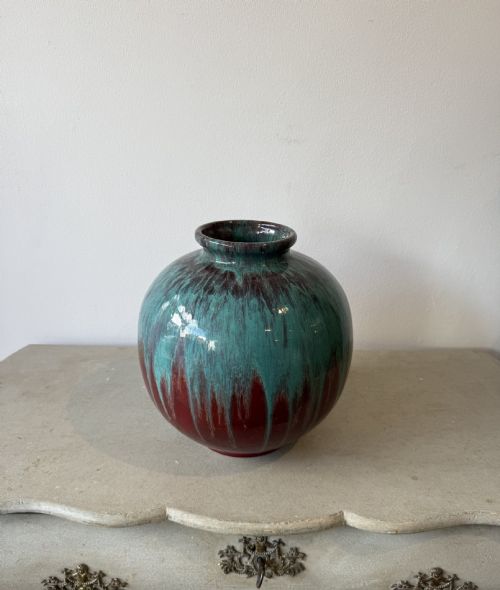
These art deco ceramic urn forms bring bold geometric design and vibrant lustre finishes straight into a modern interior.
Art Deco Ceramic Urn
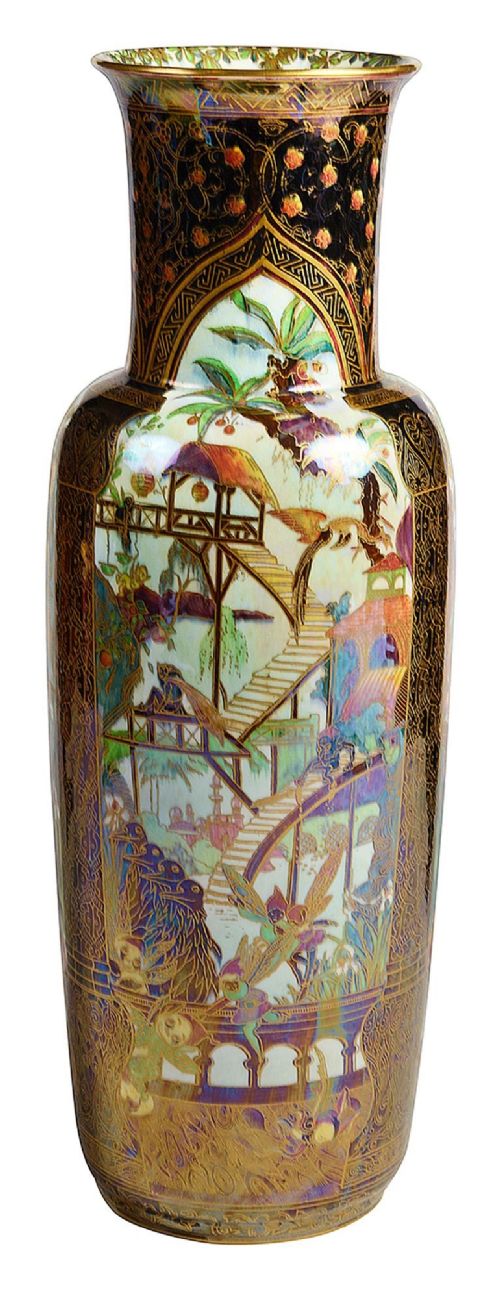
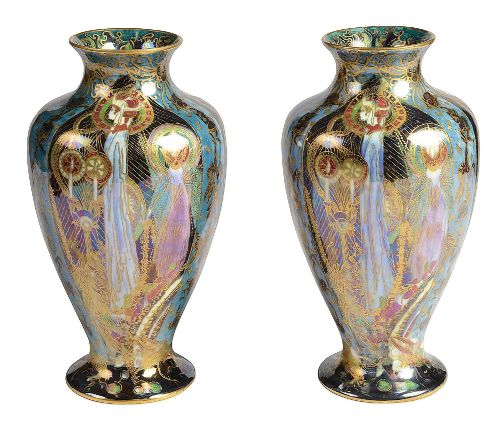
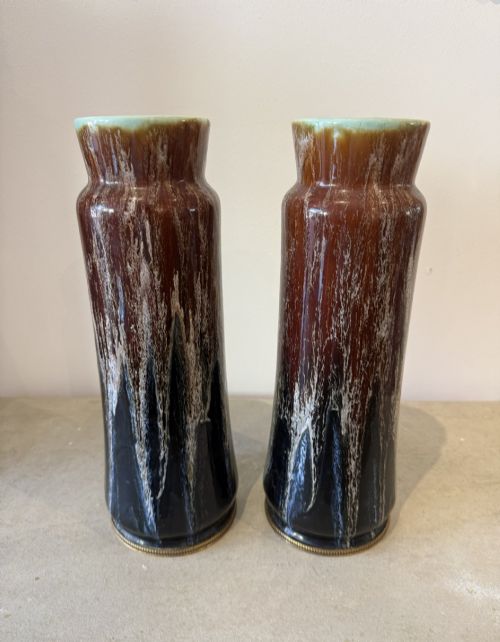
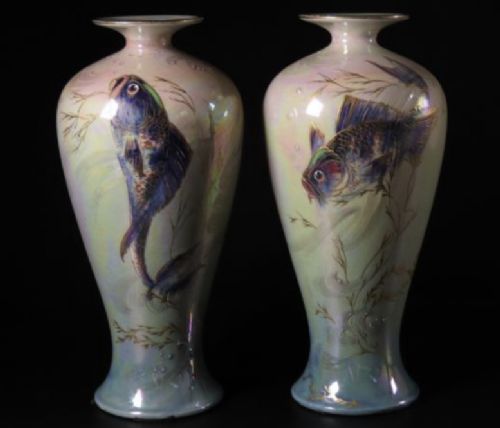
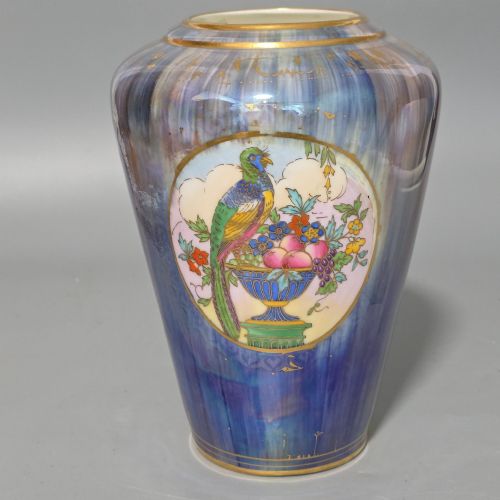
When you search for an art deco ceramic urn, you encounter vessels shaped as vases, baluster jars, and jardinières spanning the nineteenth century through the 1920s and 1930s. The selection on this page centres primarily on British earthenware and porcelain alongside French studio pottery, featuring prominent forms decorated with hand enamelling and metallic lusta finishes.
The objects take various guises, from miniature flower vessels to large decorative floor-standing pieces and side tables. Makers utilise both traditional porcelain and heavy earthenware bodies to achieve robust silhouettes suited to the geometric ideals of the period.
How they were made
Potters shaped earthenware, bone china, and porcelain bodies on the wheel or in moulds before applying complex glaze systems. Workshops layered enamel, gold leaf, and iridescent lustre glazes over the clay base to create shimmering surface effects.
Firing techniques required immense skill to fix intricate painted motifs such as fish, birds, and Chinoiserie landscapes without marring the glossy finish. Artisans combined hand painting with transfer printing to achieve the dense patterning characteristic of the era.
The listings feature earthenware and porcelain from the nineteenth century through the 1930s, incorporating glaze, enamel, and gold leaf.
What varies in quality
The distinction between standard production wares and exceptional pieces rests upon the complexity of the glaze chemistry and the ambition of the hand painting. Works decorated with specialist lustre formulations or intricate enamel designs by named artists command greater artistic merit.
Execution of the form also dictates standing, with heavy baluster shapes and large jardinieres showing superior command of ceramic shrinkage and kiln control during firing.
Daisy Makeig Jones·Walter Slater·Robert T Lallement·Hans Henrik Hansen·Richard Joyce·Charlotte Rhead
The Art Deco Ceramic Urn Glossary
- Lustre
- A type of ceramic glaze containing metallic salts that produce an iridescent, rainbow-like sheen upon firing. This technique became highly sought after by British and continental potteries during the early twentieth century.
- Baluster
- A vertical architectural form characterised by a swelling lower body tapering towards a narrow neck. Many large decorative vessels adopt this sturdy profile to support heavy surface ornamentation.
- Earthenware
- A porous pottery body fired at lower temperatures than stoneware or porcelain. It serves as the primary canvas for brightly coloured enamels and opaque glazes.
- Jardinière
- A large ornamental pot or container designed to hold plants or floral arrangements. In ceramic design, these substantial vessels often double as decorative floor pieces or small tables.
Art Deco Ceramic Urn: Frequently Asked Questions
How do I display an art deco ceramic urn?
Position larger baluster vessels and jardinières on sturdy surfaces where their geometric forms and metallic glazes catch the light. They suit minimalist settings where their strong silhouettes can act as focal points.
Smaller miniature flower holders look effective grouped on mantels or open shelving. Ensure they sit safely away from heavy household traffic to protect their delicate enamel surfaces.
Were these vessels used for flowers?
Many pieces served a dual purpose as functional flower holders and purely decorative mantel ornaments. Large baluster jars and covered vases often accommodated dried or fresh stems during the interwar period.
Some substantial jardinières functioned primarily as plant pots for indoor ferns and palms. Others remained strictly ornamental, designed to showcase the artistic skill of the pottery.
How can I tell the 1920s pieces apart?
Examine the base for factory backstamps, potters' monograms, and handwritten pattern numbers typical of British and French potteries. Stylistic clues such as stylised fauna, fish motifs, and bold geometric borders point directly to the 1920s and 1930s.
Lustre effects and cobalt blue grounds also help identify specific periods. Compare the glazing techniques against documented works by designers from the same decade.