
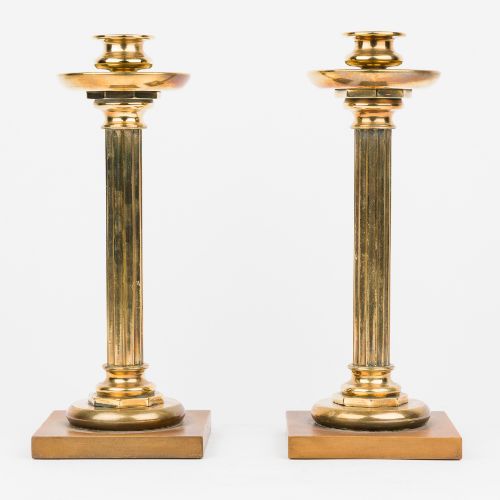


Art Deco Candlesticks
Art deco candlesticks bring geometric discipline and industrial energy to a table, offering a striking display of 1930s style.
Art Deco Candlesticks
Art deco candlesticks encompass a range of lighting supports shaped by the aesthetic movements of the early twentieth century, spanning standard domestic holders to monumental altar pieces. Buyers searching this phrase meet symmetrical metal designs and moulded glass items created during the interwar period.
The most common examples on this page are pairs of matching metal shafts and pressed glass pieces originating from around 1930. These items reflect the transition from ornate floral motifs towards clean lines, stepped tiers, and geometric abstraction.
What varies in quality
Quality rests upon the weight of the metal and the clarity of the glass, distinguishing mass-produced wares from substantial studio pieces. Heavier gauges of silver, bronze, and brass provide structural stability and indicate superior craftsmanship.
Design complexity also separates standard items from exceptional productions, such as signed glassware or works by recognised workshops. Finishes like guilloché enamel, patinated surfaces, and integrated mixed materials demonstrate a higher level of artistic ambition.
Listings feature items spanning the decades from 1900 to 1950, showing the evolution from Amsterdam School prickets to modernist glass.
Rene Lalique·Robert Edgar Stone·Just Andersen
The Art Deco Candlesticks Glossary
- Pricket
- A candlestick featuring a central metal spike designed to impale a candle rather than a socket that holds it from the sides.
- Guilloché
- A decorative engine-turned technique producing precise, intricate patterns beneath a translucent layer of enamel.
- Spelter
- An alloy of zinc and other metals utilised as a cheaper alternative to bronze for casting sculptural figures and holders.
- Bakelite
- An early synthetic thermosetting plastic found in vibrant colours on interwar bases and stems.
- Candelabrum
- A multi-branched lighting fixture designed to hold several candles simultaneously from a single base.
Art Deco Candlesticks: Frequently Asked Questions
What materials are used for art deco candlesticks?
Makers employed a wide selection of materials ranging from sterling silver, silver plate, and nickel-silver to bronze, brass, and copper.
Glass was equally prominent, appearing as clear, frosted, pressed, or coloured variants alongside early plastics like Bakelite and Catalin.
How do I identify a 1930s candlestick?
Authentication relies on observing characteristic geometric motifs, stepped square bases, and streamlined profiles typical of the period.
Many examples feature hallmarks, manufacturer stamps, or registration numbers that confirm their interwar origin.
Were these items produced as pairs?
Many examples were manufactured as matching pairs to flank mantelpieces, sideboards, or dining tables symmetrically.
Single items and larger four-piece table sets also appear within the records.
How should I clean metal candlesticks?
Silver and brass surfaces require gentle treatment appropriate to their specific metal plating and patination.
Harsh abrasive polishes should be avoided to preserve original aged finishes and applied colour coatings.