


Art Deco Bureau Desk
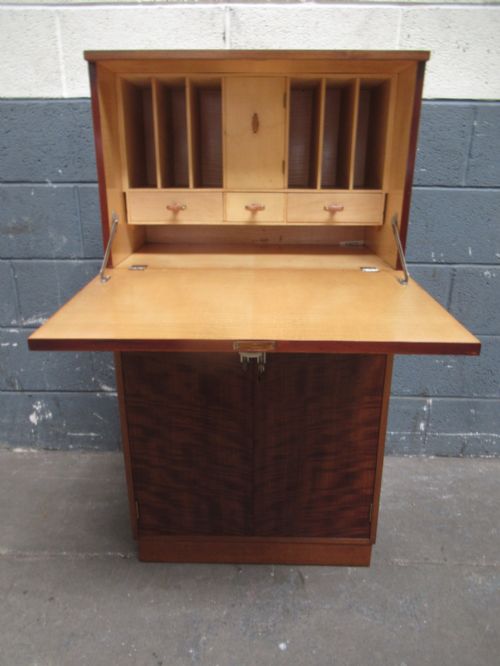
An art deco bureau desk brings streamline geometric elegance to a workspace, offering concealed writing compartments and striking wood grains.
Art Deco Bureau Desk
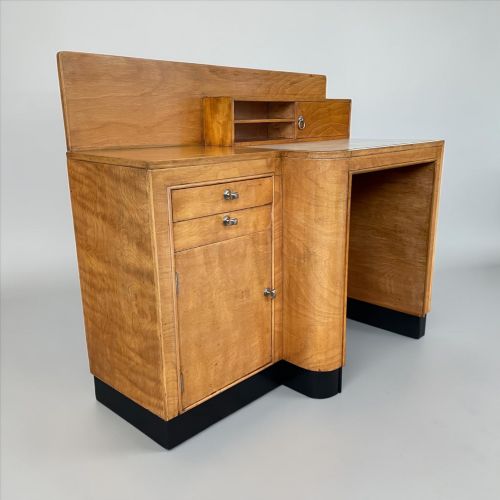
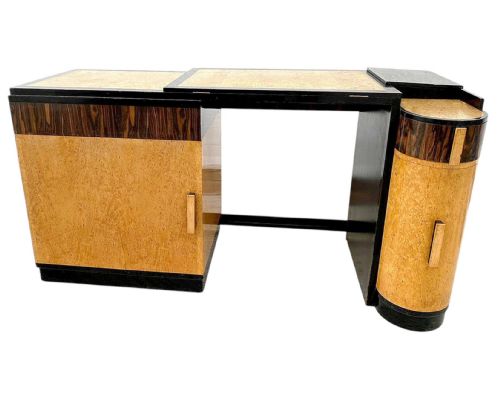
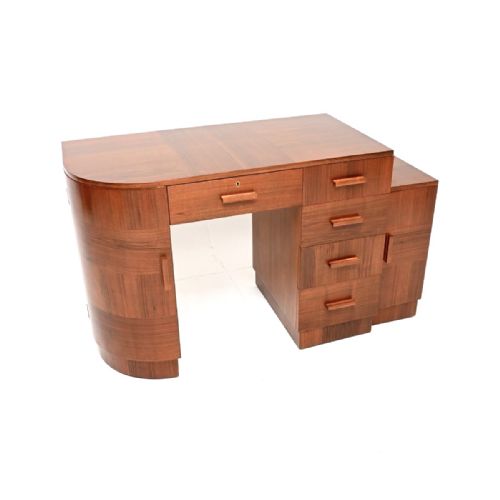
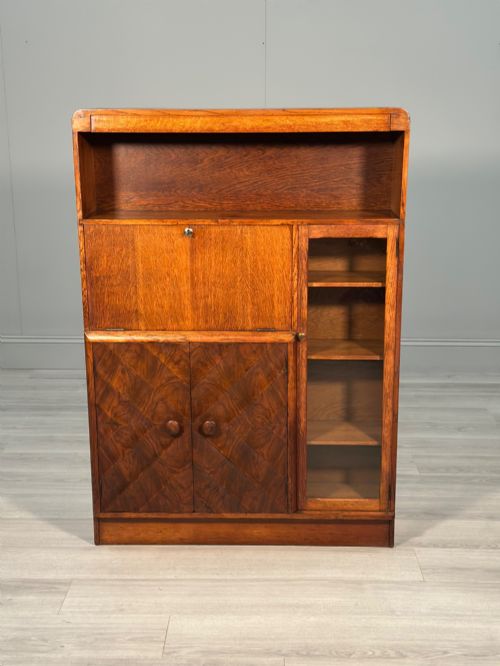
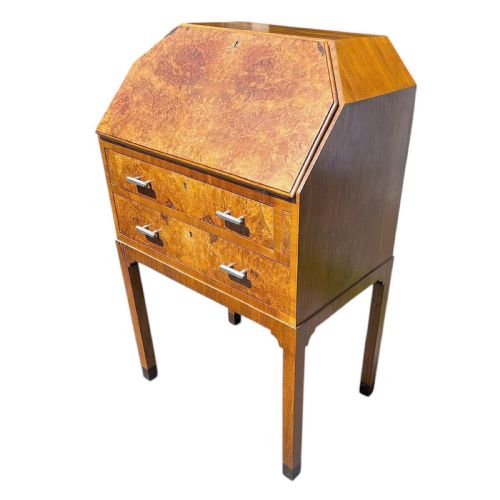
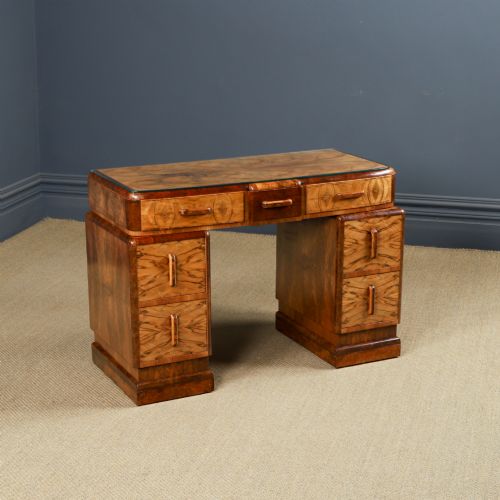
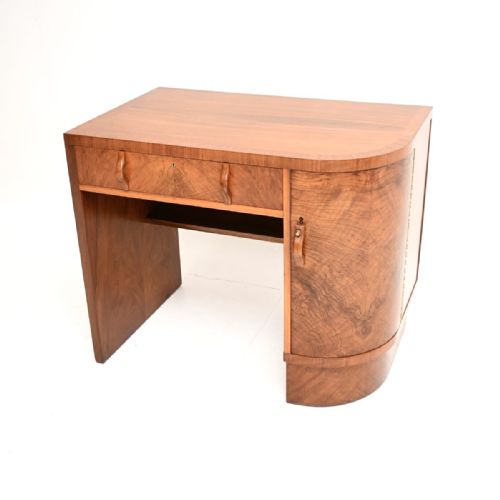
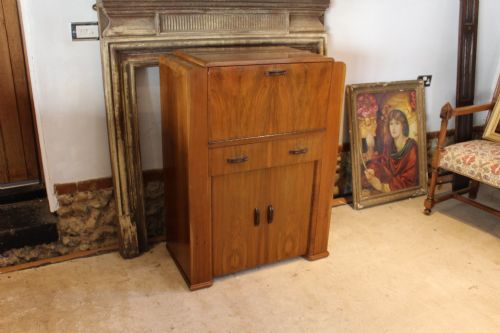
An art deco bureau desk combines workspace functionality with fold-down or sliding writing surfaces characteristic of the interwar period. The pieces seen here date predominantly from the 1930s, alongside examples from the 1920s and 1950s.
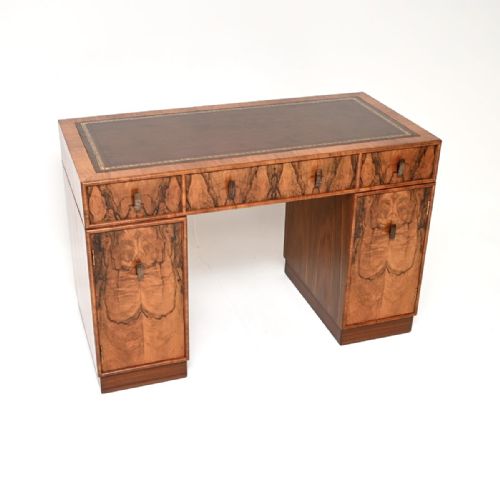
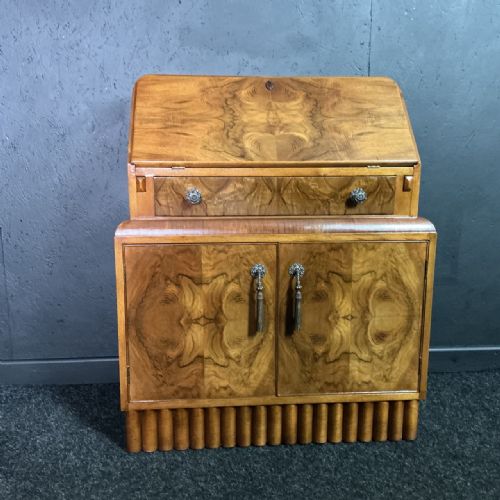
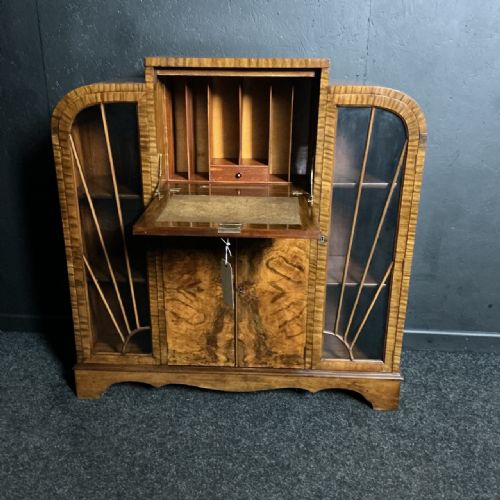
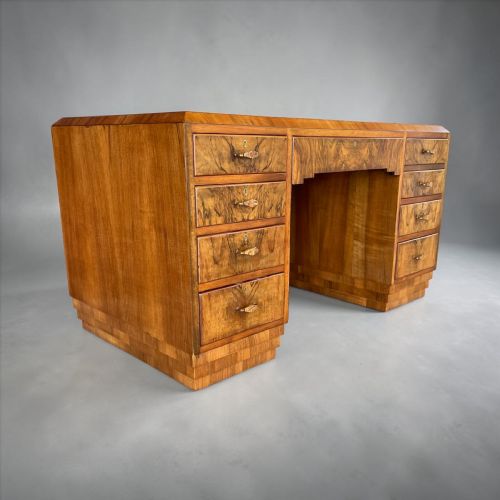
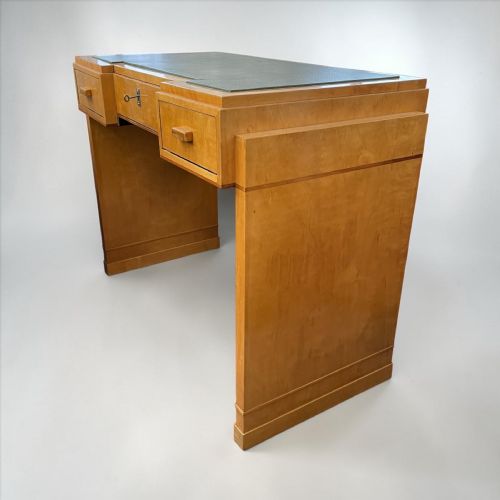
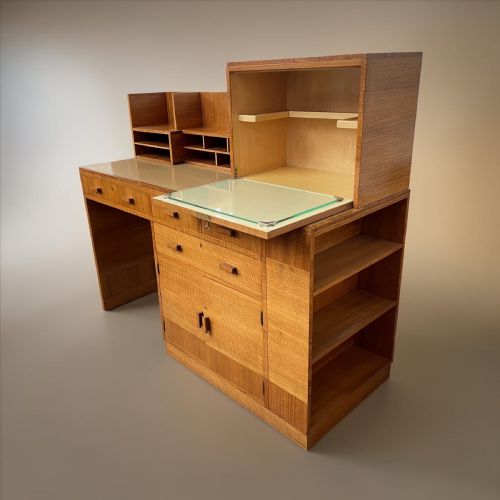
Forms range from compact upright bureau cabinets and bookcase combinations to pedestal office writing desks and serpentine fronts. English and French workshops produced these designs, often employing cloud shapes and skyscraper profiles.
How they were made
Cabinetmakers utilised timber veneers over solid foundations, pairing walnut and burr walnut with oak and burr elm. Figured grains were arranged symmetrically to create decorative patterns across drop-fronts and pedestals.
Metal accents in brass and inserted glass panels complete the construction, defining the industrial yet polished aesthetic of the period.
Art Deco Bureau Desk Retail Price Guide 2026
Typical asking prices for art deco bureau desk among the pieces listed under this phrase on Sellingantiques today, from the lower quarter to the upper quarter. They describe what is for sale here now, not the wider market.
Listings feature walnut, burr walnut, oak, and glass, spanning the 1920s, 1930s, and 1950s.
What varies in quality
The sophistication of the veneer matching and the complexity of the cabinet silhouette distinguish finer examples from simpler utilitarian office pieces. Architectural flourishes like cloud shapes or skyscraper tiers require precise carpentry.
The integration of fitted interior pigeonholes, drawers, and original hardware such as brass handles further separates standard production items from workshop-attributed pieces.
F.H. Marshall & Co Glasgow·Heal's·Étienne Kohlmann·Maurice Adams·Rurka
The Art Deco Bureau Desk Glossary
- Burr walnut
- A prized veneer taken from the wart-like growths on walnut trees, yielding intricate, swirling grain patterns. It was heavily favoured by period cabinetmakers for its decorative impact.
- Bureau
- A desk featuring a sloping hinged flap that opens to reveal a writing surface and small compartment drawers. Upright variants often incorporate bookcase sections above.
- Pedestal desk
- A freestanding writing table supported by two piers or columns of drawers. The style provides substantial storage while maintaining a formal presence in a room.
- Serpentine front
- A furniture face characterised by a curved contour that bulges outward in the centre and recesses at the sides. This shaping demands advanced woodworking skill.
- Secretaire
- A cabinet or desk designed specifically for writing and storing correspondence, typically housing a concealed drop-front writing slab.
Art Deco Bureau Desk: Frequently Asked Questions
How do I use an art deco bureau desk today?
These pieces function well as compact writing stations or laptop desks in modern rooms. The drop-front flap closes away paperwork to keep living spaces tidy.
Interior compartments organise stationery, while upper bookcase sections hold books and display objects.
Were these desks made in oak or walnut?
Both timbers appear frequently in period furniture production. Walnut and burr walnut dominate the more decorative, figured designs.
Oak versions tend to be robust and straightforward, sometimes featuring bookcase sides or roll-top mechanisms.
How do I distinguish between a 1920s and 1930s desk?
Desks from the 1920s often retain heavier traditional proportions influenced by earlier revival styles. By the 1930s, designs embraced bolder streamline geometries, cloud shapes, and skyscraper silhouettes.
French pieces from later decades continued these sleek architectural motifs into the 1940s and 1950s.
What is the difference between a bureau and a pedestal desk?
A bureau relies on a hinged flap that pulls down to create a writing surface, concealing internal pigeonholes when closed. A pedestal desk provides a fixed writing top supported by drawer columns on either side.
Pedestal variants often include glass tops and brass detailing suited for office environments.