





Art Deco Brass Box
An art deco brass box brings geometric elegance to a desk or mantelpiece, combining durable metalwork with the unmistakable styling of the interwar years.
Art Deco Brass Box
When you search for an art deco brass box, you encounter pieces designed to hold cigarettes, matches, letters, or small treasures with distinct modernist flair. These vessels frequently emerge from the 1920s and 1930s, reflecting the sleek industrial aesthetic of the period.
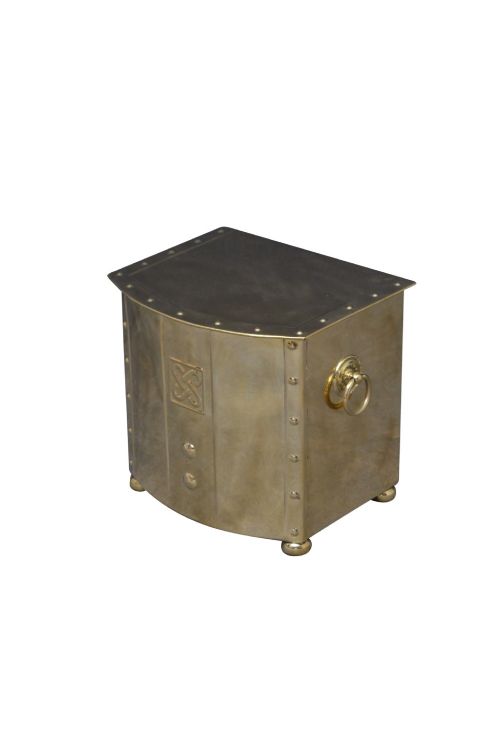
While brass forms the primary metallic element, many examples incorporate contrasting materials like green shagreen, bone trim, or carved wood. You also find larger fireside coal and log boxes that scale up these geometric motifs for domestic utility.
The objects span desktop desk accessories and specialised tobacco containers, alongside occasional intersections with Victorian influences and Arts and Crafts traditions. Each piece demonstrates how utilitarian storage was elevated into a decorative art form during the early twentieth century.
Materials and construction
Makers utilised solid brass sheets and castings, often combining the metal with exotic woods such as burr walnut, Karelian birch, and limed oak. Surface enrichment frequently involved embossing, etching, or polished finishes that accentuated the crisp lines of the design.
Textural contrast defines many constructions, pairing cold metal with organic substances like bone, leather, crocodile skin, or dyed shagreen. These mixed media pieces required precise joinery and metalworking skills to unite disparate materials harmoniously.
Art Deco Brass Box Retail Price Guide 2026
Typical asking prices for art deco brass box among the pieces listed under this phrase on Sellingantiques today, from the lower quarter to the upper quarter. They describe what is for sale here now, not the wider market.
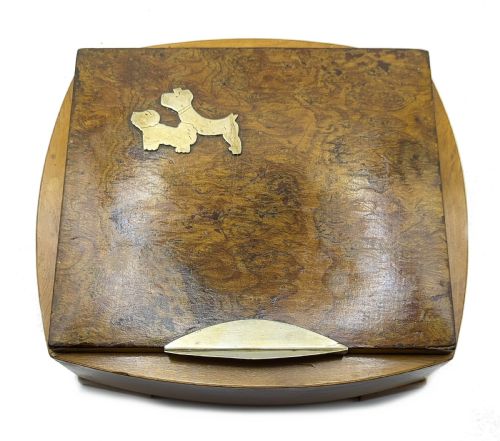
A novelty Scottie dog sits atop one 1930s cigarette box, proving that interwar designers possessed a playful sense of humour.
Distinctions in quality
Superior examples display crispness in their brass casting and stamping, with clean geometric motifs that remain sharp and well-defined. The integration of secondary materials like shagreen or carved wood demands tight tolerances and secure mounting.
Consider the weight of the metal and the integrity of the interior linings, which separate standard production items from finer bespoke creations. Well-executed patination and robust hinges indicate a higher standard of original manufacture.
Goyard·JH Browne of The Waldorf Hotel·Dorfwych
The Art Deco Brass Box Glossary
- Shagreen
- Untanned skin, typically from a shark or ray, prepared with a granular surface and often dyed green or other vibrant tones. It provides a luxurious tactile contrast to polished brass trim.
- Karelian birch
- A distinct timber variant known for its swirling, burl-like grain patterns and golden hue. It was frequently employed by period cabinetmakers to add natural texture to modernist designs.
- Embossing
- A metalworking technique where a design is raised from the reverse side using hammers and punches. This process creates low-relief ornamentation across the surface of fireside coal boxes.
- Art Deco
- A design style characterised by streamlined forms, geometric symmetry, and a embrace of modern industrial materials. It dominates the aesthetic of interwar decorative metalwork.
- Patina
- The natural sheen and surface alteration developed on metal through age and handling. A genuine brass surface deepens in colour over decades of exposure to the atmosphere.
Art Deco Brass Box: Frequently Asked Questions
What were these boxes originally used for?
Smaller vessels were typically manufactured to hold cigarettes, matches, letters, or playing cards for guests in a drawing room. Larger lidded containers served utilitarian functions beside the hearth, storing coal or logs.
Desk accessories helped keep correspondence and writing implements organised in the study. Their dual purpose as decorative objects meant they remained on display when empty.
How do I care for antique brass?
Dust the surface regularly with a soft, dry cloth to prevent the accumulation of grit in recessed geometric patterns. Avoid abrasive metal polishes that can strip away the aged patination accumulated over the decades.
If the piece incorporates leather, shagreen, or wood, keep moisture away from these sensitive organic elements. Natural wax can be applied sparingly to preserve finished timber sections.
How can I date an art deco box?
Stylistic cues point directly to the interwar period, specifically the 1920s and 1930s, when symmetry and stylized motifs peaked. Construction methods, such as the type of hinges and fasteners used, also offer chronological clues.
Manufacturer marks or engraved signatures on the base or interior can sometimes pinpoint the exact workshop or retailer. Comparing the combination of materials, like shagreen paired with bone, helps narrow down the decade.
Are these items purely decorative?
While their striking geometry makes them exceptional display pieces, they remain fully functional storage containers. The hinged lids and fitted interiors operate just as they did a century ago.
Owners frequently use them today to store modern trinkets, keys, or business cards while maintaining period style. Their robust construction ensures they withstand daily handling in a contemporary home.