

Art Deco Blue Ring
An art deco blue ring captures the geometric boldness and vibrant colour of the interwar period.
Art Deco Blue Ring
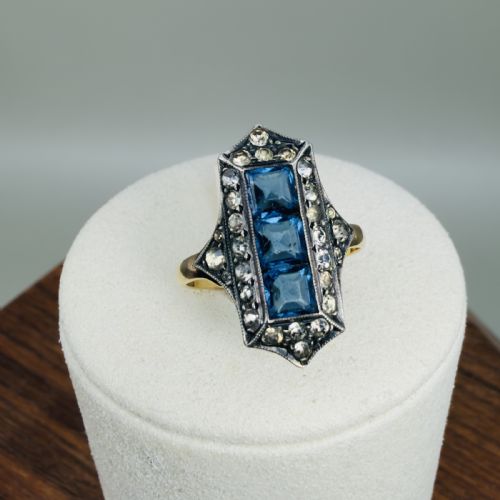
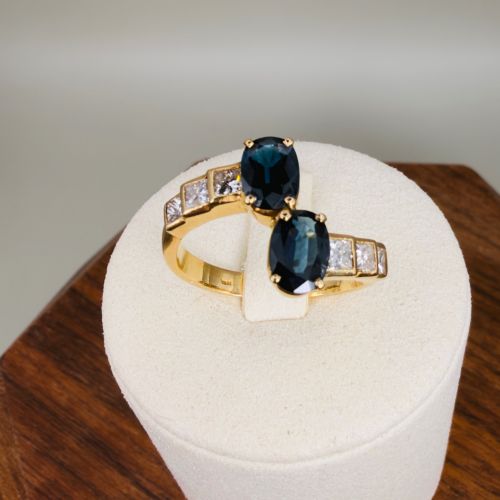
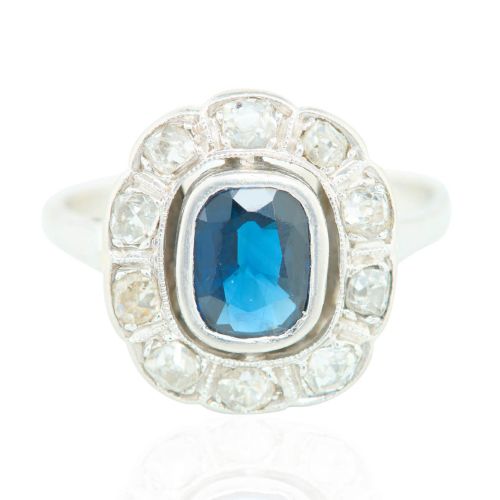
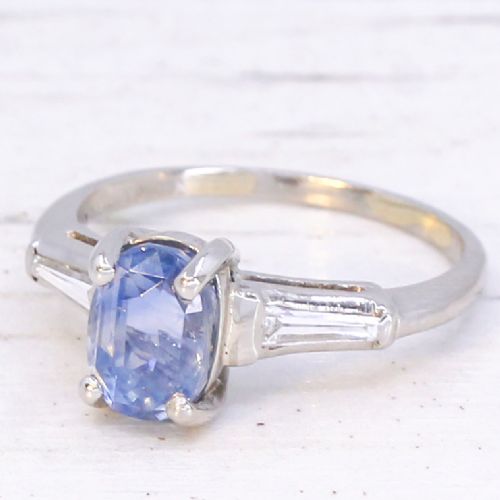
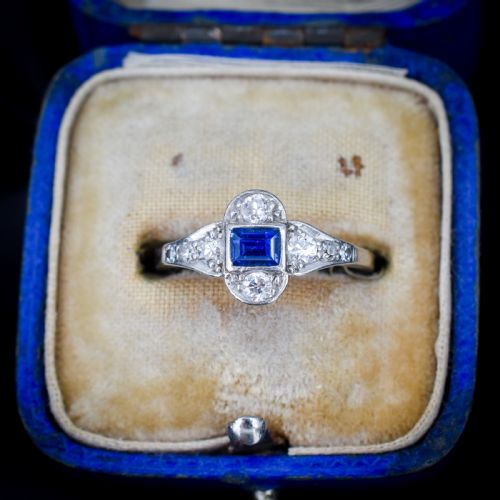
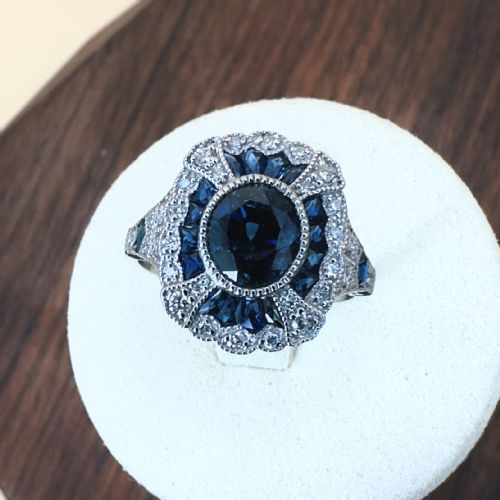
An art deco blue ring brings together angular geometry and saturated colour, most frequently found in the form of diamond and sapphire cluster rings originating from the 1920s and 1930s. These pieces often feature central blue stones flanked by contrasting white diamonds in platinum or 18ct white gold settings.
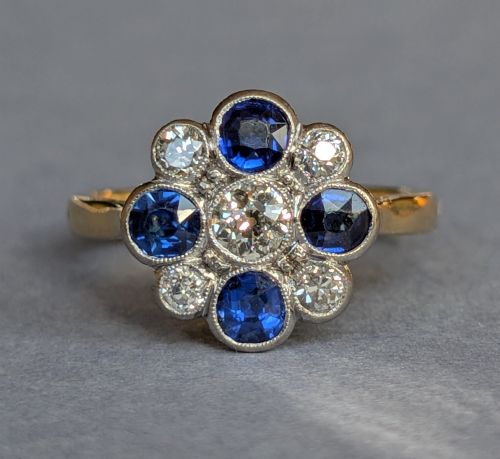
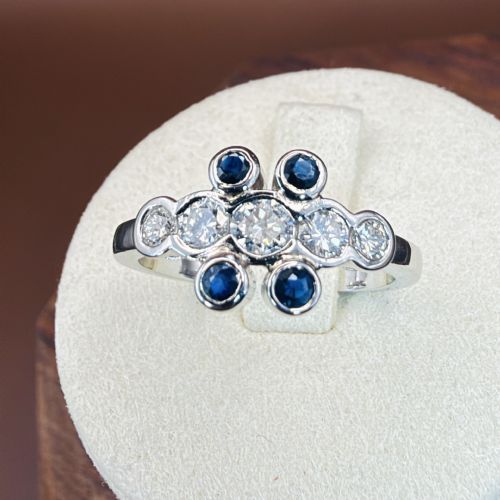
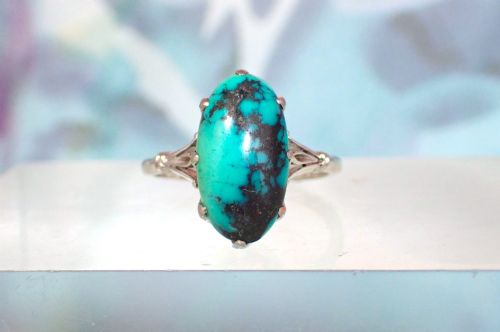
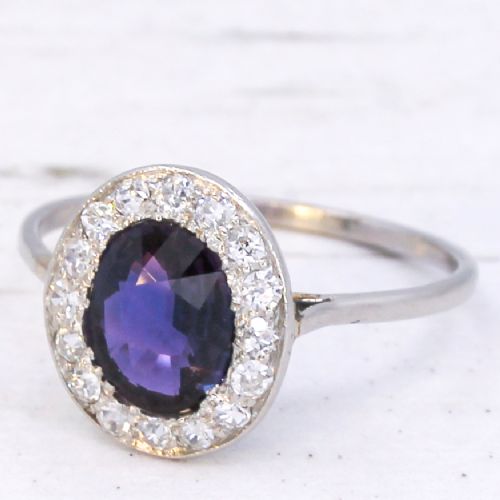
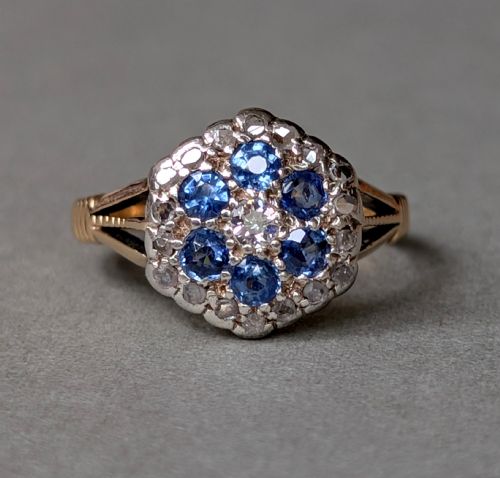
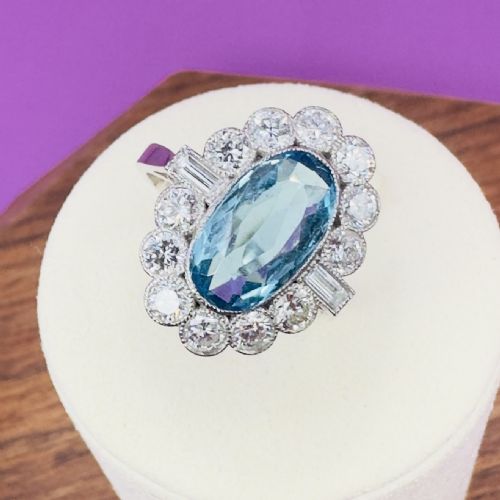
Buyers encounter numerous variations on this page, including navette, target, and daisy configurations alongside straightforward solitaire and three-stone arrangements. While sapphires dominate the selection, stones such as blue zircon, aquamarine, and turquoise also appear within authentic period pieces.
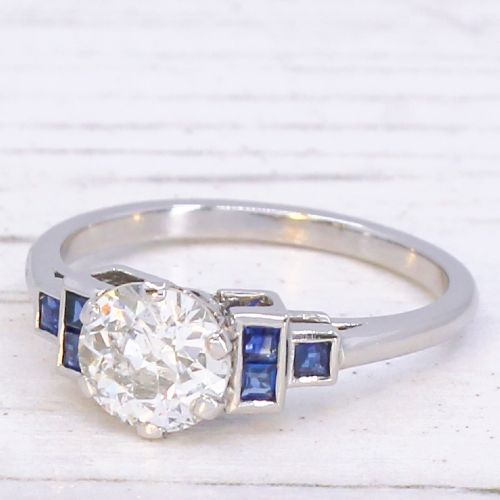
The aesthetic leans heavily into symmetry and stepped shoulders, reflecting the architectural influences of the period. Alongside pieces from the primary interwar decades, the listings incorporate later revivals that maintain the distinct visual language of the 1920s.
How They Were Made
Goldsmiths of the period utilised platinum and 18ct white gold to provide a strong, neutral backdrop that maximised the brilliance of diamonds and the depth of blue stones. Platinum allowed for delicate, knife-edge settings and intricate pierced galleries without sacrificing structural integrity.
Stone cutting defines the technical execution, featuring calibre cut sapphires tailored precisely to fit channel settings alongside traditional old cut and transitional cut diamonds. Master lapidaries shaped blue zircons, aquamarines, and sapphires into geometric ovals, squares, and marquise profiles to suit strict symmetrical designs.
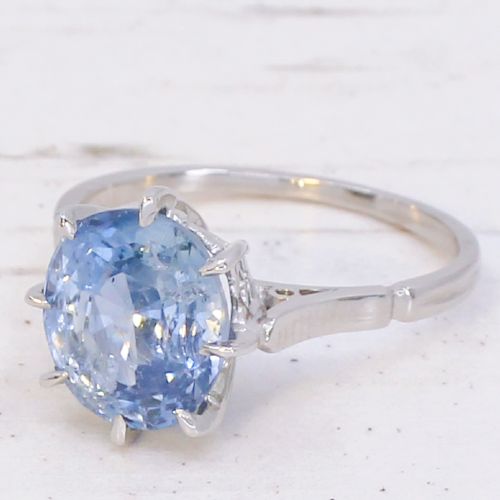
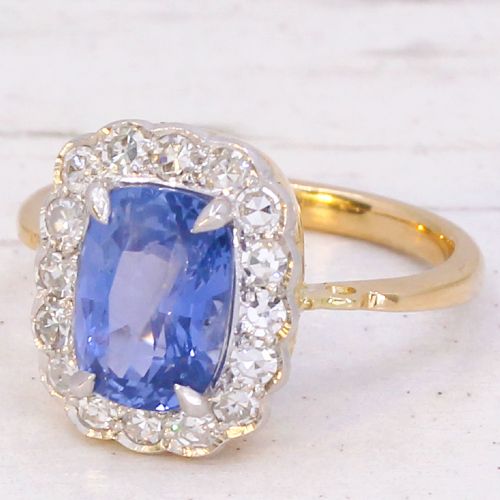
Central gems include unheated Ceylon sapphires, aquamarines, and blue zircons set within geometric cluster configurations.
What Varies in Quality
The distinction between standard examples and exceptional pieces rests upon the origin, treatment, and saturation of the central blue stone, particularly in natural unheated sapphires from sources like Ceylon or Burma. Superior pieces exhibit even colour distribution and high transparency without compromising the integrity of the surrounding diamond work.
Execution of the metalwork also separates tiers of quality, visible in the precision of calibre cutting where stones meet flush without visible gaps in the platinum or gold claw work. Hand-pierced millegrain detailing and balanced proportions across the shoulders elevate the overall refinement of the piece.
The Art Deco Blue Ring Glossary
- Calibre cut
- Small gemstones specifically shaped and faceted to fit tightly into geometric channels or specific mounting layouts without shared prongs.
- Cluster ring
- A ring design featuring a prominent central gemstone encircled by a group of smaller accent stones, typically diamonds.
- Navette
- A boat-shaped or marquise-profile setting that elongates along the finger, popular for maximising finger coverage in period cocktail rings.
- Millegrain
- A decorative technique applying a fine border of tiny raised beads along the edges of metal settings, common in Edwardian and art deco jewellery.
- Transition cut
- A diamond facet style bridging the older old European cut and the modern brilliant cut, featuring a smaller table and slightly larger culet.
Art Deco Blue Ring: Frequently Asked Questions
How do I care for an antique sapphire ring?
Sapphires possess high hardness, yet the delicate platinum or gold settings require gentle handling during everyday wear. Avoid ultrasonic cleaners and harsh chemicals, opting instead for warm soapy water and a soft brush.
Store antique rings individually in padded boxes to prevent metal friction and stone abrasion. Regular professional inspection ensures the claws securing the central blue stone and accent diamonds remain tight.
Can these rings be resized easily?
Resizing depends primarily on the band material and the extent of the shoulder design. Plain shanks in 18ct gold or platinum present straightforward adjustments for a skilled bench jeweller.
Complex geometric patterns extending down the band restrict major size alterations without disrupting the pattern. Consult a specialist familiar with antique settings to preserve the structural integrity of the piece.
What defines an art deco blue ring?
Symmetry, linear motifs, and high-contrast colour combinations distinguish these designs from earlier Victorian or Edwardian styles. The integration of calibre cut stones creates flat planes of intense blue alongside sparkling diamond borders.
Platinum construction permits ultra-fine settings that give the geometric shapes a lightweight yet durable architecture. This combination of structural boldness and crisp colour remains the hallmark of the aesthetic.