
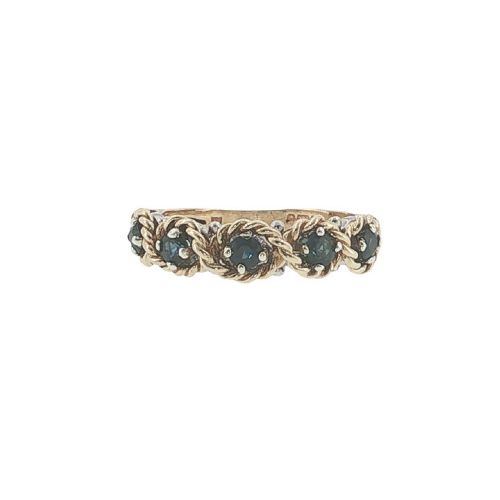


Retro Blue Gemstone Ring
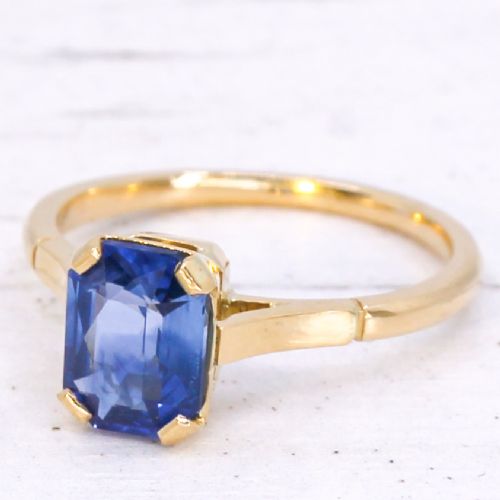
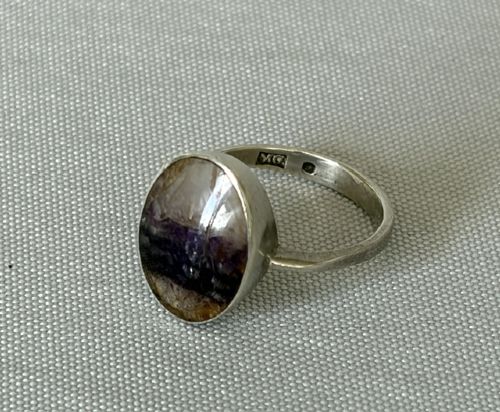
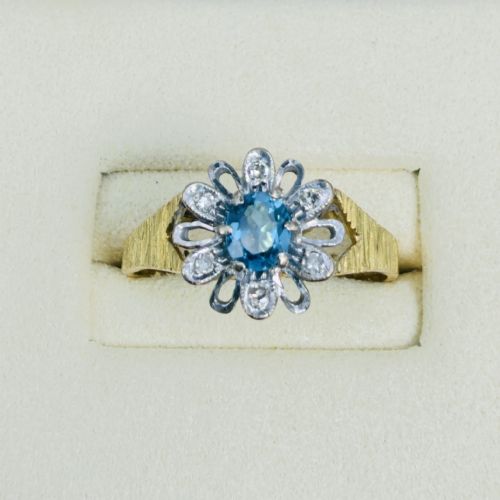
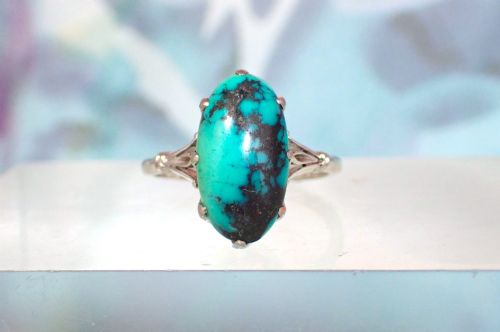
A retro blue gemstone ring brings together bold mid-century scale and vibrant stones in gold or platinum settings.
Retro Blue Gemstone Ring
A retro blue gemstone ring spans designs from the 1920s Art Deco period through the 1950s and 1960s, encompassing styles like mid-century modern and retro. Buyers searching for a retro blue gemstone ring encounter substantial cocktail rings, floral cluster designs, and clean band configurations.
The materials featured in these pieces range from striking aquamarines and sapphires to turquoise, Blue John, zircon, and opal, paired with diamonds. Settings utilise 9ct gold, 14ct gold, 18ct white gold, 18ct yellow gold, and platinum to support the central blue stones.
Materials and construction methods
Goldsmiths constructed these rings using precious metals including platinum and various purities of gold such as 9ct, 14ct, and 18ct in both yellow and white varieties. These robust metals provided the necessary structural strength to support large, prominent gemstone carats.
Stones like aquamarines, sapphires, zircons, and diamonds were secured into cluster, solitaire, marquise, and tank settings. Metalwork techniques combined secure claw settings with intricate decorative shoulders and diamond accents to frame the central blue stones.
Listings feature periods spanning the 19th Century, Art Deco 1920s and 1930s, through to Mid-Century 1940s, 1950s, 1960s, and later than 1960.
Distinguishing quality across pieces
The distinction between standard and superior pieces rests on the weight and quality of the central blue gemstone alongside the accompanying diamonds. Large carat weights in aquamarines and sapphires, particularly when paired with high-grade platinum or 18ct white gold, elevate the standing of a piece.
Proportion and execution of design define the upper tier, where intricate floral cluster or tank forms are balanced by precise stone placement. Finer examples display harmonious integration between the gold or platinum mount and the distinctive blue hue of the primary gem.
The Retro Blue Gemstone Ring Glossary
- Aquamarine
- A blue or cyan variety of beryl utilised frequently in large cocktail rings from the mid-century period. It provides substantial carat weight while maintaining transparency.
- Cluster ring
- A design featuring a central gemstone surrounded by a border of smaller stones, often diamonds. This arrangement maximises visual impact and light reflection.
- Platinum
- A dense, durable precious metal utilised for fine jewellery settings. Its strength allows for secure, delicate claw work holding heavy gemstones.
- Tank ring
- A bold, volumetric jewellery style originating around the 1940s, characterised by industrial lines and heavy gold or platinum construction.
Retro Blue Gemstone Ring: Frequently Asked Questions
What defines a retro blue gemstone ring?
These rings typically feature mid-century, retro, or Art Deco styling with prominent blue stones such as aquamarine, sapphire, zircon, or turquoise. They often manifest as large cocktail rings or detailed floral clusters.
Settings span platinum and various carats of gold, reflecting design trends from the 1920s through the 1960s.
How do I care for my ring?
Maintenance depends on the specific gemstone and metal composition present in the piece. Softer materials require gentle cleaning methods to preserve their surface integrity.
Regular inspection of the platinum or gold settings ensures the stones remain secure within their claws.
How can I tell the period apart?
Art Deco pieces from the 1920s lean towards geometric precision and 18ct white gold or platinum usage. Mid-century and 1950s examples often introduce larger cocktail proportions, tank designs, and yellow gold.
Later pieces extending into the 1960s and 1970s incorporate distinct cluster configurations and specific hallmark dates.
Were these rings worn daily?
Many substantial cocktail and dress rings were created for specific social occasions due to their generous stone sizes. Lighter band configurations and five-stone rings saw more frequent everyday wear.
Sturdier platinum and 18ct gold mountings supported regular use across different decades.