


Art Deco Big Cat Sculpture
An art deco big cat sculpture brings raw predatory grace into a room through sleek lines and striking materials.
Art Deco Big Cat Sculpture
An art deco big cat sculpture captures the sleek, muscular power of panthers, lions, and lionesses through the characteristic geometry and stylised lines of the interwar period. These figures emerge predominantly from the 1920s and 1930s, reflecting a fascination with motion, speed, and exotic wildlife.
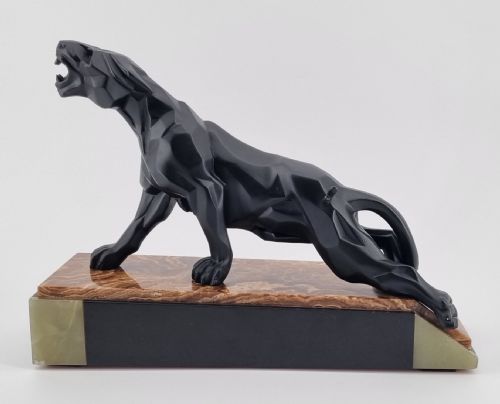
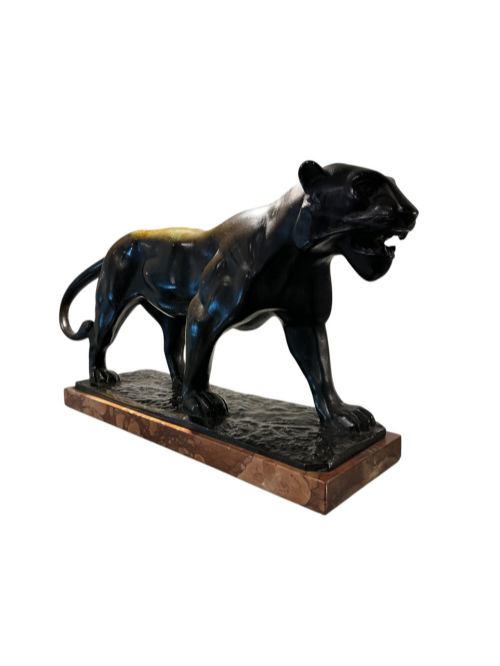
The version most commonly encountered on this page is the prowling or resting panther mounted upon a contrasting plinth. These pieces frequently pair dark metal or carved timber with veined stone bases, creating a balanced visual weight typical of the era.
Object types remain strictly sculptural, ranging in scale from modest mantelpiece figures to larger floor or table centrepieces. The focus rests squarely on feline anatomy rendered through the modernist lens of twentieth-century animalier art.
How they were made
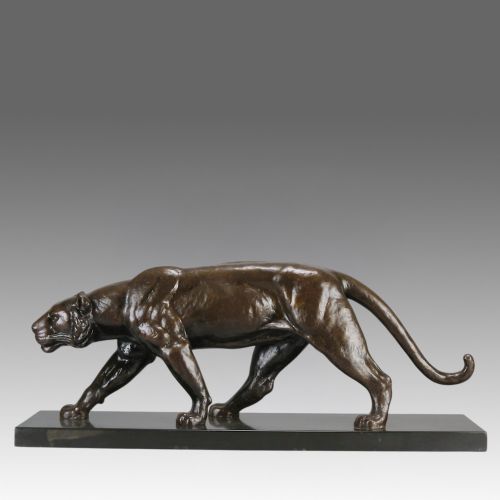
Makers utilised hot cast bronze and patinated spelter to model the musculature of panthers and lions with precise detail. Metal figures were often finished with dark patination or silvering to accentuate the play of light across the crouching bodies.
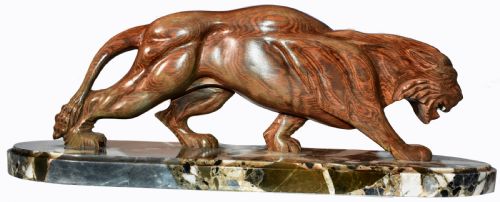
Carved hardwood and alabaster pieces show the subtractive skill of sculptors working directly with natural grain and translucency. These organic materials were shaped into smooth, flowing feline forms that complement the hard geometry of the supporting marble bases.
Listings span the 1920s, 1930s, and 1940s, featuring materials such as bronze, spelter, marble, alabaster, and hardwood.
What varies in quality
The distinction between tiers rests upon the anatomical precision and the expressive power captured in the feline's posture. Superior examples demonstrate a deep understanding of animal movement, where tension in the shoulders and claws feels immediate rather than stiff.
Material pairing and base selection heavily influence the standing of a piece. The integration of high-grade marble with finely chased bronze or deeply carved hardwood separates ambitious studio work from standard decorative production.
Alexandre Ouline·Eugene Emile Borga·Michel Decoux·Thomas Cartier
The Art Deco Big Cat Sculpture Glossary
- Animalier
- Art that realistically depicts animals, particularly prevalent in nineteenth and twentieth-century sculpture. Artists in this tradition focused intensely on anatomical accuracy combined with stylistic flair.
- Spelter
- A zinc alloy commonly utilised as a less expensive alternative to bronze during the art deco period. It was frequently painted or patinated to simulate heavier metals.
- Patination
- The surface treatment or colour achieved on metal through chemical means, age, or deliberate heating. It enhances shadow and depth on sculptural surfaces.
- Alabaster
- A fine-grained, translucent stone carved into decorative objects and sculptural bases. Its soft texture allows for subtle gradients of light.
Art Deco Big Cat Sculpture: Frequently Asked Questions
What metals are used?
Makers cast these figures in hot cast bronze and patinated spelter, often finishing the surfaces with dark tones or silvering. These metals allowed sculptors to capture the sleek musculature of big cats.
Bronze remains the more durable and prized medium, while spelter offered a lighter, more accessible alternative during the interwar period.
How are they mounted?
Many figures are set directly onto contrasting black or multi-coloured marble bases. This arrangement provides stability and echoes the architectural geometry of the period.
The stone plinth also frames the sculpture, lifting the feline form to create a distinct separation from furniture surfaces.
How do I date them?
Dating relies on the distinct material combinations, stylistic markers, and registration signs typical of the 1920s and 1930s. The emphasis on stylised animal movement points directly to the interwar modernist aesthetic.
Signatures or foundry marks inscribed on the metal or stone also help pinpoint the exact period of creation.
Where should I place one?
These sculptures suit prominent flat surfaces such as mantelpieces, heavy sideboards, or dedicated display pedestals where their silhouette stands clear. Their horizontal prowling forms naturally draw the eye along a line of sight.
Keep them away from direct heat sources and moisture to protect organic elements like wood and alabaster.