

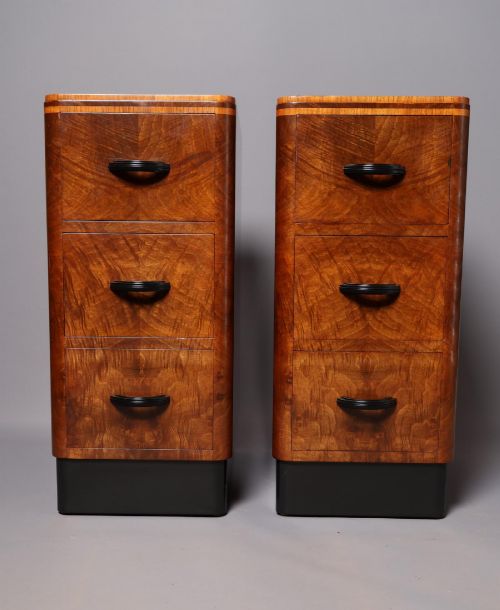


Art Deco Bedside Chests
Art deco bedside chests bring distinct geometric form and rich timber figures to the bedside, originating primarily from the 1920s and 1930s.
Art Deco Bedside Chests
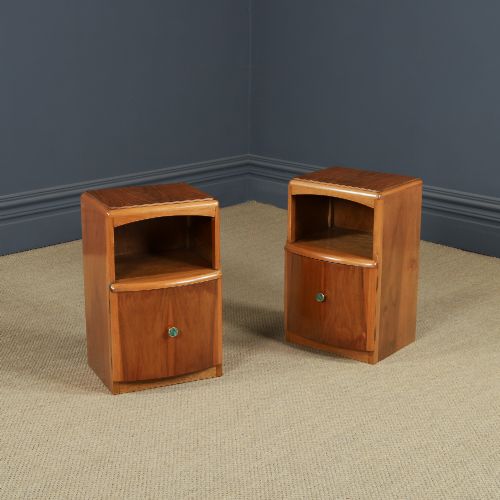
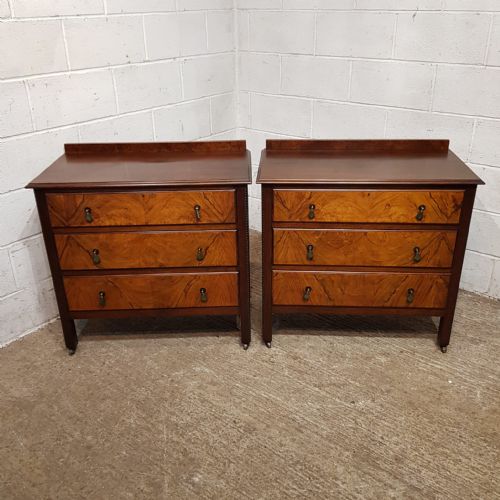
When searching for art deco bedside chests, buyers encounter compact storage items designed for the bedroom during the interwar period. The forms vary from single door cupboards and open compartments to small chests of drawers and nightstands.
Walnut dominates the selections seen here, frequently utilised as burr walnut, figured walnut or straight grain veneer. Pieces also appear in oak, satinwood, maple, birds eye maple, quilted birch and occasional combinations involving metal or brass.
The majority date from around 1930, with earlier examples stretching back into the 1920s and later items reaching into the 1940s. English workshops generated many of the surviving examples, alongside specific designs by makers such as Gomme and Heals of London.
How they were made
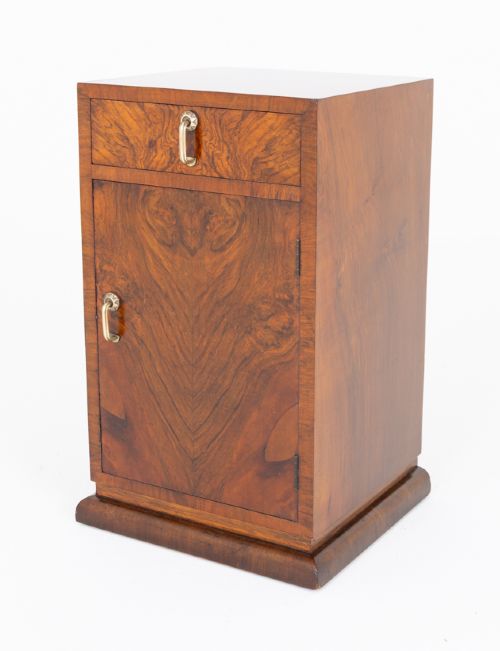
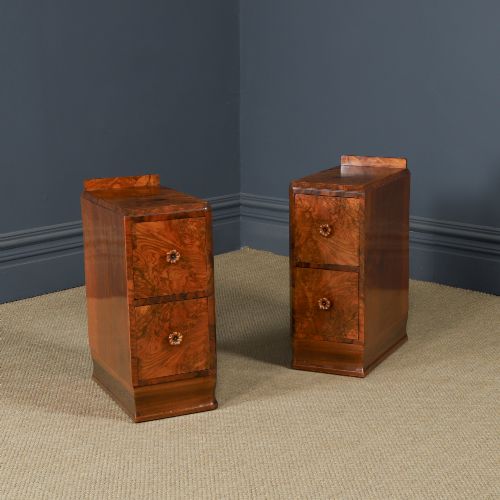
Cabinet makers constructed these pieces using solid wood framing combined with decorative wood veneers applied to carcases and drawer fronts. Burr walnut and figured walnut provide the characteristic swirling grain patterns associated with the period.
Handle hardware often incorporates brass, metal or contrasting dark wood, whilst details like bakelite appear on select fittings. Surface finishing relied on traditional polishing techniques to highlight the natural figuration of the timber.
Several pairs hide internal pot cupboards, reminding us that early bedside storage served very different nighttime domestic needs.
What varies in quality
Quality rests significantly upon the choice and matching of timber veneers across drawer fronts and top surfaces. Symmetrical grain patterns on burr walnut examples indicate careful selection by the cabinet maker.
Construction methods and drawer linings demonstrate the underlying standard of manufacture, separating standard production items from workshop pieces bearing maker attributions like Heals of London or Gomme.
Gomme·Heals of London
The Art Deco Bedside Chests Glossary
- Burr Walnut
- A specialised wood veneer taken from the growth excrescence on a walnut tree, yielding complex, swirling grain patterns. This material remains highly sought after for its decorative impact on cabinet doors and tops.
- Figured Walnut
- Timber displaying distinctive natural grain distortions or figures that catch the light from different angles. It forms the primary surface aesthetic for many interwar bedroom pieces.
- Nightstand
- An alternative term for a small bedside cabinet or chest designed to hold a lamp and personal items. These often incorporate a combination of a small drawer and a lower cupboard.
- Wood Veneer
- A thin slice of decorative timber applied over a secondary wood carcase to provide an ornamental surface. This technique allowed makers to utilise rich walnut or maple without relying on solid costly timber throughout.
Art Deco Bedside Chests: Frequently Asked Questions
What is an art deco bedside chest?
An art deco bedside chest is a small bedroom cabinet or drawer unit produced during the 1920s and 1930s. These pieces combine practical bedside storage with the distinctive geometric lines of the period.
They commonly feature rich wood veneers like walnut and maple, standing beside a bed to hold lamps, books and nighttime essentials.
How do I date an art deco bedside chest?
Dating relies on examining construction methods, timber choices and stylistic markers recorded across pieces from the interwar period. Most examples originate from around 1930, with some stretching back into the 1920s or forward into the 1940s.
Hardware materials like brass and bakelite, alongside maker attributions, help confirm the era of manufacture.
Are these chests usually found in pairs?
The historical record and current listings show that many of these cabinets survive and are offered as matching pairs. Finding a matched pair makes them particularly suitable for balancing twin beds or a double bed.
Single items also appear frequently for smaller spaces or asymmetric bedroom layouts.
What woods were used for these chests?
Walnut is the predominant timber seen across these cabinets, specifically utilised in burr, figured and straight grain veneer variations. Other recorded materials include oak, satinwood, maple, birds eye maple and quilted birch.
Craftsmen selected these decorative woods to showcase dramatic grain patterns across drawer fronts and top surfaces.