


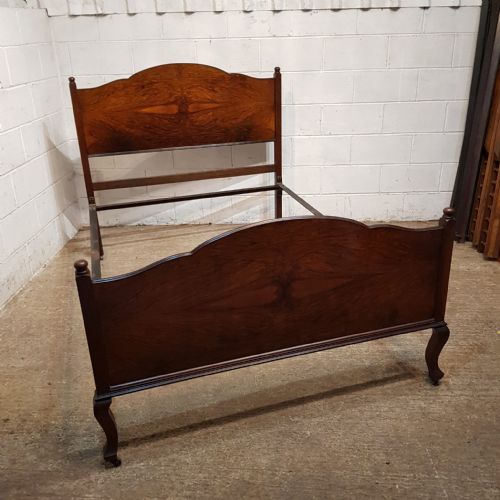


Art Deco Bedding
Art deco bedding brings together bold architectural walnut frames, clean lines, and integrated cabinetry from the interwar period.
Art Deco Bedding
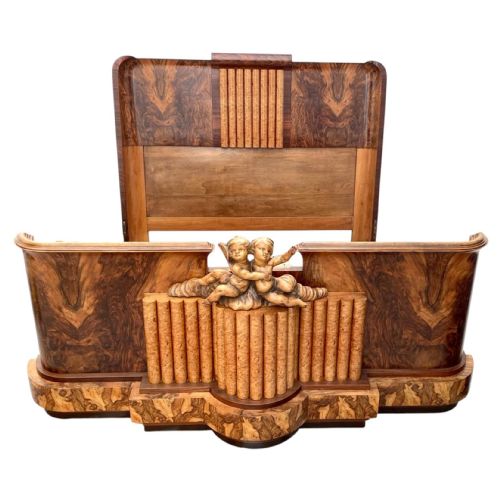
When you search for art deco bedding, you encounter substantial wooden sleeping furniture, primarily double and single beds, bed frames, and headboards accompanied by integral bedside tables. The pieces originate predominantly from the 1930s, alongside examples from the 1920s, 1900, and Victorian periods.
The form is defined by geometric architecture, symmetry, and built-in functionality such as attached cabinets or nightstands. Double beds and matching pairs of single beds dominate the selection, often taking inspiration from skyscraper and Odeon architectural motifs.
Beyond standard bed frames, the category extends to related bedroom items including bedside cupboards, day beds, reading stands, and dressing furniture. Walnut and maple predominate, giving rooms a warm, polished presence that reflects the design ambitions of the era.
How they were made
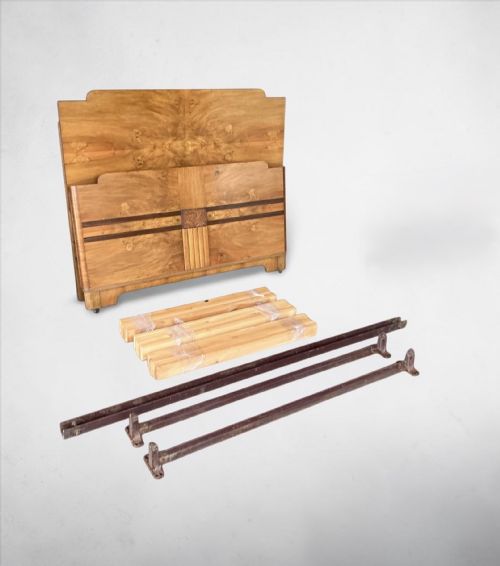
Cabinet makers utilised choice timber veneers, including burr walnut, figured walnut, birds eye maple, and satinwood, laid over sturdy timber carcases to create striking grain patterns on large headboards and footboards. Contrasting wood tones were frequently combined in geometric panels to accentuate the symmetrical styling.
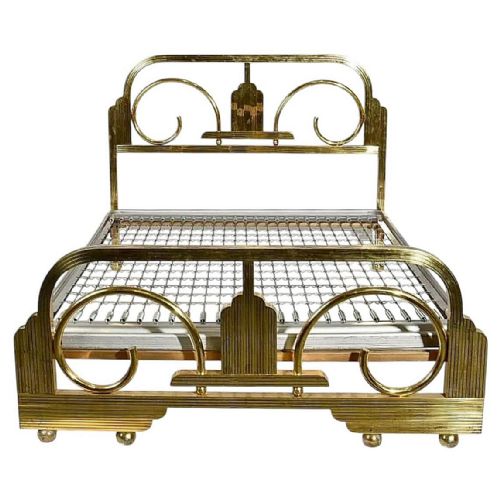
Metal elements in iron, brass, and chrome appeared on structural supports, reading stands, and decorative fittings, blending industrial materials with polished wood. Construction methods relied on precise veneering techniques and integrated joinery to support built-in cabinetry like attached bedside lockers.
Art Deco Bedding Retail Price Guide 2026
Typical asking prices for art deco bedding among the pieces listed under this phrase on Sellingantiques today, from the lower quarter to the upper quarter. They describe what is for sale here now, not the wider market.
Listings feature woods such as walnut, burr walnut, satinwood, maple, and limed oak alongside metal elements in iron, brass, and chrome.
What varies in quality
Quality rests in the choice of timber veneer and the skill of its book-matching across wide headboard surfaces. Highly figured burr walnut, birds eye maple, and contrasting satinwood displays demand superior woodworking expertise compared to plain timber panels.
The integration of functional elements dictates the sophistication of a piece. Examples featuring built-in bedside cabinets, streamlined lighting, or matching nightstands demonstrate a more ambitious architectural design than standalone frames.
Waring and Gillow·Betty Joel·H.L. Epstein Brothers
The Art Deco Bedding Glossary
- Burr walnut
- A prized timber harvested from the wart-like growths on walnut trees, yielding turbulent and decorative grain patterns.
- Odeon style
- An architectural and decorative influence derived from streamline moderne cinema design, marked by curved, tiered masses.
- Skyscraper style
- A design form mimicking the vertical setbacks and verticality of early twentieth-century metropolitan skyscrapers.
Art Deco Bedding: Frequently Asked Questions
How do I fit a modern mattress?
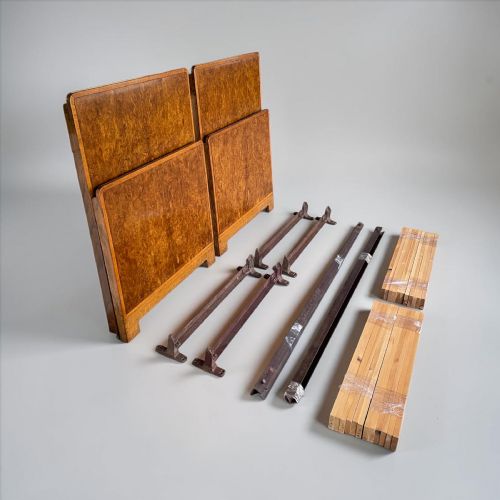
Many vintage frames accommodate standard mattress dimensions, though internal rail measurements can vary slightly depending on the maker.
It is advisable to check the internal width and length before purchasing a new mattress to ensure proper placement within the wooden rails.
Are bedside tables always attached?
Attached bedside cabinets and integral shelves form a signature feature of many headboards from this design period, offering a unified aesthetic.
Other examples consist of standalone bed frames accompanied by separate nightstands or matching cupboards.
What woods were commonly used?
Walnut and maple serve as the primary timbers, frequently enhanced by decorative burr walnut veneer, satinwood highlights, and blonde maple finishes.
Metals such as chrome and brass also appear on structural frames and associated reading stands.
How do I care for walnut veneer?
Polished wood surfaces benefit from gentle dusting with a soft cloth and protection from direct sunlight and excessive humidity.
Avoiding harsh chemical cleaners preserves the natural oils and grain clarity of the timber.